Category: Latest Articles

  • Skin Care Routine For Your 40s: Time To Tighten Your Skin

    Skin Care Routine For Your 40s: Time To Tighten Your Skin

    Forties are the new thirties, right? If that’s the case, then why didn’t your skin get the memo? While it’s true that this decade brings more of the same changes that hit your skin 10 years ago (hi, collagen loss, slowing cell turnover and dehydration), it doesn’t stop there. In your forties, you start to see more visible changes – especially in the structure of your skin. Here’s a rundown of what’s happening this decade and how to adopt the best skin care routine for your forties.

    What Happens To Your Skin In Your 40s

    Collagen and elastin are important proteins that provide structure to your skin, keeping it firm, plump and youthful looking. Your body naturally produces collagen in abundance when you’re young, but once you reach your forties, collagen production declines to new lows; enough so that it makes a visible difference to your skin. The Eminence Organics Product Support Team explains that with less collagen in your forties, “this is the time when lines start to appear around your mouth.” With the loss of the structural support provided by important proteins, the skin begins to sag and lines and wrinkles become more apparent.

    Not only does the skin lose its elasticity, the subcutaneous fat under the skin melts away as we get older. Without the padding that keeps the cheeks high and plump, the skin tends to droop and jowls make their first appearance. Keeping the skin firm and tight becomes priority number one during this decade.

    As the years pass, you may also notice your complexion becoming more dull. Cell turnover starts to slow down in your thirties, meaning that dead skin cells shed less frequently and fresh new skin cells are sluggish to reach the surface. The end result? A complexion that’s more dull than dazzling. 

    And while the skin is surrendering its natural radiance and elasticity, it also becomes dry. Continuing the process that started in your thirties, the skin produces less sebum, the oily waxy substance that moisturizes and protects those top layers on your face. With less of the body’s natural oils coating the skin, the complexion loses moisture easily, becoming both dry and dehydrated. Dry skin makes fine lines become more obvious, leaving the skin with more visible signs of aging.

    Ingredients For Skin Care In Your 40s

    To combat the acceleration in the appearance of aging during this decade, you’ll want to focus on specific skin care ingredients for your forties. Here are our top picks: 

    Botanical Peptides

    Plant peptides are some of the most powerful ingredients to target the look of aging. A type of molecule that makes up proteins, a peptide can signal to the body to create more collagen — a very useful function when your skin is rapidly losing this structural protein during this time of life. Topical products actually containing collagen, however, may not always deliver the intended effects. Collagen molecules don’t have the ability to penetrate the skin. Peptides, on the other hand, are smaller, which makes them a better option for topical use.

    Natural Retinol Alternative

    Like conventional retinol, our botanically-sourced retinol alternative can reduce the visible signs of aging, but without the harsh side effects that conventional retinol can cause. Extracted from plants like chicory root and tara tree, our Natural Retinol Alternative removes dead skin cells, tightens pores, smooths the skin, minimizes the look of lines and even fades the appearance of dark spots. 

    You can find the Natural Retinol Alternative in our Monoi Age Corrective Exfoliating Cleanser, Neroli Age Corrective Hydrating Mist and the Bamboo Firming Fluid. According to happy customer Stephanie B.: “My esthetician recommended the Bamboo Firming Fluid as a more natural retinol alternative since retinol products were too harsh and drying on my skin. I have been obsessed with this ever since – definitely notice a difference in my skin when I am using it and a little goes a long way!”

    Bakuchiol is another botanically-sourced retinol alternative that is becoming more popular for its powerful results that come without irritation, redness or UV sensitivity. Conventional retinol can cause dryness, redness and sensitivity and can cause a purging stage (essentially where your skin will get worse before it gets better). With retinol alternatives, you don’t have to put your skin through unnecessary stress before seeing coveted results.

    Glycolic Acid

    The most popular type of alpha hydroxy acid, glycolic acid is usually derived from sugar cane. It effectively exfoliates the skin, increasing cell turnover rate by breaking down the bonds between pore-clogging particles. It also smooths out the look of wrinkles, fades the appearance of dark spots and even prevents problem skin. A perfect exfoliant in your forties!

    Botanical Hyaluronic Acid

    When your skin is feeling parched, botanical hyaluronic acid is the thirst-quenching ingredient that it’s craving. Deeply hydrating, botanical hyaluronic acid replenishes the skin with moisture, smoothing out the complexion and minimizing the look of fine lines. To maximize the effects, be sure to layer with an emollient moisturizer that complements the acid’s humectant effects. 
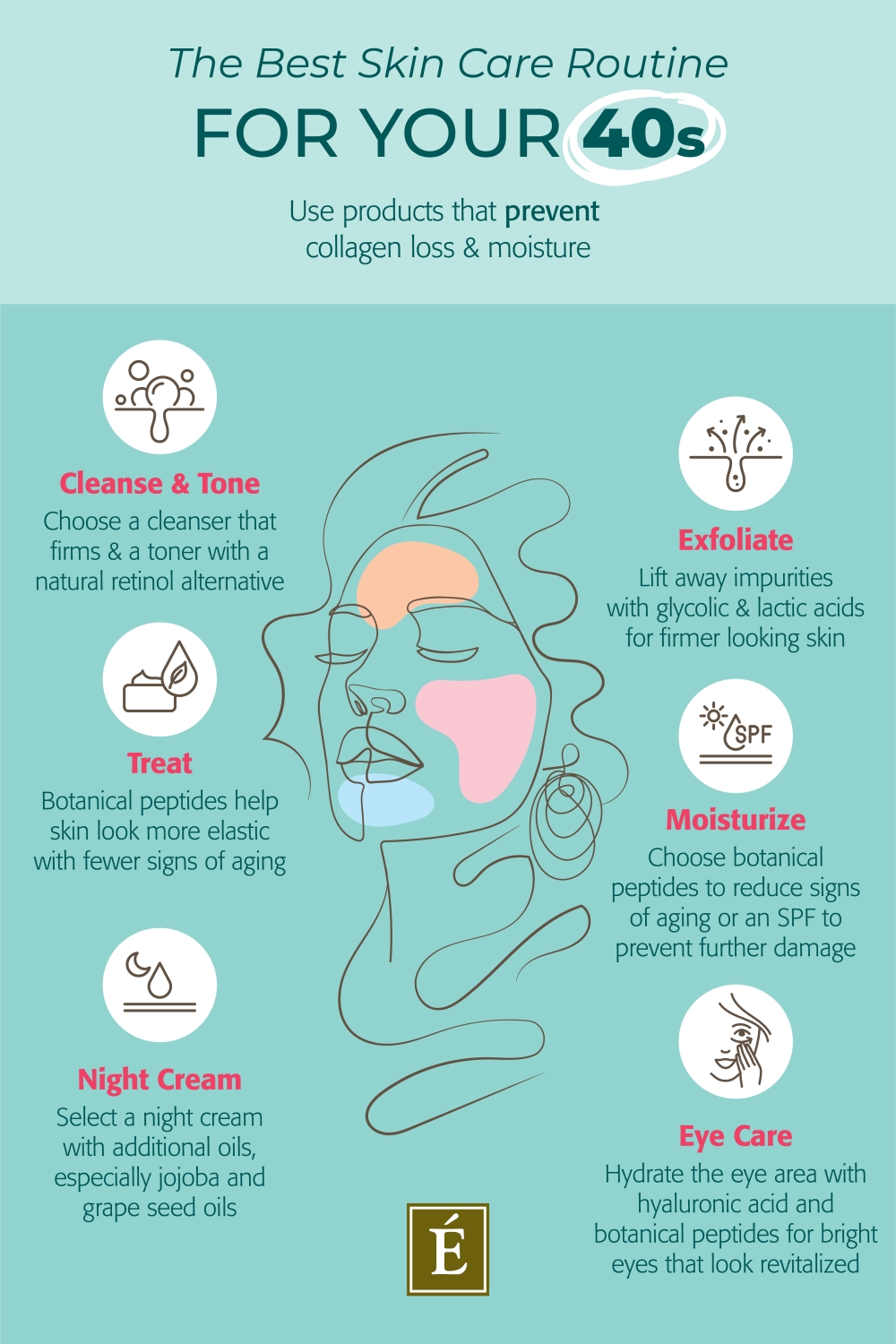
    Best Skin Care Routine For Your 40s

    Using the most potent ingredients that nature provides, here’s the skin care routine we suggest to tackle the issues of middle-aged skin head on, with perfect solutions for those in their forties.

    Cleanse: Choose a cleanser that not only removes impurities but also restores the appearance of elasticity and firmness to the skin. Look for botanical hyaluronic acid, which hydrates and leaves the skin looking plump with fewer visible lines and wrinkles.

    Tone: Complete the cleansing process with a toner that includes a Natural Retinol Alternative. Formulated with this natural ingredient that mimics the effects of retinol without the side effects, a toner with a Natural Retinol Alternative fights the visible signs of aging, appearing to lift and tighten the skin.

    Exfoliate: Lift away dead skin cells with an exfoliant like the Firm Skin Acai Exfoliating Peel. Formulated with glycolic acid – the magic ingredient for the forties age group – this type of exfoliating peel revitalizes mature skin. Glycolic acid and lactic acid rejuvenate, balance and smooth away the look of wrinkles.

    Treat: Check the ingredients list for a serum that contains botanical peptides. This skin care essential gives a boost to mature skin types, helping the skin look more elastic with fewer visible signs of aging.  

    Moisturize: A high quality moisturizer is another vehicle for delivering botanical peptides to the skin. Double the impact with a peptide-packed moisturizer and reduce the look of fine lines and wrinkles. During the day, layer on an SPF moisturizer as well. A moisturizer with both UVA and UVB protection shields your skin from the aging, damaging effects of the sun. 

    Night Cream & Mask: To combat the dryness of mature skin, invest in a good night cream. Since skin repairs itself while you sleep, a night cream works wonders while you catch your zzzs. Look for one containing additional oils like jojoba and grape seed oils. You can also add an overnight mask for ultimate hydration and to improve the appearance of elasticity with a mask to restore that youthful glow.

    Eye Cream: Don’t forget the part of your face with the most delicate skin by applying an eye cream. Choose one that hydrates the eye area with hyaluronic acid and botanical peptides for bright eyes that look revitalized. Customer Lisa left a 5-star review about the Marine Flower Peptide Eye Cream saying: “Amazing results! Wrinkles are less defined and my eye area is more plump.”

    Watch Lead Skin Care Trainer Natalie Pergar as she details the ingredients you need in a skin care routine for people in their 40s: 


    Find out more about recommended products to build into your forties skin care routine at the nearest Eminence Organics Spa Partner. Which key ingredient are you already using for your mature skin care routine? Let us know in the comments or on social media. 

    Not in your 40s? Find skin care information for your age group: 

    This article was originally written in December 2019.

     

  • Strawberry Spinach Salad (With Optional Chicken)

    Strawberry Spinach Salad (With Optional Chicken)

    Strawberry Spinach Salad (With Optional Chicken) – The Real Food Dietitians


    Privacy & Cookies Policy


  • Skin Care Routine For Your 30s – Tips To Hydrate And Rejuvenate

    Skin Care Routine For Your 30s – Tips To Hydrate And Rejuvenate

    It feels like every time you start to understand your skin on a deeper level, things change. And transitioning from your twenties into your thirties is no exception! You may have noticed your skin looks more tired than it used to, or maybe it’s feeling more sensitive and dry. Wishing your complexion had visible radiance and hydration? In your thirties, you’re not alone.

    There’s plenty going on with your skin this decade, which is why creating a skin care routine for this stage of your life is super important. What worked before might not be working as effectively – or at all – so it’s time to change things up and look for ingredients that nourish your skin while also protecting against environmental pollutants and free radicals.

    What Happens To Your Skin In Your 30s

    Where do we start? This is a transitional period in terms of your complexion. Skin concerns that you dealt with in your twenties may or may not be an issue now, but new ones are popping up. Some telltale signs that your skin has hit its thirties include more prominent signs of aging: Fine lines, an overall dull or dehydrated complexion, a loss of collagen and volume in certain areas of the face and skin that doesn’t bounce back like it used to.

    Another factor to consider is that what took place over the last ten years starts to reveal itself in this decade of life – in other words: What happens in your twenties doesn’t stay in your twenties. Too many days out in the sun without sunscreen? Sun spots and hyperpigmentation start to become noticeable. Didn’t use skin care products with antioxidants? Signs of skin damage from free radicals begin showing up in the form of fine lines and dry skin.

    And if that wasn’t enough to think about, hormones might still be causing issues for skin, even well into this decade! Fluctuating levels – combined with daily stress, environment and a less-than-optimal diet – could show up on your skin in the form of breakouts and even cystic acne (sadly, this is not just a teenage issue).

    “You may start to notice that your skin looks more tired, less radiant and may become drier and more sensitive,” the Eminence Organics Product Support team explains. To counteract these common signs of aging, the best skin care routine for this age includes products that exfoliate, hydrate and encourage cell turnover.

    Let’s do a deeper dive into some of the most common issues you’ll want to address in a skin care routine:

    Signs Of Aging Become More Prominent

    While you might have noticed fine lines, dehydration or hyperpigmentation in your twenties, this is the decade where they become even more noticeable in areas like the forehead, eyes and mouth.

    Collagen, Elastin And Estrogen Production Starts To Slow

    As your body ages, production of collagen and elastin (responsible for the suppleness and elasticity of your skin) slows down, leaving it feeling less firm. The decline in collagen production starts in your mid-to-late twenties, so by your thirties you’ll want to address it. Additionally, an estrogen slowdown can cause a change in the fullness of your face, especially around the jaw and cheekbones.

    Dullness And Dryness Become Noticeable

    The arrival of your thirties also comes with a slowing of your cell turnover cycles, meaning dead skin cells stick around (literally) and cause an overall dull or dry complexion. Dry skin also makes it harder for skin care products to penetrate deeper into cells, limiting the effectiveness of nourishing ingredients.

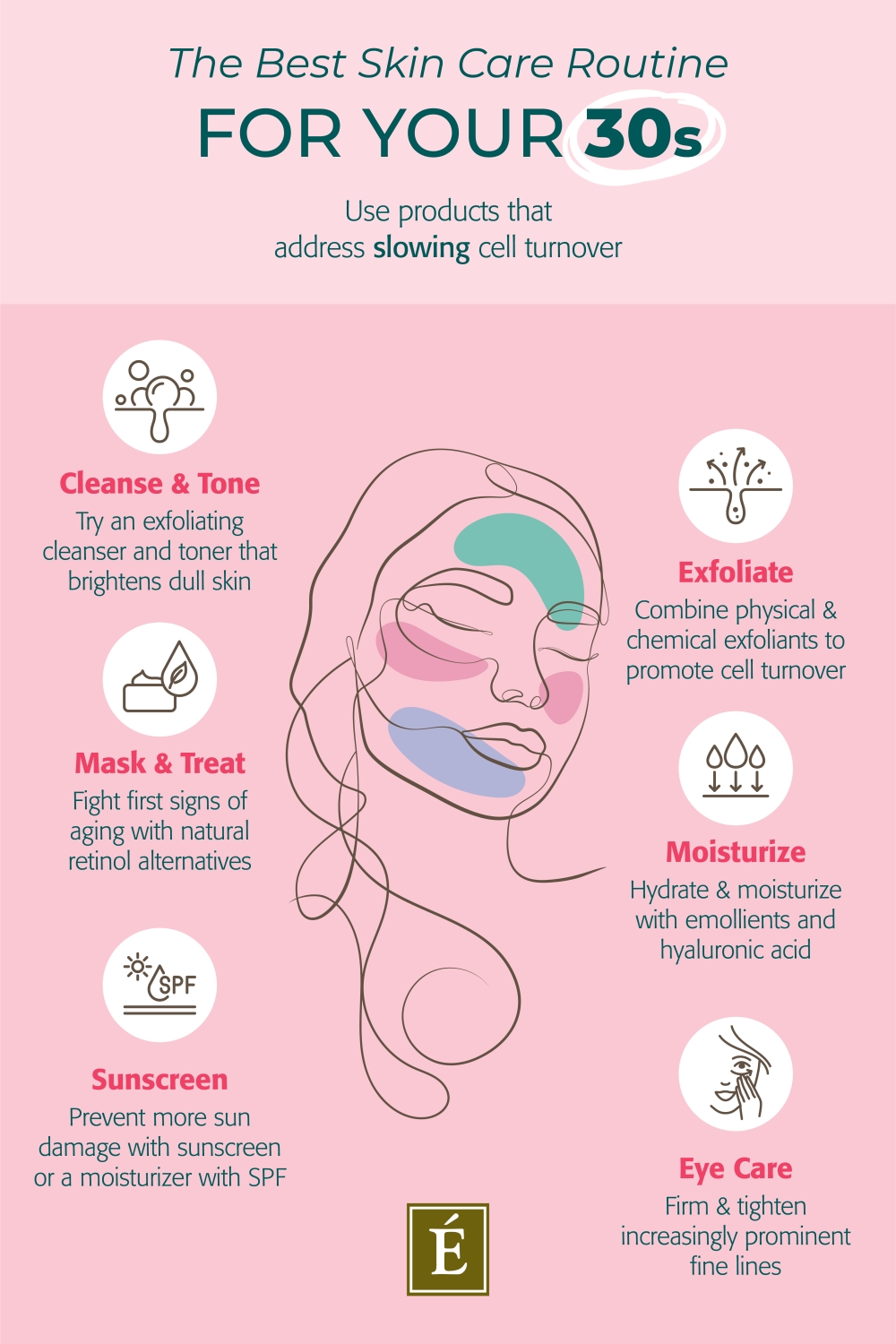
    The best skin regimen for this stage involves the essentials – cleanser, moisturizer and sunscreen – as well as additional skin care products that help address more prominent signs of aging.

    Skin Care Routine For Your 30s

    The Best Skin Care Routine for Your 30s

    Want to create an effective and revitalizing routine that addresses common concerns while also promoting radiant and healthy skin? Here are the essentials:

    Cleanse – Look for a versatile cleanser, like our Mangosteen Daily Resurfacing Cleanser, that removes buildup and makeup from the skin while also gently exfoliating. According to our customer, Vicky, who has one bottle in her shower and one on the counter: “This is the best cleanser. Smells amazing and it cleanses your face, removing all the makeup, impurities and gently exfoliates! I use it day and night.”

    Toner & Essence – After cleansing, use a toner to brighten and hydrate dull skin. Double down with a lightweight essence to add moisture. The Stone Crop Hydrating Mist and Birch Water Purifying Essence are both great options in your thirties.

    Exfoliate – Give your exfoliating routine an extra push or polish. Our Turmeric Energizing Treatment, Radish Seed Refining Peel and Strawberry Rhubarb Dermafoliant are treatments designed to gently buff away dead skin to encourage cellular turnover. 

    Mask & Treat – For areas that need more attention, use natural retinol alternatives like our Bamboo Firming Fluid to fight the first signs of aging, including fine lines and wrinkles. And incorporate a skin-boosting serum or a mask into your routine. The Citrus & Kale Potent C+E Serum protects against free radicals and oxidation. Vitamin C is a great choice, as is something with soothing main ingredients, like our Stone Crop Masque. 

    Moisturize – Always hydrate with products that contain deeply nourishing emollients and hyaluronic acid. An eye cream is also recommended to firm and tighten increasingly prominent fine lines. Try the Neroli Age Corrective Eye Serum or the Wild Plum Eye Cream.

    Sunscreen – A must, always! Protect skin from further sun damage by using a topical sunscreen or a moisturizer with SPF. Our Lilikoi Daily Defense Moistuizer SPF 40 is a foolproof option.

    Additional Steps to Take

    Caring for your skin often starts on the inside. Be sure to drink the recommended eight to 10 glasses of water a day to help hydrate your skin from within. Protective antioxidants through a healthy diet (think green tea and Vitamin C-rich fruits and vegetables) are another valuable addition to your regular intake. You can also keep your skin healthy by reducing stress to a minimum through positive mental health and even engaging in regular exercise!

    Visit an Eminence Organics Spa Partner to learn more about your skin as well as the best skin care routine for your age group.

    Not in your 30s? Find skin care information for your age group: 

    This article was originally written in December 2019.

  • Greek Cucumber Salad (Fresh and Light)

    Greek Cucumber Salad (Fresh and Light)

    Greek Cucumber Salad (Fresh and Light) – The Real Food Dietitians


    Privacy & Cookies Policy


  • Body Acne: How To Get Rid Of Breakouts On Your Back, Chest & Shoulders

    Body Acne: How To Get Rid Of Breakouts On Your Back, Chest & Shoulders

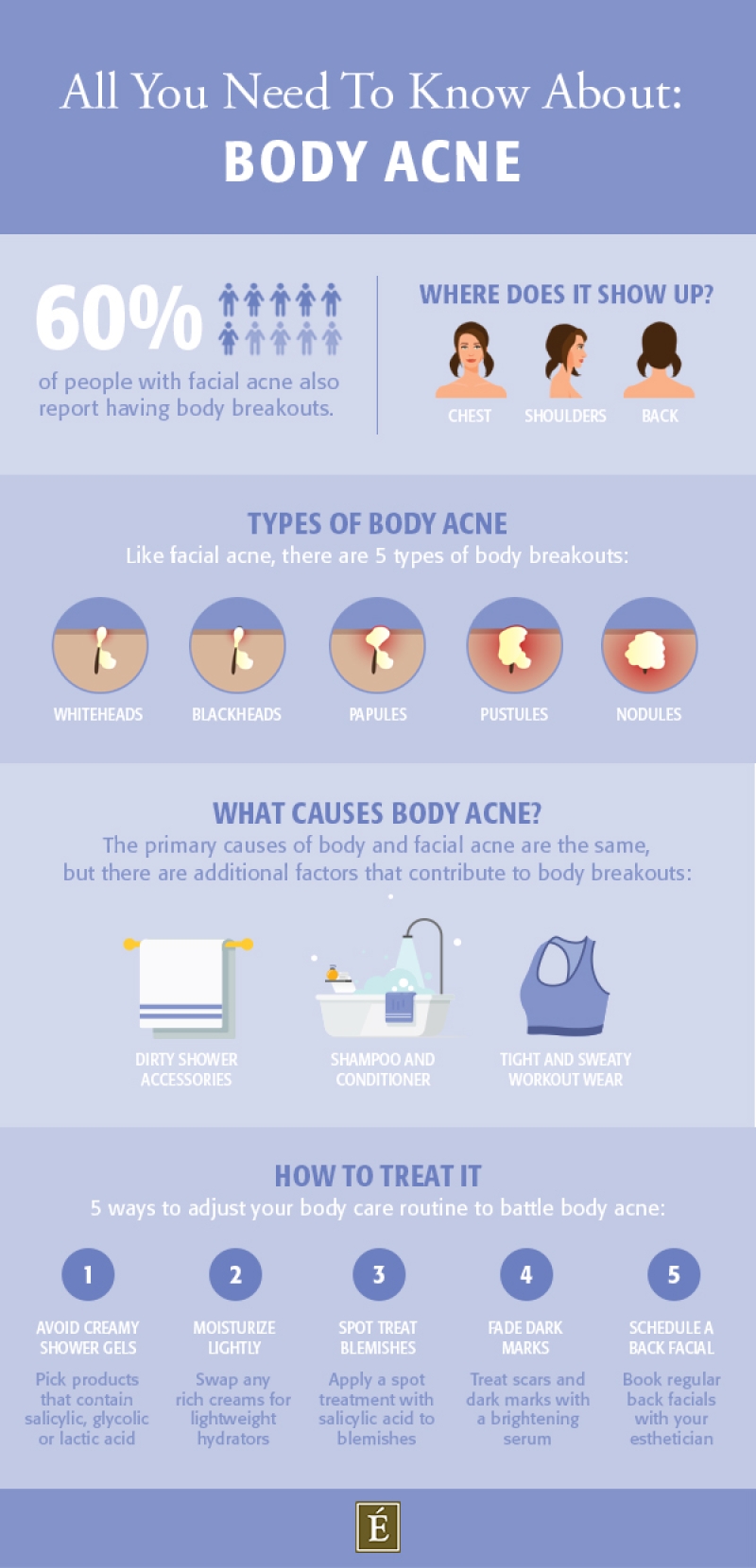
    While acne breakouts on the face tend to steal the spotlight, there’s a good chance that if you’ve experienced acne on your face, pimples have also popped up south of your chin. In fact, Everyday Health estimates that up to 60% of people who report having facial acne experience body acne as well. Here’s a breakdown of what causes body blemishes, as well as some tips about how to treat them.

    What Is Body Acne? | What Causes Body Acne? | How To Treat Body Acne 

    What Is Body Acne?

    Body acne refers to any type of acne that appears on the back and upper half of the body, including the chest and shoulders. These breakouts are classified similarly to acne on your face, and are often accompanied by oily skin, scarring and blackheads. While body acne can appear anywhere (aside from oil-free zones on the palms of your hands and the soles of your feet), it tends to show up most commonly on the back, chest and shoulders – where there is a higher density of hair follicles and oil-and-sweat-producing glands. To make matters worse, the pores and hair follicles on your body are much larger than those found on your face, and the skin on your back is extremely thick. These factors heighten the potential for dirt and oil to become trapped, block pores and cause breakouts.

    What Causes Back, Chest & Shoulder Acne?

    Eminence Organics Lead Skin Care Trainer Natalie Pergar tells us that the primary causes of body and facial acne are in sync: “Body acne is caused by the same factors as facial acne – bacteria, overactive oil glands and excess dead skin cells.” As with facial acne, oil and dead skin cells block a pore, mix with acne-causing bacteria and trigger an immune response that presents as pimples, blackheads, redness, cysts or a combination. There are a few additional factors that contribute to breakouts on your back, chest and shoulders. These include:

    1. Shampoo & Conditioner

    Believe it or not, keeping clean can actually contribute to body acne. As you rinse shampoo and conditioner from your scalp, the oils and other ingredients from your hair products can run down your back and clog pores. And, the location of body breakouts doesn’t help; unless you’re an expert contortionist, it’s likely that you’re missing patches of hair product during your daily scrub. A few tips to keep in mind:

    Rinse shampoo and conditioner off to the side
    Wash your body after shampooing to make sure you catch any lingering residue
    Use a clean body brush to access hard-to-reach spots
    Dry the area thoroughly with a clean towel after your shower

    2. Sweaty & Tight-fitting Workout Wear

    One of the most common contributors to body acne is sweaty, tight-fitting clothing. While they can be great for the gym, clingy fabrics trap sweat and bacteria on the skin, which can lead to clogged pores and body breakouts. Natalie adds: “When acne affects the body, it’s also good to note that the rubbing of clothing and sports equipment can add to irritation due to the extra heat and sweat.” The best way to tackle this trigger: Opt for loose-fitting workout wear when possible and be sure to remove it (and hit the showers) immediately after you hit the gym.

    3. Dirty Shower Accessories

    Dirty shower accessories can quickly undo the good done by your daily cleanse. Wet loofahs, damp towels and moist bath brushes are a breeding ground for bacteria which can compromise clear skin. In addition to frequently washing your favorite towel, Refinery29 recommends replacing your loofah every three weeks and using a body brush with natural fibers to limit the available hiding places for fungus and bacteria. You should also ensure that your shower tools have time to dry.

    How To Treat It: Products That Can Help You Get Rid Of Back, Shoulder And Chest Acne

    Body breakouts may be caused by the same triggers as facial acne, but they can be more challenging to treat. Because hair follicles and pores are spaced further apart, the skin tends to be tougher in these areas, making it difficult for topical products to penetrate the skin and work as quickly as they do for facial acne. On the other hand, the skin on your back is more resilient, and can better handle potent treatments that may be irritating to your face. Here are a few ways you can adjust your body care routine to battle breakouts on your back, shoulders and chest:

    1. Avoid Creamy Body Wash

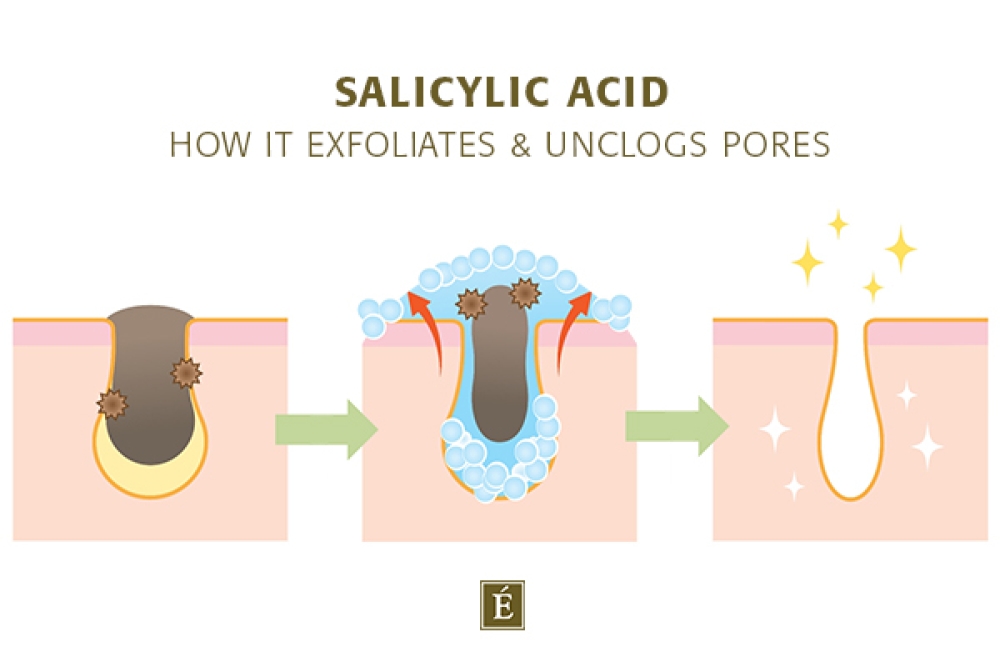
    The skin on your back has more sweat and oil gland activity than elsewhere on the body, but it also happens to be the area that is least thoroughly cleansed. Due to the difficulty in reaching inaccessible spots like the skin between your shoulder blades, oil, dead skin, sweat and dirt easily build up and clog pores. For starters, Natalie advises avoiding ultra-creamy body washes and choosing treatments that contain acne-fighting ingredients like salicylic acid (a BHA that unblocks pores), glycolic acid (an AHA that dissolves dead skin cells to prevent spots) or lactic acid (a gentle AHA that helps smooth skin and prevent pimples). Cleansers designed to treat acne on the face are safe and effective on the chest, back and arms. Try the Acne Advanced Cleansing Foam or the Mangosteen Daily Resurfacing Cleanser. GQ also recommends using a long-handled cleansing sponge or body brush to help reach every nook and cranny.

    2. Moisturize – Lightly

    While it may seem counterintuitive to add moisture to already oily and acne-prone skin, it’s a skin care step you can’t skip. It’s hard to wrap your head around, but less moisture can cause skin to produce more pore-clogging sebum in an effort to stay lubricated. Keeping your skin’s moisture barrier intact is essential to lock in hydration as well as protect your pores from bacteria and other acne-causing irritants. Yet, not all moisturizers are made equal. Like your body wash, you’ll want to steer clear of rich creams designed for dry skin and, instead, choose a lightweight lotion that will keep your skin hydrated and its oil balance in check.

    3. Spot Treat Blemishes

    The same spot treatments you apply to your face can be used for your back, chest and shoulders. Experts agree that products that contain acne-fighting salicylic acid are your best bet against body blemishes; this superstar ingredient not only clears clogged pores but also helps prevent breakouts from recurring. With regular use, it has the power to keep skin clear and breakout-free for good. Plus: Unlike benzoyl peroxide, salicylic acid is extremely gentle and will not bleach fabric. When choosing the right spot treatment, we recommend reaching for products with a light but creamy consistency that can be easily spread across your back, chest and shoulders. The Clear Skin Probiotic Masque is a good option. 

    One customer, Megan, says of the mask: “I couldn’t believe how much better my skin looked after just using 2 or 3 times. I’m obsessed. I have oily, combo skin and it helps hydrate as well as reduce the redness. My skin also feels so soft after. It certainly feels like a spa treatment. Couldn’t be happier with my purchase.”


    4. Fade Dark Marks

    Because the skin on your back is more resilient and has a slower cell turnover than the skin on your face, it can take longer to heal. This increases the chance that your body acne will leave scars and lengthens the amount of time it will take for post-inflammatory hyperpigmentation to fade. Whatever you do, don’t pick, squeeze or scratch your spots – and if you do (sometimes the urge is impossible to resist), apply a brightening serum like the Bright Skin Licorice Root Serum immediately.

    5. Schedule A Back Facial

    Acne facials aren’t just for the face. In fact, many spas and salons now offer back facials to specifically target the hard-to-reach spots you can’t tackle at home. Not only do these professional treatments clean your skin at a deeper level, they also include professional-strength exfoliation and extractions to encourage skin cell turnover and clear clogged pores. Visit our Spa Locator to book a back facial at an Eminence Organics Spa Partner near you.

    Watch this video to find out more from Natalie about how to reduce the look of body acne:


    This article was orignally published in November, 2018

  • Why Your Sunscreen Is Pilling (And How To Prevent It)

    Why Your Sunscreen Is Pilling (And How To Prevent It)

    Clean face? Check! Favorite Serums? Check! Daily application of sunscreen… and wait, what are those white blobs? 

    We all know that wearing sunscreen is a must at this point, so it’s not too surprising if some of you have started to notice small white blobs, or “pills,” occasionally forming after application. At the bare minimum, pilling is a waste of product, but it’s generally pretty frustrating as well. When something so integral to your daily routine causes such an unattractive result, it leaves you questioning what went wrong, and more importantly— how can it be prevented. So, let’s take a look at why these annoying pills form.

    Why Does Sunscreen Pill?

    When creating a sunscreen, there are a few key elements that a formulator must keep in mind. For one, they’ll want it to lay down on the skin and create a uniform film, allowing the sunscreen agents to disperse evenly. They will also want to ensure it stays put and doesn’t migrate on the skin. This is important to maintain the consistent, uniform coverage necessary to pass SPF testing. So typically, certain ingredients are incorporated to form films on the skin to keep it in place. Once the film is formed (depending on which ingredients were used), any rubbing on the sunscreen can break the film up and create what looks like pilling. 

    Which Ingredients Cause Pilling?

    There are a few different ingredients to keep an eye out for when it comes to pilling. Gums are the most common (and easiest) film formers to use. Ingredients like guar gum, sclerotium gum, xanthan gum, and many others containing the word gum are commonly found in sunscreen. There are also polymers (like accolades, copolymers, or a variety of different silicone polymers) that are used to lock this film in place. 

    These ingredients do not pose a risk of pilling on their own, but rather when you’re applying sunscreen with other products like serums, moisturizers, or makeup. When pairing a sunscreen containing gums or polymers with another product containing gums or polymers, the two will grab onto each other or interact. Because they’re incompatible, this can lead to the dreaded pilling.

    By either rubbing your sunscreen after application or incorporating additional products with polymers and gums, the sunscreen film can break up and form pills.

    How Can Pilling Be Prevented?

    Weekly Exfoliation

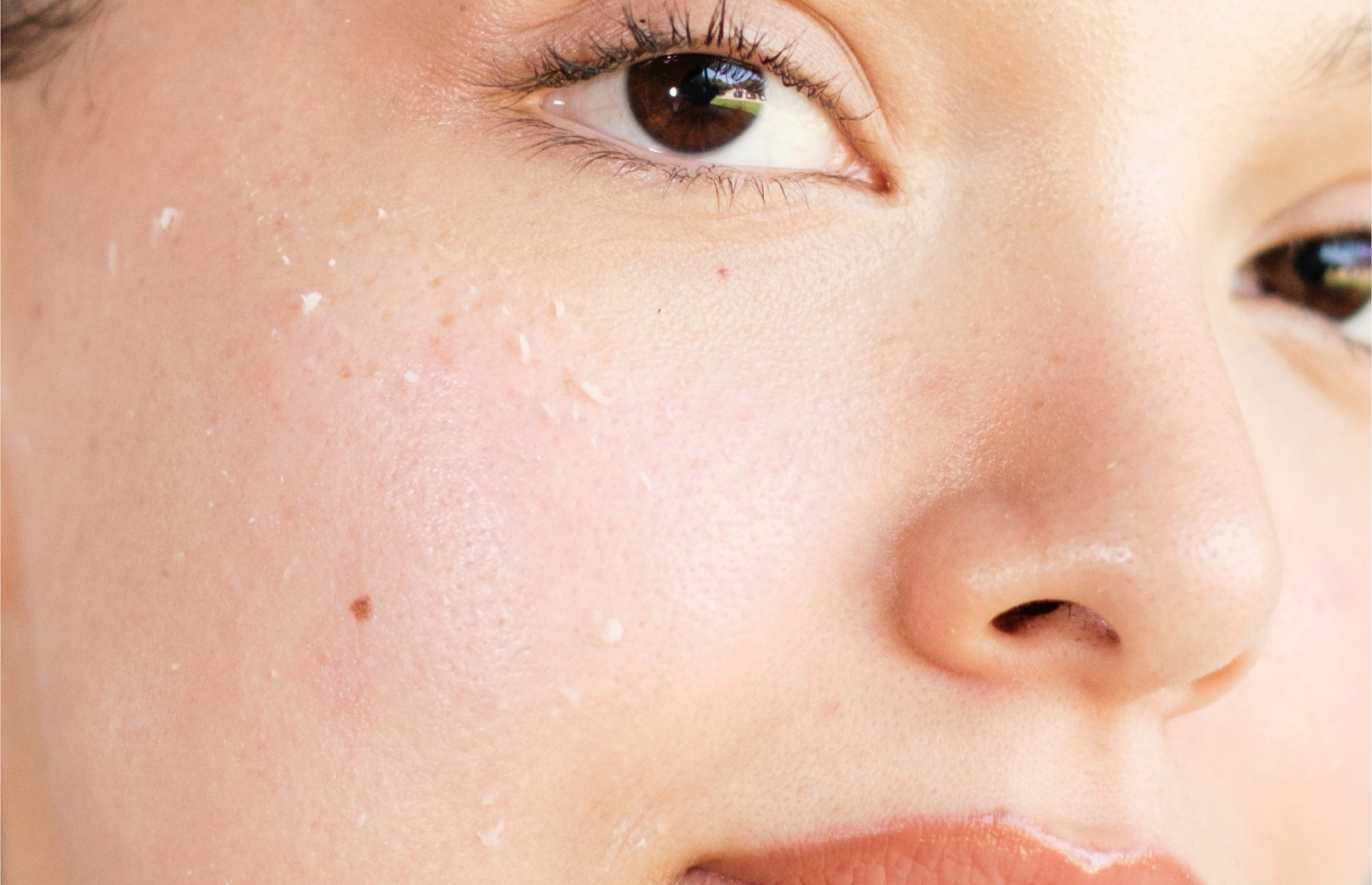
    A thoughtful skincare routine is critical in creating a clean slate for all products to come. While pilling is, for the most part, a polymer interaction, texture from dirt or dead skin cells sitting on top of the skin can cause problems of their own. Dry skin, dead skin cells, and flaking skin can prevent sunscreen from being absorbed. This is why exfoliating one or two times a week is an excellent way to clear your skin and ensure maximum absorption of skincare products.

    Read more about the various types of exfoliants and find out which one is right for you.  

    Take A Closer Look At The Products You Use

    When trying to avoid pilling, it all comes down to selecting the right products and putting them together. Sometimes this means choosing which product you like better. If there’s a certain serum, moisturizer, or makeup product that you can’t go without, but it interacts with your sunscreen, you may need to look for a sunscreen that doesn’t contain the same gums or polymers. The same goes for if there’s a sunscreen you can’t live without. Unfortunately, there’s not much to do about that gum-on-gum interaction besides rotating through different products and determining which ones are compatible. Like so many things in skincare, learning what works best for your unique skin comes down to trial and error.

    Seek Out Trusted Brands With Rigorous Testing Procedures

    I’ve been the head of product development for my skincare line for over 27 years, and this has really taught me that following proper product testing procedures is key to ensuring a good user experience. 

    For example, I just recently began testing a new moisturizer for my line. One thing I always look at when formulating skincare products is to see how they react with other products. In this case, that means testing this moisturizer with every single serum in my line so that when it’s all said and done, I can confidently say all of our products work together without the risk of pilling. Lo and behold, I did run into a pilling problem with one of our serums, and guess what—I had to go back to rework the formula. Now this is all totally normal but essential for providing a product that not only does what it says it’s going to do but also provides a great user experience (and definitely no pilling!). 

    While I can never be sure how a product will react with another outside of my line, it’s my mission to do as much as humanly possible in terms of testing formulas, ingredients, different viscosities, and anything else necessary to ensure a good interaction.

    Pilling from the moisturizer I was testing.

    So, Why Not Formulate Sunscreen Without Gums and Polymers?

    Simply put, gums, elastomers, and different polymers are critical to helping boost the SPF value of a product. They ensure that the protective film forms properly on the skin and disperses the UV filters evenly, providing the best SPF value and the best sun protection possible. If formulators didn’t use these ingredients, it would be extremely difficult to develop high-performing sunscreens that meet (and maintain) SPF standards on the skin.

    At the end of the day, these sunscreens are very nice, stable products that just so happen to interact with another nice, stable product. Unfortunately, this is just something that has to be navigated by selecting products that work together.

    Three Common Misconceptions About Sunscreen Pilling

    Myth #1: Application Techniques Can Prevent Pilling

    Unfortunately, this is not the case. From a physical aspect, there’s little that can be done since you’re laying one film down on your skin and then laying another film over it. Once these layers are completely dry, pilling begins. Ultimately, it’s a chemical reaction and no technique will make a difference. 

    However, I always recommend layering your products from thinnest to thickest to ensure absorption of products and longer-lasting hydration.

    Myth #2: Your Skin Type Affects Pilling

    Nope! As I mentioned, this just happens to be a phenomenon that happens due to a chemical reaction—not your skin type.

    Myth #3: The Amount Of Sunscreen Applied Affects Pilling

    While it may affect the amount of pilling, using anything other than the recommended amount of sunscreen is never a good idea. Yes, applying less sunscreen may reduce pilling, but this limits its efficacy and protection, and likely means you’re not getting the advertised SPF. And vice versa, if your sunscreen is experiencing an interaction with other products, adding more could just make it worse. After all, if your products are causing an interaction, the more of them you use, the more you will pill. 

    Read more about how to apply sunscreen properly.

    Finding the perfect combination of products can be a journey, but I hope this helps you navigate it a bit better. By taking the time to experiment and identify a solution to your pilling problems, you’re not only saving money but also providing your skin the best form of protection against UV rays.

    Next up, find out which 5 skincare mistakes could be making your makeup less effective.

  • Tuna Pasta Salad (With Gluten-Free Option)

    Tuna Pasta Salad (With Gluten-Free Option)

    Tuna Pasta Salad (With Gluten-Free Option) – The Real Food Dietitians


    Privacy & Cookies Policy


  • How to Care for Dry Skin in Spring

    Springtime brings a refreshing change in the weather but it can also bring with it weather changes which can impact skin – especially people prone to dry and dehydrated skin. Learn about some of the causes of dry skin in spring and how to create a skincare routine specifically designed for spring time to help you maintain healthy and glowing skin.

    What causes dry skin in spring?

    Dry skin is a common problem that many people experience during the spring season and there are many factors which can contribute to dry skin in the spring. One of the primary causes is the change in weather as different climates and environmental factors can affect skin. During the winter season, the air tends to be dry and cold, which can cause the skin to become dehydrated – as a result when you enter the warmer months of Spring you may find your skin is still recovering from the Winter. 

    As the temperature starts to warm up in spring, the air also becomes drier, which in turn may cause skin to lose moisture resulting in dryness and dehydration. Some people may find that the increase in pollen and other allergens during the spring season may also irritate the skin and contribute to dryness and inflammation on the skin.

    There can be several causes of dry skin in the spring:

    Temperature Changes: As the weather starts to warm up in the spring, the air can become drier. This can cause the moisture in your skin to evaporate more quickly, leaving your skin feeling dry and tight.Reduced Humidity: In the spring, humidity levels can drop, leading to a decrease in moisture in the air. This can cause your skin to lose its natural moisture and become dry.Sun Exposure: During the spring you are likely to be spending more time outside in the sun – remember that prolonged exposure can cause skin to become dry and dehydrated.Allergies: Spring allergies may cause inflammation and dryness in the skin.

    How can I prevent dry skin in the spring?

    If you’re already starting to notice some signs of dry skin in the spring, the key is to start early with caring for your skin the moment that Spring starts. Some tips to prevent dry skin in the spring include:

    Using a gentle cleanser instead of harsh soapsUse a night cream filled with moisture-binding ingredients as seen in our Seaweed Night Cream – for more mature skin types or ultra dry skin try a night cream with ultra-emollient oils like our Seaweed Night Cream Ensure Sunscreen is worn during the day to help protect skin

    What are some other skincare tips for skincare in the spring time?

    Avoid long, hot showers or baths as hot water can strip the skin of its natural oils, causing dryness and irritationUsing a humidifier to add moisture to the airApplying a moisturizer immediately after bathing or showering to lock in moisture and water content. Look for skincare with ingredients like hyaluronic acid which help to draw moisture to the skin.Skip skincare which is alcohol-free, or has a lot of added fragrance and perfume which may irritate certain skin types. Use gentle motions to apply skincare products (try using a pressing and patting motion) rather than scrubbing and or rubbing the skin. 

    Skincare Routine for Spring

    Whilst you may have your tried true and tested skincare routine – it can be worth making a few changes in your spring skincare routine to help improve its appearance, radiance, and hydration. Look to use moisturizing creams that don’t clog your pores, sunscreen, and gentle alcohol-free cleansers and toners. 

    Step 1: CLEANSER – First start by cleansing the skin with our Orange Cleansing Soap our oil-free, cream cleanser in a non-drying formula that gently exfoliates and renews skin with mild exfoliating action thanks to Orange Peel Extract the cleanser visibly improves the look of dull skin, uneven skin tone and uneven skin texture and helps dry and dehydrated skin types look brighter and smoother – perfect for your spring skincare routine. 

    Step 2: TONER – To help soothe skin use our Aloe Vera Toner after cleansing, the formula is Alcohol-free & fragrance-free and contains aloe vera — soothing and hydrating it is a natural plant extract with anti-inflammatory and anti-microbial properties making it perfect for spring. To help renew skin you may like to incorporate our Glycolic Acid Toner into your skincare routine a few times a week. This exfoliating alcohol-free toner helps to brighten and balance the skin tone with a formula that includes Grapefruit extract and Aloe Vera. 

    Step 3: MOISTURIZER – Every evening moisturizer should be used in your skincare routine to help replenish and moisturize. Our Seaweed Night Cream is perfect for spring as it effectively hydrates and moisturizes without the use of pore-clogging oils and instead uses ingredients like Sodium Hyaluronate (a derivative of hyaluronic acid) which helps to reduce dry, flaky skin by attracting moisture to skin cells. If you require a touch more hydration or are looking for a spring time moisturizer with anti-aging benefits try our Protein Night Cream. With a moisture-intensive formula enriched with ultra-emollient oils to softens skin and retain moisture it also helps to combat against skin-aging free radicals.

    Step 4: SUNSCREEN – During the day time it is important to protect your skin with a sunscreen and product with SPF – especially since you’re likely to be spending more time outdoors as the weather warms up. Our Collagen Moisturizer with SPF 15 is a lightweight collagen moisturizer containing SPF 15. The formula delivers year-round broad-spectrum UVA/UVB protection and is formulated with both Collagen and Cottonseed Oil (which is rich in antioxidants like Vitamin E and essential fatty acids) to hydrate the skin.

    Step 5: MASK – To give skin additional moisture and hydration – look to include a facial mask into your skincare routine 2-3 times a week. Our Ginkgo Mask is a creamy, moisture-intensive facial mask which helps to revive dehydrated skin. Ginkgo Biloba helps to provide parched skin with moisture as Allantoin, Shea Butter, and Vitamin E nourish skin and encourage a softer, smoother, more radiant complexion.

    Shop skincare. 

    Categories: Skin Care |
    Permalink

  • How To Help Your Client With Home Care Products And Routines

    How To Help Your Client With Home Care Products And Routines

    Whether your Clients book treatments for self-care, skin issues, relaxation – or a combination of all three – they visit your spa knowing they will leave their appointment looking and feeling better. And while ideally they will see you in person as often as possible, the best way to keep them coming back is to send Clients home with recommendations for products that will help extend the benefits and results from their spa treatments. After all, long-term skin care results are not achieved in the treatment room alone. 

    There are a few simple steps that you can take to make sure you and your Clients get the most out of your time together — and that those benefits extend far beyond the spa. Read on for some simple and useful tips that will allow you to make your Clients happy while increasing your sales.  

    Why Is Home Care Important?

    While your Clients undoubtedly leave their treatments with a glow, we all know that long-term skin care goals require more than just regular spa visits. Building on post-spa results requires some home care, which is why equipping them with the tools to maintain their results between appointments is an important part of the process. 

    Did you know that 89% of retail customers welcome home care recommendations and that over 85% of spa Clients reported purchasing skin care products after being given recommendations by spa staff? In other words, Clients want to be educated about how to make their post-appointment results last and they’re happy to spend money to make that happen. By recommending retail products to Clients, you can help them attain their beauty goals while you achieve your sales goals. So how do you go about it? We’ve outlined some best practices that will make the process as smooth as your skin after a body wrap.

    Ask questions 

    Having your Client fill out a skin care consultation form is a great first step in getting to know their needs, concerns, preferences and habits. All of these details will help you zero in on the best spa treatment to meet those needs, as well as the products to recommend for home use. Eminence provides tools like the custom Eminence Skin Care Consultation and Home Care Routine forms which help spa professionals create at-home protocols that will address Clients’ skin concerns and goals. 

    Explore Client Needs

    Ask questions to get to the root of their problems or pain points. It can be helpful to get a feel for the types of products they have used in the past, including what they liked or disliked and why. If you have a list of questions prepared, this will help you fine-tune the home care protocol and suggest products that will help your Client achieve their skin and self-care goals. 

    Step-By-Step

    Some Clients love to hear all about their treatments in real time. They’re eager to learn which products you’re using and why, and to ask questions about their own specific skin. This kind of play-by-play also allows you to tweak the treatment based on things like scent and texture preferences, as well as optimal outcomes. The more they enjoy the treatment and hear about the benefits of the products you’re using, the more likely they are to make a purchase on their way out. 

    Provide Product Experience

    A great way to get a Client to fall in love with a product is to let them experience it. Things like scent, texture and ease of application can all be demonstrated either during a treatment or after. A swatch on the back of the hand can do wonders, as can sending a couple of samples home with them.

    Educate On Product

    You are the expert and your Client is often very interested to learn more. Lean into the unique features of the products and highlight the results you’ve seen. Often this is their first interaction with a specific ingredient or treatment type, and your expertise and deep knowledge can help convert them into a retail customer. 

    Encourage Use At Home 

    Asking your Clients about their at-home routines is a great way to help fill in the gaps and recommend products that they may be missing. Again, you’re the expert and Clients are looking to maintain the results achieved by their treatments after they’ve left the spa. Introduce them to a step or product that may not currently be part of their routine (like a toner, essence, eye cream or mask) and explain the benefits of adding it to their regimen.

    Samples

    Include a sample or two that pairs well with any products they’re purchasing. Once they get a chance to try it at home, chances are higher that they’ll purchase it next time. And if you’ve recommended a few products but they decline to purchase on the spot, sending a few samples home with Clients gives them a chance to try the products in their own time and notice the results, which ultimately could lead them back to the spa to purchase in the future. 

    Positive Retail Space 

    The look and feel of the space is such an important part of the experience. Strategically merchandising products with a clear, uncluttered display – and incorporating brand assets, stands, samples and Eminence materials – can go a long way towards getting Clients interested in making a purchase.

    Home Care Routine 

    Whether you have talked the Client through every step of the treatment or you’re going over the routine afterwards, providing a detailed list of the products used, along with a completed Home Care Routine handout, is perhaps the most important step in the process. Not only will it list every product you used and give them a guide for home care, it will also stay in their file or future reference. If they misplace the list or come back asking about a certain product or routine, you or your staff will be able to refer to it easily and help them reap the benefits again.  

    After The Treatment 

    When the Client’s treatment is over, make sure the last interactions are pleasant, informative and positive, as they are the final impression they will be left with. Choose three products to showcase at the front desk and inform the front desk staff of the “why” behind those recommendations. When polled, over 80% of Spa Directors said that it is very important that their staff are effective at recommending home care. 

    The products should also be listed on the consultation form that you’ll send home with the Client. All of this attention will help the Client to feel cared for, have all questions answered and have a sense that the whole spa supports their wellness.

    Find out more about becoming an Eminence Spa Partner or to find out more about how Eminence Organic Skin Care can support you in your business. 

  • Your Moisture Barrier is Actually Healthier Than Ever—Here’s Why

    Your Moisture Barrier is Actually Healthier Than Ever—Here’s Why

    In all my 30+ years of being an esthetician, I have never seen as many people come to me with concerns over sensitive skin as I have in the last few years. I’m almost certain that we have social media to thank for this, as the term “damaged moisture barrier” has been burned into our collective psyche. There’s no doubt that having a robust moisture barrier is a key component of healthy skin, and on the one hand, I am glad people have a better understanding of this concept. I think it helps prevent skin issues that can be caused by user error, such as over-exfoliation. 

    But when it comes to damaged skin barriers, I advise everyone to take a step back and calm down. People have reached a bit of a fever pitch thinking their barriers are either damaged all the time or damaged beyond repair (spoiler alert, your skin is resilient and can always bounce back!). Remember, a “damaged barrier” is only a modern-day term for having dry, sensitive skin– it’s nothing to lose sleep over and it’s far from a permanent condition. Our barriers are not as damaged as we think they are. To understand why, let’s take a little trip down memory lane. 

    Skincare in the ‘80s

    Let me tell you, the skincare industry has come a long way since I entered the scene as an esthetician in 1988. The average skincare routine consisted solely of three steps: cleanse, tone, and moisturize. Don’t think this sounds too bad? Let’s take a closer look.

    Back in the ‘80s, cleanser options were far and few. You could either use a super drying bar soap or a foaming cleanser that was sure to be loaded with drying sulfates. The binders that are used in bar soap give it a pH that isn’t compatible with our skin, making them notoriously harsh and drying. Even worse, these cleansers were paired with a Buf Puf, or what basically served as a Brillo Pad for your face! Back then nobody knew what a moisture barrier was, leading people to scrub and scrub at their skin– especially if they were acne prone. We now know that acne is an anti-inflammatory condition and that irritating it like this is the last thing we want to do.

    When it came to toners, they were entirely astringent back then (anyone remember SeaBreeze or Ten-O-Six?). To get that astringent effect, they usually had drying alcohols in them. One of the most popular cleansers at the time was Clinique No. 2, which contained not only alcohol but also acetone. Anytime I heard that one of my clients was using this toner, I would demonstrate its ability to remove my nail polish right in front of their eyes. It didn’t take long to conclude it’s definitely not something you want on your face!

    I’m a big fan of toners for these five reasons, but modern toners are alcohol-free and deliver hydrating, nourishing ingredients into the skin.

    Lastly, moisturizers were not something that those with oily, acne-prone skin were concerned about using to keep their skin hydrated. This only contributed to overall dryness. 

    Skincare in the ‘90s and ‘00s

    The ‘90s and early aughts ushered in a new crop of popular products, but most of them were just as bad. 

    Clarisonic

    In terms of exfoliation, the Buf Puf was just replaced by Clarisonic. It was advertised that you should use it twice a day and in turn, became the reason I saw so many people rubbing their skin raw. 

    Facial Scrubs

    Facial scrubs also became popular during this time. However, most of them consisted of jagged bits of walnut shells or apricot pits. To the surprise of many, I actually still think facial scrubs can be extremely beneficial, especially for hyperpigmentation. This was an unpopular opinion for a long time because people were scarred– both literally and figuratively– by old-school scrubs. I still believe they can be very beneficial, but it’s all about using a modern scrub with gentle particles.

    Proactive

    Proactive was another product that quickly rose to fame, likely due to repetitive TV commercials and illustrious endorsements from everyone’s favorite celebrities. If you had acne, you were using proactive. But their products were heavy on drying ingredients like benzoyl peroxide, and they didn’t provide much compensation in the way of moisture. 

    Exfoliating Acids 

    They may be one of the most widely used skincare actives today, but let’s not forget how exfoliating acids started! When acids first came onto the scene, no one had any idea how to use them properly. They were sold at incredibly high percentages, and the formulas weren’t very well stabilized because the importance of pH with these products wasn’t yet well understood. 

    I came to learn this firsthand in 1992 when I got my hands on a pure 2% AHA glycolic acid gel. This was revolutionary at the time because these acids were fairly unknown (even among skincare professionals!). Per the instructions, I kept it on my skin for 10 minutes, rinsed it off, then wiped my face with a damp washcloth. As I wiped, I noticed my skin was peeling off. I was excited, thinking it was just really effective. Come to find out, I was actually wiping off new skin cells. The next day, my skin was oozing badly and I developed scabs on my face. It took a month for everything to fully heal. 

    Retinoids

    I was also around when retinoids went mainstream for the treatment of wrinkles and photoaging. They had historically been used to treat acne, but the FDA eventually approved them for anti-aging (I even met the dermatologist who was instrumental in getting them approved). In 1990, ABC News broke a story about how there was an acne prescription that was being used off-label for the treatment of wrinkles. Everyone rushed out to get it and started using it with little to no education. The next few weeks I was booked solid with all these clients who were running to their esthetician to repair all the dryness, sensitivity, and damage that had been caused. I had a client come in once with super dry skin from using a prescription retinoid, and when she sat down and smiled at me, her nasolabial folds literally cracked and bled right in front of my very eyes. There was only one strength of retinoid available at the time (intended for oil, acne-prone skin) meaning that those prone to dryness were stuck using a retinoid that was way too strong for them.

    Where We’re At Now (and Why Your Barriers are Safer Than Ever)

    Needless to say, everyone is much more educated about how to use active ingredients now. Exfoliating acids are now available in tons of different strengths, with stabilized formulas, and additional hydrating and soothing ingredients. Astringent toners have been replaced with hydrating essences. Physical scrubs are now gentle and well-formulated. Different types of acids, like lactic and mandelic, are an option for even the most delicate skin types. And retinoids? There are so many different types of retinoids available now. Again, all different kinds of strengths and bases—some more gentle and hydrating than others depending on your needs. With a wealth of education available about how to properly use retinoids, people now know how to mitigate side effects slowly (like applying moisturizer underneath). Even makeup is a lot more nourishing than it used to be! Back when matte was the look, foundation makeup was largely contributing to dryness. Now, a lot of makeup has skincare ingredients in it.

    The moral of the story is that products now are far gentler than they’ve ever been before. This means that how people use them and how brands promote their products is very important to focus on. For example, an exfoliating acid serum could have a great, gentle formulation. But, if you’re using it every single day of the week, you’re still going to get a compromised barrier. 

    Education In Skincare

    Consumers are more educated than ever before, and one reason is that brands lean much more heavily into product education, which I’ve always thought was super important. I think the main danger now is that while information is more readily available than ever, there’s so much of it that it can be a double-edged sword. People get information from sources that aren’t reputable, and their skin can become compromised due to user error. (And yes, people are still seeing DIY skincare recipes involving putting lemon juice on their skin. One of the many reasons I’m not a fan of DIY skincare.)

    How Products Are More Efficacious Now

    Simply put, products are more efficacious now because we understand the skin’s needs a little better and there are more options to choose from. This means you can find products that are suitable for your unique skin instead of everyone having access to the same few products like back in the day. I based my whole brand on the idea that everyone’s skin is unique and has its own needs, that’s why I created the Nine Skin Types. Because products are less harsh we’re working in sync with mother nature. Never go against her, always work with her! It’s all about listening to your skin and not overdoing it.

    Wondering what to do if you’ve damaged your barrier? If you overdo it and end up compromising your moisture barrier, here’s how to fix it

Padişahbet
Crypto Casino
Padişahbet Güncel Giriş
Padişahbet Giriş
new online casino
Padişahbet Giriş