Author: admin

  • A Look at the Most Popular Prescription Weight Loss Drugs

    A Look at the Most Popular Prescription Weight Loss Drugs

    by Caitlin H,

    May 20, 2024

    Exploring Ozempic, Wegovy, Zepbound, and Mounjaro and their effectiveness.

     

    Weight Loss Drugs

    GLP-1 agonist weight loss drugs (think Ozempic and Wegovy) are all the rage right now, available at clinics and spas nationwide. They promise users a quick way to shed pounds, and many studies show they are quite effective in doing just that.

    But do they work long-term? What are the downsides? And are they right for you? Here’s a deeper look at these weight loss drugs, including pros and cons and how to use them most effectively paired with your Diet-to-Go meals.


    How Do GLP-1 Agonist Weight Loss Drugs Work?


    GLP-1 agonist drugs like semaglutide (Ozempic and Wegovy) and tirzepatid (Mounjaro and Zepbound) work by imitating a hormone that releases insulin. That, in turn, brings down blood sugar levels, telling the brain you’re full and lowering appetite.

    Doctors prescribe Ozempic and Mounjaro to people with type 2 diabetes, while the FDA specifically approved Wegovy and Zepbound for weight loss.


    How Effective Are These Drugs?


    Studies show that these weight loss drugs are extremely effective. For example, Wegovy helped 1,961 adults with BMIs of 30 or more lose an average of 15% of their body weight compared to a placebo group — as outlined in the results of a 2021 clinical trial. Another study of Ozempic users found statistically significant weight loss in users compared to the placebo group, as did studies of Mounjaro and Zepbound.

    However, while users of these drugs are likely to see results, Radio Host and Sports Medicine Physician, Dr. Gabe Mirkin cautions that the studies fail to outline the full picture.

    “Most people have regained two-thirds of their lost weight within one year after they stop taking these drugs,” Mirkin wrote in a recent article.

    That means most users would have to continue taking the drug to keep the weight off, a fact which itself comes with challenges surrounding cost, supply shortages, and unpleasant side effects.


    High Costs, Low Supply, and Adverse Reactions


    The most difficult hurdle for most people to overcome when it comes to long-term usage of weight loss drugs is cost, with insurers less likely to approve them and out-of-pocket costs topping well over $1,000 a month.

    “In 2022, about 60% of the new weight-loss drugs were approved by insurers, but today fewer than 25% are covered by insurance,” Mirkin said.

    Supply shortages are another problem, particularly with specific weight loss drugs like Wegovy, as demand surges.

    Providers at clinics, spas, and telehealth services also tend to prescribe them improperly, even referring customers to pharmacies that offer unapproved knockoffs.

    Side effects have the potential to be extremely unpleasant and can include:


    Nausea and vomiting
    Stomach pain
    Diarrhea
    Pancreatitis and kidney issues (in rare cases)


    Despite the challenges, many people have found them worthwhile, including celebrities like Oprah, who publicly announced her own usage of them and how she found success via a holistic approach.


    How to Use Them Most Effectively


    In late 2023, Oprah joined a growing list of celebrities who announced they used weight loss drugs like Ozempic to maintain their weight. She explored the latest trend in her special, “Shame, Blame, and the Weight Loss Revolution,” where she echoed what many experts say.

    Weight loss drugs are most effective if users combine them with other healthy lifestyle changes that involve incorporating fitness and, most importantly, healthy eating.

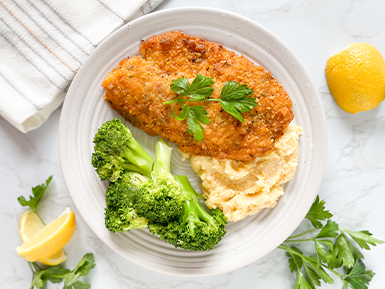
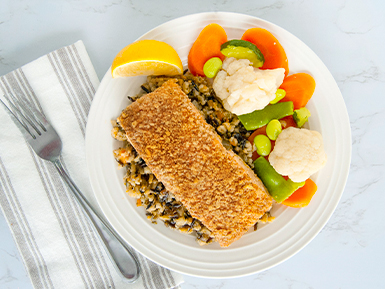
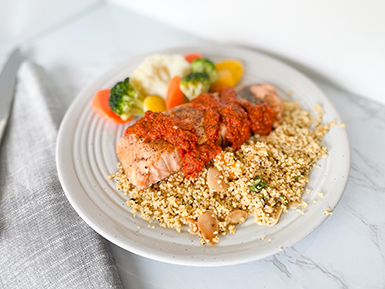
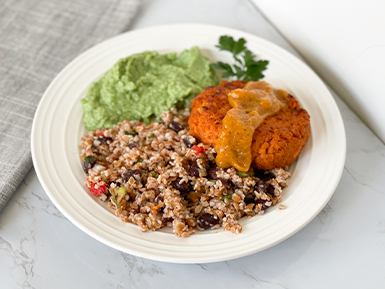
    Diet-to-Go’s meal plans are specifically made for a wide variety of people who want to eat delicious, nutritionally balanced meals without much thinking. Our meal plans include:


    “Recent studies show that GLP-1 agonists and bariatric surgery may help with weight loss, but the excess weight usually returns soon after you stop taking the drugs or have the surgery,” Mirkin wrote. “Before you take GLP-1 agonist weight-loss drugs or have bariatric surgery, be ready to follow the lifestyle changes necessary for long-term weight loss.”


    How Can I Get the Weight Loss Drugs?


    Prescriptions for weight loss drugs depend on your medical situation and history. However, many providers and insurers base it on your body mass index (BMI).

    Patients must have a BMI of 30 or more, or 27-29 combined with another condition, such as high cholesterol or blood pressure.
    The best way to determine if you’re a candidate is to discuss your options with your doctor.


    The Bottom Line


    Ultimately, weight loss drugs like Wegovy, Ozempic, Zepbound, and Mounjaro may be highly effective while using them. However, ensuring results last a lifetime entails a multi-pronged approach that includes fitness and healthy eating, too.


    ————————————————————————————


    Author: Caitlin H
    Diet-to-Go Community Manager

    Caitlin is the Diet-to-Go community manager and an avid runner. She is passionate about engaging with others online and maintaining a healthy, active lifestyle. She believes moderation is key, and people will have the most weight loss success if they engage in common-sense healthy eating and fitness.



    Nutrition Science

  • Watermelon Lime Mocktail (With Hydrating Electrolytes)

    Watermelon Lime Mocktail (With Hydrating Electrolytes)

    Watermelon Lime Mocktail (With Hydrating Electrolytes) – The Real Food Dietitians


    Privacy & Cookies Policy

  • What Is The Relationship Between The Gut & The Skin?

    What Is The Relationship Between The Gut & The Skin?

    Are you diligently following a skin care routine and seeing some improvements, but still battling persistent skin issues like acne, eczema or rosacea? Emerging research suggests a strong connection between our gut health and the condition of our skin, also known as the gut-skin axis. While your skin care routine is making a difference, you can achieve even clearer, healthier skin by synergizing your efforts with a focus on both skin and gut health.

    What Is Gut-Skin?

    The term “gut-skin” refers to the connection between the digestive system and the skin, highlighting how the health of the gut can influence the skin. This relationship is based on the gut-skin axis, a communication network that links the gut microbiome to skin conditions. The gut even plays a role in your nervous system, with your stomach containing more than 100 million nerve cells that communicate with the brain. With this in mind, it’s clear that your is important in your overall health. Science is uncovering the role that maintaining a healthy gut can play in revealing clearer, more radiant-looking skin.

    Historical Perspective

    Nearly a century ago, dermatologists John H. Stokes and Donald M. Pillsbury proposed a groundbreaking theory linking the gut, brain and skin, now known as the gut-brain-skin axis. They suggested that emotional states like stress, worry and fear could disrupt gut health, leading to skin issues. Certified Holistic Nutritionist Maria Marlowe explains, “Research has increasingly supported their ideas, showing how stress and emotional disturbances can impact gut health and, in turn, skin health.”

    How Gut Health Affects Skin

    While science has validated certain aspects of their hypothesis, much remains unknown about the intricate workings of the gut-brain-skin connection. We understand that stress-induced changes in the gut microbiome can reduce beneficial bacteria like Lactobacillus and Bifidobacterium, while allowing harmful bacteria to thrive. This imbalance triggers inflammation and impairs immune function, which are key factors in conditions like acne, psoriasis and rosacea​​. Marlowe highlights that “stressful thoughts can negatively alter the gut microbiome’s composition,” ultimately affecting skin health by promoting the growth of opportunistic bacteria​. 

    “We now also know that certain foods and medications can also disrupt the gut (whether you are stressed or not) setting off that same set of events — negative changes in the gut microbiome, which leads to inflammation in the body and ultimately inflammation in the skin,” explains Marlowe.

    “Note that most common skin disorders (such as acne, psoriasis and rosacea) are considered inflammatory skin disorders. All of these conditions have been linked to some form of gut dysbiosis,” Marlowe explains. 

    There Is Much to Learn About the Gut

    The precise mechanisms by which gut bacteria influence skin conditions remain largely unexplored. Emerging research aims to uncover the molecular pathways involved in the gut-skin connection. Scientists are investigating how diet, stress and medications interact with gut bacteria and affect your skin health. 

    While certain foods and medications are known to disrupt the gut microbiome, leading to systemic inflammation that manifests in the skin, the full extent of these interactions is still under investigation.  

    What Strategies Can I Use to Clear My Skin?

    Here are some steps you can take to improve your gut health:

    Probiotics: As WebMD explains, “Probiotics are live yeasts and good bacteria that live in your body and are good for your digestive system.” Consume probiotics to restore and balance the gut microbiome. Probiotic-rich foods include yogurt, kefir, sauerkraut and kimchi. You can also take probiotic supplements, but it’s always a good idea to check with your doctor first before adding supplements to your diet.
    Prebiotics: According to WebMD, prebiotics are a source of food for your gut’s healthy bacteria. “They’re carbs your body can’t digest. So they go to your lower digestive tract, where they act like food to help the healthy bacteria grow.” These microbiota act as fuel for good bacteria, supporting their growth. Prebiotics can be found in high-fiber foods like onions, garlic, leeks, asparagus, oats and apples.
    Avoid Inflammatory Foods: Minimize consumption of processed foods, sugars and dairy. By cutting them out, you may find that they trigger gut or skin issues.
    Balanced Diet: Eat a balanced diet rich in fiber, lean proteins, healthy fats and fermented foods to promote microbial diversity.
    Hydration: Stay well-hydrated to support overall digestive health.
    Reduce Stress: Manage stress through activities like yoga, meditation and other forms of exercise.

    By taking these steps, you can improve your gut health, which may reflect positively on your skin.

    What About Topical Probiotics?

    Topical probiotic skin care products are growing in popularity. The skin’s microbiome — composed of bacteria, fungi, viruses and mites — plays a vital role in health. Probiotics are oftentimes what people are referring to when they talk about  “good bacteria.”  They help balance the microbiome on the skin, which can defend against environmental stressors and harm. International Educator Brian Goodwin explains, “The skin’s surface is home to a delicate balance of microorganisms, like bacteria and other microbes. This mix of living organisms is known as the microbiome,” which is essential for maintaining skin health. Topical probiotics can help keep the bacteria associated with conditions such as acne and eczema in check.

    Applying probiotics topically can help replenish and fortify this ecosystem, supporting your skin’s first line of defense.  In terms of product recommendations, our Kombucha Microbiome Collection is formulated with pre, pro* and postbiotics to maintain your skin’s natural microbiome. This collection is also formulated with kombucha, white tea, ginger and jasmine which comforts the skin, calms skin inflammation, and helps you achieve a luminous, healthy-looking glow. 

    The Final Takeaway

    The gut and skin are strongly connected, and many skin issues can be addressed by taking good care of the gut. Probiotics play a key role in maintaining a healthy gut, which in turn promotes glowing skin. Always consult with your doctor before starting any new probiotic regimen to ensure it’s right for you.

    Do you swear by incorporating probiotics into your diet? We would love to hear from you. Let us know your thoughts in the comments or join the conversation on social media.

    *Does not contain live probiotic cultures.

  • A Dive Deep into 5 Fish We Love

    A Dive Deep into 5 Fish We Love

    by Caitlin H,

    May 27, 2024

    deep-dive-into-5-fish-we-love

    Fish is a delicious and nutritious protein that often finds its way into healthy diets—and for good reason. It’s a filling main dish packed with a wide range of nutrients. It’s also extremely versatile, affording home cooks and chefs the ability to create unique and tasty dishes that millions of people enjoy daily.

    Diet-to-Go’s chefs are no different. We include fish of numerous varieties on our menus, and we love to get creative with unique flavors and savory tastes that keep our customers satisfied while they work towards their weight loss goals.

    Let’s dive deeper into the health benefits of five of the most popular kinds of fish and our delicious meals that feature them!


    Tilapia


    Tilapia is a popular farm-raised fish native to the Middle East and Africa. It typically has a mild, sweet flavor and flaky skin, although its taste can change dramatically based on where it is raised.


    Omega-3 Fatty Acids: For supporting heart health


    Vitamin B12: For healthy blood cells


    Niacin: For skin, digestive, and nervous system health


    Vitamin D and Phosphorus: For improving bone strength


    Selenium: For preventing cancer


    Herb Crusted Tilapia with Polenta and Broccoli


    Herb Crusted Tilapia with Polenta and Broccoli
    440 calories; 29g protein


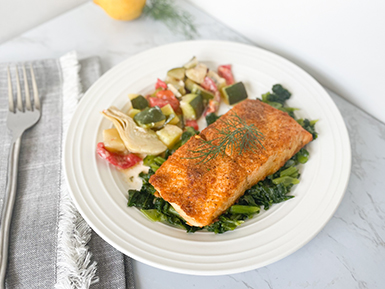
    Lemon Herb Tilapia with Swiss Chard, Artichoke Mix and Broccoli Florets
    Lemon Herb Tilapia with Swiss Chard, Artichoke Mix and Broccoli Florets
    440 calories; 40g protein

    Tilapia Veracruz with Cauliflower Mash and Green Bean Mix

    Tilapia Veracruz with Cauliflower Mash and Green Bean Mix
    450 calories; 45g protein


    Salmon


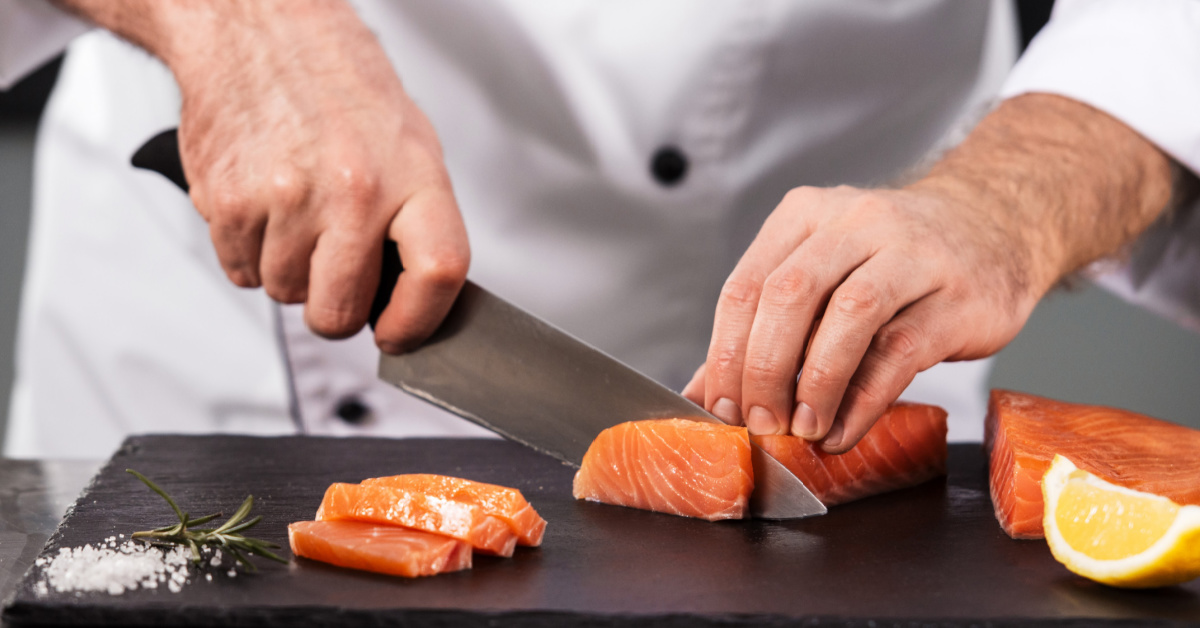
    Salmon is a Pacific and Atlantic fish with many varieties that thousands of farms grow. Its pink color and flaky texture have a nutty, full, buttery flavor that makes it a popular choice worldwide— especially in the U.S.

    Wild Pacific salmon are available at many supermarkets, as are farm-raised varieties. Wild Atlantic salmon is only available via farms as the U.S. has prohibited fishing due to overfishing and pollution.


    Omega-3 Fatty Acids: For supporting heart health


    Vitamin B12: For healthy blood cells


    Vitamin B6: For brain function


    Vitamin D and Phosphorus: For improving bone strength


    Selenium: For preventing cancer


    Potassium: For nerve, muscle, and heart function


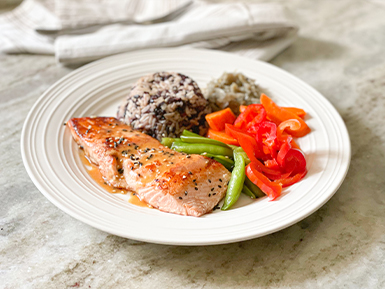
    Herbed Baked Salmon with Veggie Blend and a Three Grain Rice Pilaf
    Herbed Baked Salmon with Veggie Blend and a Three Grain Rice Pilaf
    360 calories; 28g protein

    Harissa Salmon with Mandarin Orange Almond Cous Cous and a Veggie Blend
    Harissa Salmon with Mandarin Orange Almond Cous Cous and a Veggie Blend
    350 calories; 26g protein

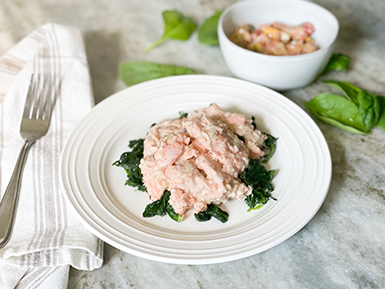
    Salmon Cake over Rice Pilaf with Spinach Cauliflower Puree
    Salmon Cake over Rice Pilaf with Spinach Cauliflower Puree
    380 calories; 23g protein

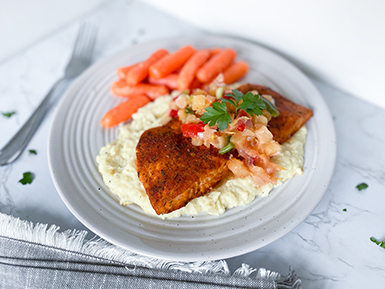
    Baked Salmon with Pineapple Salsa, Turnip & Parsnip Veggie Puree and Ginger Carrots Baked Salmon with Pineapple Salsa, Turnip & Parsnip Veggie Puree and Ginger Carrots
    400 calories; 32g protein

    Salmon Teriyaki Rice Bowl
    Salmon Teriyaki Rice Bowl
    560 calories; 32g protein

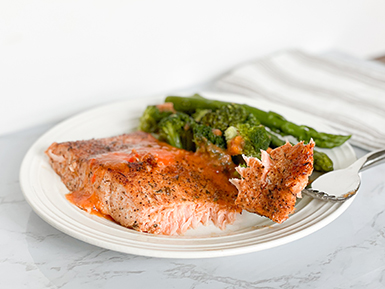
    Baked Cajun Salmon with Asparagus & Broccoli and a Cream Sauce
    Baked Cajun Salmon with Asparagus & Broccoli and a Cream Sauce
    310 calories; 33g protein

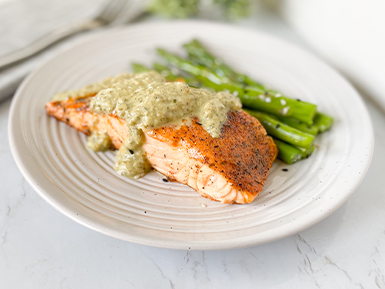
    Chimichurri Salmon with Marinated Asparagus
    Chimichurri Salmon with Marinated Asparagus
    540 calories; 34g protein

    Cumin Salmon with Mustard Greens and a Zucchini Veggie Medley
    Cumin Salmon with Mustard Greens and a Zucchini Veggie Medley
    390 calories; 37g protein

    Salmon and Spinach Salad with Marinated Vegetable Blend
    Salmon and Spinach Salad with Marinated Vegetable Blend
    500 calories; 34g protein


    Shrimp


    Ah, shrimp — a staple in most people’s diet with reports saying the average American downs about 5 pounds per year, making it the most valuable seafood commodity in the country. These days, most regular and jumbo-size shrimp come from farms, although sometimes coastal fishermen catch them and sell them in markets.

    You can find cold-water, pink shrimp, which are cooked and peeled, and warm-water shrimp that are pink, white, or brown, which can be cooked or raw.

    Shrimp tends to have a watery, slimy texture, giving cooks more of a blank canvas to turn it into a scrumptious dish with a wide variety of flavor possibilities. It also pairs well with rice and noodles dishes.


    Potassium: For nerve, muscle, and heart function


    Phosphorus and Calcium: For teeth and bone health


    Iron: For efficiency in carrying oxygen to muscles and throughout the body


    Copper and Zinc: For a strong immune system


    Magnesium: For energy boosts


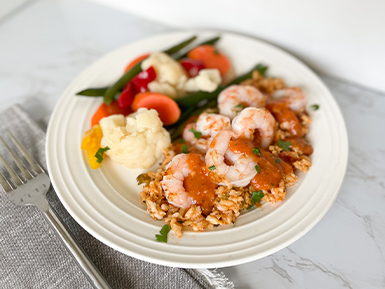
    Spanish Shrimp and Rice
    Spanish Shrimp and Rice
    370 calories; 27g protein

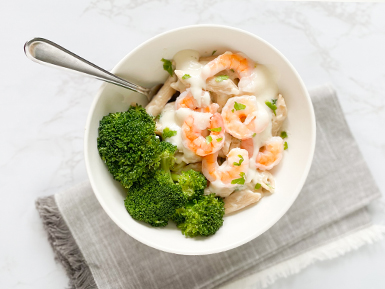
    Shrimp Alfredo and Broccoli
    Shrimp Alfredo and Broccoli
    510 calories; 37g protein


    Tuna


    Tuna is a saltwater fish populous in the Atlantic Ocean. It has a meaty, savory flavor that most people find extremely filling.

    Albacore “white meat tuna” is a favorite at many sushi places, and Skipjack “light meat tuna” is often a star protein at fancy restaurants.


    Omega-3 Fatty Acids: For supporting heart health


    Vitamin B12: For healthy blood cells


    Vitamin D and Phosphorus: For improving bone strength


    Selenium: For preventing cancer


    Potassium: For nerve, muscle, and heart function


    Iron: For efficiency in carrying oxygen to muscles and throughout the body


    Iodine: For a healthy metabolism


    Tuna Meltovers with a Peach Crisp with Walnuts
    Tuna Meltovers with a Peach Crisp with Walnuts
    330 calories; 26g protein

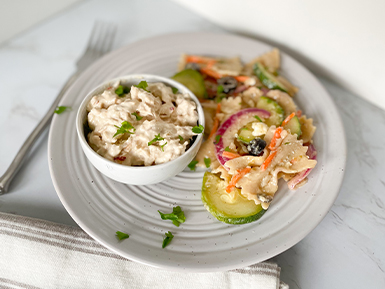
    Greek Pasta Salad with Tuna
    Greek Pasta Salad with Tuna
    520 calories; 19g protein

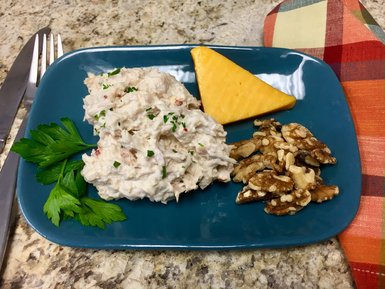
    Tuna Salad with Cheddar Cheese and Walnuts
    Tuna Salad with Cheddar Cheese and Walnuts
    610 calories; 32g protein


    Cod


    Cod is a lean, low-fat fish often found in shallow waters that people have enjoyed for centuries. Its flaky texture and white color are well-known. After years of overfishing, cod is now protected and available at markets and restaurants nationwide.


    Omega-3 Fatty Acids: For supporting heart health


    Vitamin B12: For healthy blood cells


    Niacin: For skin, digestive, and nervous system health


    Vitamin D and Phosphorus: For improving bone strength


    Selenium: For preventing cancer


    Choline: For regulating mood and improving memory


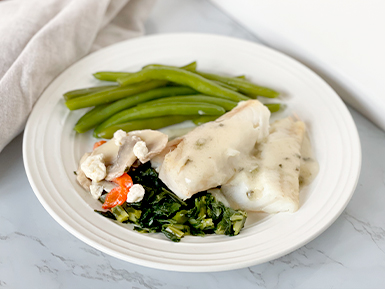
    Boston Cod in Lemon Herb Sauce with Greens, a Red Pepper & Mushroom Blend, and Green Beans
    Boston Cod in Lemon Herb Sauce with Greens, a Red Pepper & Mushroom Blend, and Green Beans
    420 calories; 41g protein

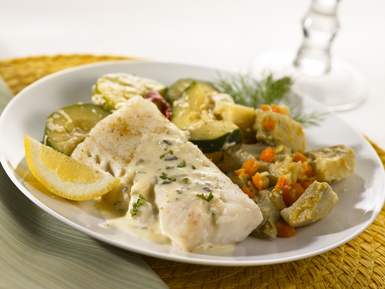
    Cod Loin with Lemon Herb Sauce and Artichoke Barigoule, plus Zucchini Squash Blend
    Cod Loin with Lemon Herb Sauce and Artichoke Barigoule, plus Zucchini Squash Blend
    360 calories; 34g protein

    Ultimately, fish is a tasty, nutritious, lean protein source with versatility that gives our chefs room to get creative — and the end result is something our customers love. You can view our sample menus with many more delicious dishes here.


    ————————————————————————————


    Author: Caitlin H
    Diet-to-Go Community Manager

    Caitlin is the Diet-to-Go community manager and an avid runner. She is passionate about engaging with others online and maintaining a healthy, active lifestyle. She believes moderation is key, and people will have the most weight loss success if they engage in common-sense healthy eating and fitness.


    Ingredients of Success

  • 16 High Fiber Dinner Recipes That Are Super Delicious

    16 High Fiber Dinner Recipes That Are Super Delicious

    16 High Fiber Dinner Recipes That Are Super Delicious – The Real Food Dietitians


    Privacy & Cookies Policy

  • Best Peptide Skin Care Products & Treatments

    Best Peptide Skin Care Products & Treatments

    Wrinkles, fine lines, dry skin. It can be worrisome, or even alarming, when you notice changes in your skin, but peptide skin care products might just be the answer. Peptides may feel like a buzzword in skin care, but they’re so much more than that — they’re a reliable way to diminish the appearance of fine lines and wrinkles for visibly smoother, plumper and youthful-looking skin. Let’s explore the effects of these ingredients, their benefits, as well as spa treatments with similar collagen-boosting effects.

    What Are Peptides?  

    Peptides are a vital active in skin care products, leaving skin looking plump and youthful. When applied to the face, peptides activate the production of protein (such as collagen) in the skin. Collagen is essential when it comes to improving our skin’s appearance. It acts as a building block for skin, bones, joints, teeth, muscles, joints and connective tissues, and gives our skin its firmness and elasticity. Unfortunately, collagen production declines as we age, leaving the skin less youthful-looking. By including peptides in your skin care, you can dramatically improve the appearance of the tone and texture of your skin. 

    Curious about the effectiveness of these ingredients? Let’s take a closer look at product options as well as spa treatments below. 

    Best Peptide Skin Care For Smooth-Looking Skin

    Now that you’re well-versed in the benefits of peptides and collagen, it’s time to explore skin care products that help your skin look healthy and strong. Here are a few of our tried-and-true favorites to enhance and protect the look of your skin.

    The Marine Flower Peptide Collection 

    The botanical peptides and algae extracts found in our Marine Flower Peptide Collection are designed to leave the skin looking firm and elastic. The Marine Flower Peptide Serum and Marine Flower Peptide Eye Cream can be added to any skin care routine to deliver significantly smoother skin that looks truly ageless. This eye cream can be applied morning and night and will not only target the look of fine lines, but dark circles as well. According to Lead Skin Care Trainer Natalie Pergar, the Marine Flower Peptide Eye Cream and Marine Flower Peptide Serum both “refine pores and smooth the look of the complexion.” 

    The Marine Flower Peptide Concentrate supports the benefits of the Marine Flower Peptide Serum by further increasing the appearance of skin firmness and targeting the visible signs of aging. This luxurious, lightweight gel gives your skin a revitalizing boost revealing more supple-looking skin. 94% of users noted smoother skin in just 4 weeks!

    If you want your skin care to work while you sleep, the Marine Flower Peptide Night Cream is a velvety formula containing two unique plant peptide technologies. Within 4 weeks, an incredible 91% of the night cream users noted firmer skin. Like overnight magic, this rejuvenating cream locks in moisture and reduces the look of fine lines and wrinkles for fresh, hydrated, firmer-looking skin. 

    Your lips may not be the first thing you think of when investing in skin care, but your pout is worth taking care of. Plump and smooth your lips with the Marine Flower Peptide Lip Serum. Formulated with marine flower and botanical hyaluronic acid, this silky serum improves the appearance of lines around the lips and surrounding area. It can be applied throughout the day or layered under lip balm or lipstick. Users of the lip serum reported a 37% reduction in the appearance of lip furrows.

    Arctic Berry Peel & Peptide Illuminating System

    The Arctic Berry Peel & Peptide Illuminating System includes three products, all containing our Peptide Illuminating Complex that uses botanical peptides derived from hibiscus seeds. Slough off dead skin cells with our Arctic Berry Enzyme Exfoliant and Arctic Berry Advanced Peel Activator MA10 and lock in moisture with our Arctic Berry Peptide Radiance Cream. This blend of antioxidants and botanical peptides minimizes the appearance of aging and gives skin a firmer and smoother-looking appearance. 

    Applying a thin layer of our Marine Flower Peptide Serum prior to our Arctic Berry Peptide Radiance Cream each night is a powerful combo for skin that feels smooth and healthy. Our Eminence Organics Product Support Representatives explain that this serum will “also help treat redness from dry skin and improve the look of skin tone and texture overall.”

    While the exfoliating treatment should be only used one to two times per week, the peptide cream can be used daily during your morning and night skin care routine. Also available for purchase on its own, the Arctic Berry Peptide Radiance Cream can be used by all skin types, including sensitive, to help battle the look of fine lines and wrinkles.

    You can also receive the professional Arctic Berry Treatment by visiting your closest Eminence Organics spa. This professional peptide treatment will leave your skin looking smooth and radiant. A boosted version of the home care system, the pro treatment “features multiple acids to exfoliate the skin, allowing you to reap the maximum benefit from a unique botanical peptide complex.”

    Citrus Lip Balm

    If vertical lip lines are among your top skin care concerns, you can also pair the Marine Flower Peptide Lip Serum with our Citrus Lip Balm which contains botanical peptides derived from hibiscus seed, as well as shea butter and sunflower seed wax for deep hydration. With daily application for four weeks, lip lines will appear minimized and lips are left looking smooth and full. 

    The Citrus Lip Balm is also part of our Lip Trio designed to erase the look of dryness from the lips, alongside the Lip Comfort Plumping Masque and Citrus Enzyme Lip Exfoliator. Keep reading to learn more about the Lip Comfort Plumping Masque.

    Lip Comfort Plumping Masque   

    As mentioned, you’ll find the peptide-packed Lip Comfort Plumping Masque as a part of our Lip Trio. This deeply hydrating mask contains rich shea butter and avocado oil, as well as peptides, to encourage the appearance of firmer and softer-looking skin.

    Watch Natalie in this In The Mix video to learn more about peptide skin care products.


    Spa Treatments For Smooth Skin

    Skin care products containing peptides aren’t the only solution for skin that looks strong and supple. Support your skin with collagen-boosting spa treatments; you can contact an authorized Eminence Organics spa near you to see what services they offer.

    Microneedling

    Microneedling (or collagen induction therapy) is designed to stimulate collagen production. This treatment creates thousands of microscopic punctures in the skin to induce wound-healing. These micro-injuries trigger the skin’s fibroblasts to synthesize new collagen and elastin. Stefanie Williams MD tells Get The Gloss: “Medical needling gives skin a gentle nudge to remind it to keep making fresh collagen. It’s a very natural regenerative treatment that helps the skin help itself.”

    Laser Treatments

    Fractionated lasers are another go-to. These work similarly to microneedling in that they cause tiny, controlled injuries that trigger the creation of new collagen. In this case, rather than using medical needles, the skin care professional will use resurfacing lasers to stimulate collagen production. Dr. Zeichner tells Harper’s Bazaar: “Lasers work by punching microscopic holes in the skin, creating a controlled burn and taking advantage of the skin’s ability to heal itself after wounds.”

    Microcurrent Therapy

    If your skin is in the early stages of the aging process, microcurrent treatments can be beneficial. This type of spa treatment is best for skin that is showing the earliest signs of aging, as it conditions the skin’s fibroblasts to function optimally and continue to produce healthy, high-quality collagen. In microcurrent therapy, two metal rods that conduct low-level electricity are drawn over the surface of the skin to stimulate and energize facial muscles.

    Have you ever received any of these collagen-enhancing treatments, or used peptide products in your skin care routine? Let us know in the comments below or on social media!

  • Man Uses Diet-to-Go to Shed 100+ Pounds Ahead of Hip Surgery

    Man Uses Diet-to-Go to Shed 100+ Pounds Ahead of Hip Surgery

    by Caitlin H,

    Jun 3, 2024

    Name: Rodney Arnold
    Age: 73
    Occupation: Retired Code Enforcement Officer
    Meal Plan: Keto-Carb30/Mediterranean
    Favorite Meal: Short Ribs
    Start Date: November 2022
    Starting Weight: 365
    Height: 6
    Pounds Lost: 105
    When I get a craving, my go-to trick: A Honeycrisp apple

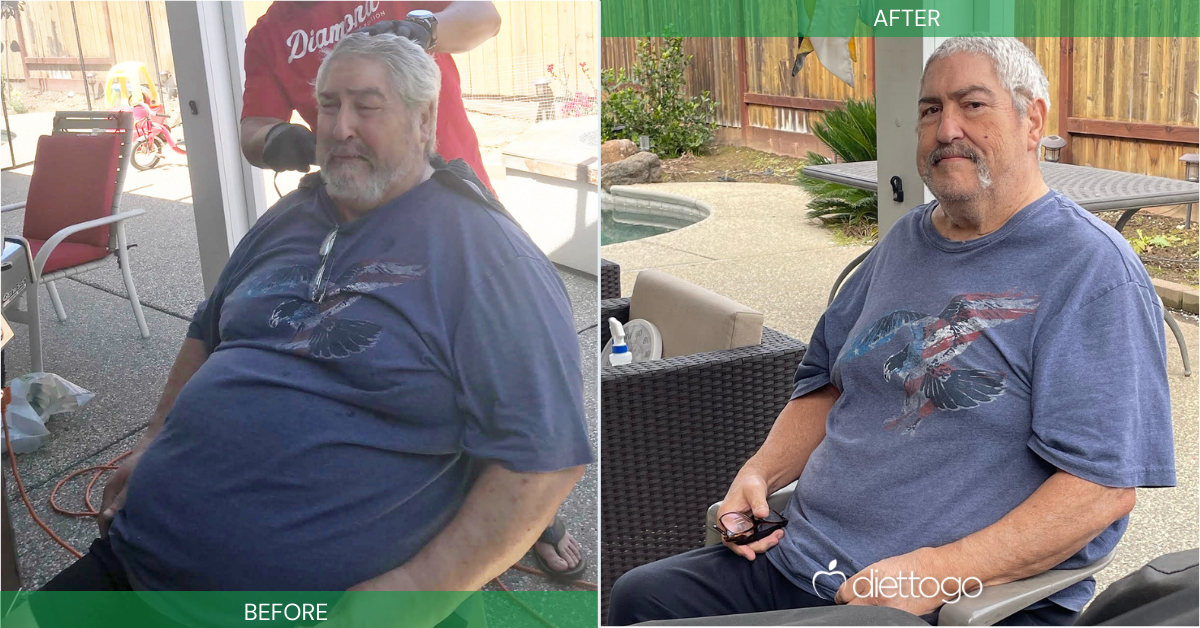
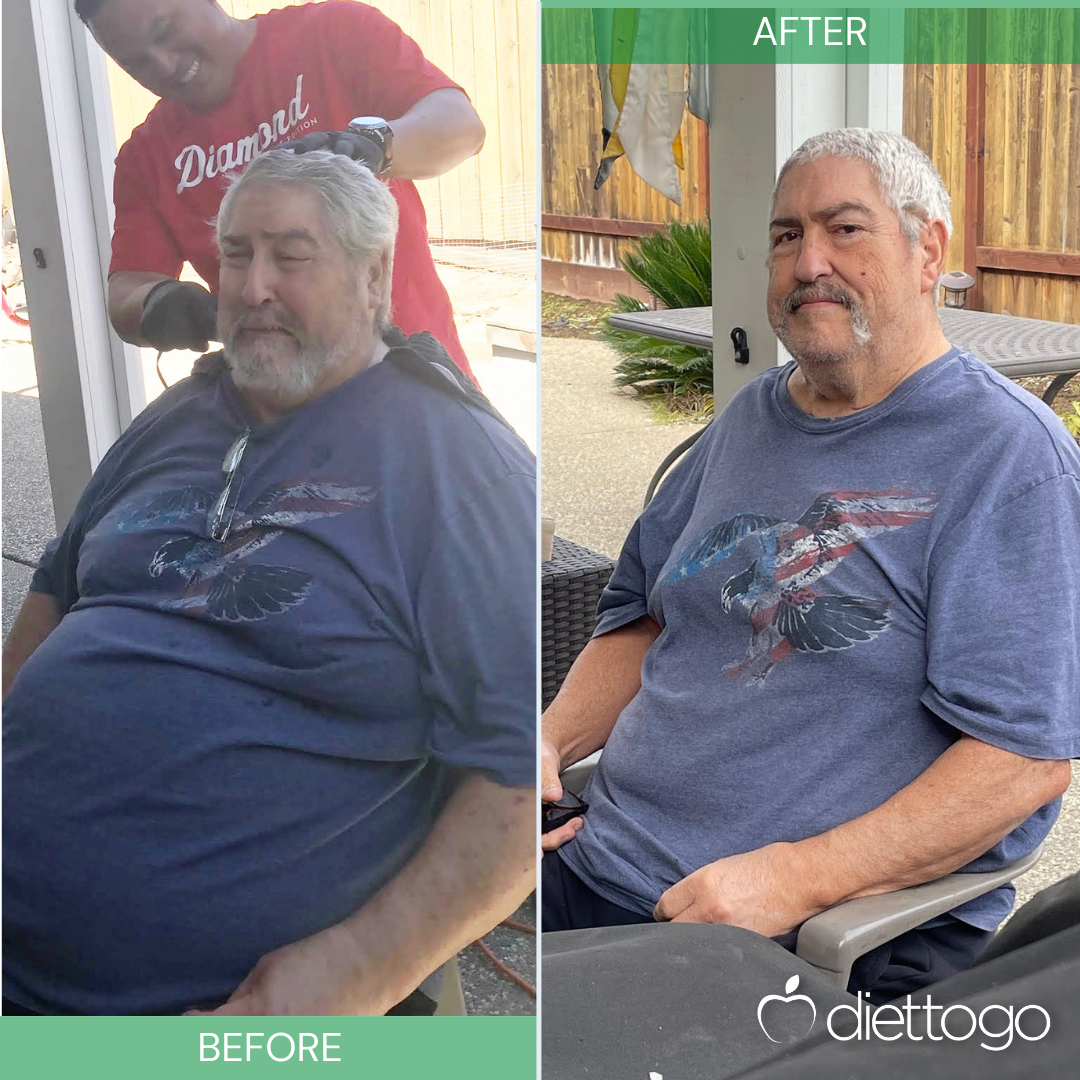
    For many people, a medical scare is the catalyst for making a big life change. That was certainly the case for 73-year-old Rodney Arnold, a retired Sacramento code enforcement officer from Hawaii who has shed more than 100 pounds with Diet-to-Go.

    “My hips are pretty much shot, and I found out I had to have hip surgery,” Rodney said, remembering a doctor’s visit in late 2022. “They wouldn’t touch me unless I lost a lot of weight and my BMI was 30.”

    Rodney said that was the push he needed to commit to dropping to 250 from his then-current 360-pound weight — a change he needed to make to return to his former lifestyle that brought him the fulfillment he desired in his retirement.


    ‘I’d love to get back to it’


    When Rodney retired in 2008, he and his wife spent time touring the western United States in their RV. He golfed. He swam. He played with his 10 grandchildren. He walked his dog. He wore his favorite Hawaiian shirts.

    “Part of the problem is I can’t step without support,” he said. “I have to use the walker. Because of [that], we sold the motor home and stay in a home.”

    Rodney added that his immobility severely limits his ability to enjoy any activities he loves.

    “During summer, we have a pool,” he said. “Since I can’t put pressure on my leg all summer, I trod water for an hour daily. But in the winter, there’s no pool, no exercise, no way to work out.”

    Having the hip surgery—something only possible if he lost weight—was vital for Rodney to return to the things he loves. However, Rodney said that not exercising or being able to move initially made his weight loss extremely challenging.

    “I dropped to 1,000 calories a day,” he said. Experts recommend eating a minimum of 1,200 calories a day to avoid going into starvation mode, which can ultimately negatively impact weight loss.”


    ‘The selection is incredible’


    Rodney knew eating just 1,000 calories a day wasn’t sustainable. He and his wife, Donna, began researching weight-loss meal plans.*

    “We came across Diet-to-Go, and the meal variety, their selection, really appealed to me. That’s why I chose it,” Rodney said.

    Enjoying his wife’s delicious cooking and wine in large portions played a significant role in Rodney’s weight gain, so he said variety and taste were essential to ensuring a successful diet and weight loss plan.

    “It was easier to let that go because Diet-to-Go food was so tasty,” he said.


    ‘The customer service is outstanding’


    Rodney also found that Diet-to-Go’s customer service supported his goals.

    “Everyone is so willing to accommodate your requests,” he said. When I wanted to switch two meals a day or when I got too many breakfasts, they said, ‘no problem,’ and fixed the issue,” he said.

    Rodney added that the Diet-to-Go online portal makes it straightforward to substitute meals and understand his weekly nutrition.

    “I’m minimally tech-savvy; I get myself into trouble if I get too into technology,” Rodney laughed. “[The portal]. speaks to the way Diet-to-Go is organized. It’s easy for an old person like me to use.”


    ‘Pain is a great motivator’


    Rodney said one of the most significant things that’s kept him on track since he started with Diet-to-Go in November 2022 is the end goal of achieving the necessary BMI to make hip replacement surgery a reality.


    “There wasn’t much doubt because of my goal,” he said. “I had to lose weight. I had to get my BMI down. Pain is a great motivator. ,” In March, he did just that.

    “At first, I was very scared of my weight and realized that my BMI had to be 30 or below before surgery. But, I met that BMI,” Rodney said, adding that his surgery is now scheduled for May 2024.

    Rodney said his physical therapist and other medical professionals have been amazed at his achievements.

    “I went into different doctor’s appointments along the way, and they saw my weight loss and were very impressed, Rodney said.

    The results are something he wholeheartedly credits to leveraging Diet-to-Go.

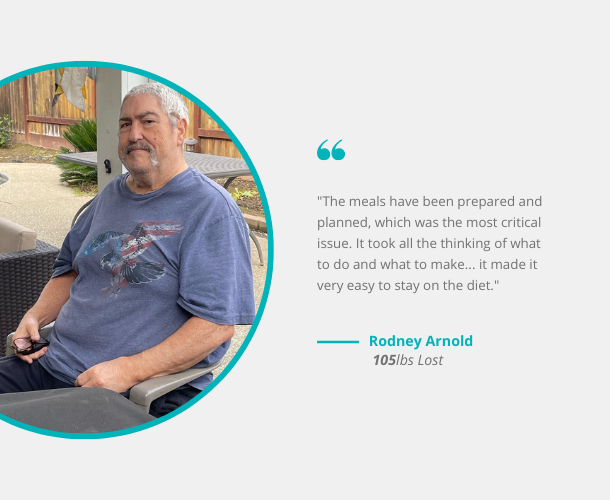
    “​​The meals have been prepared and planned, which was the most critical issue,” Rodney said. “It took all the thinking of what to do and what to make out of the picture. You did all the prep, work [and] the meal planning, and it made it very easy to stay on the diet.”


    ‘I’m much more aware.’


    Rodney plans on sticking with Diet-to-Go until he reaches his goal of 250 pounds and gets both hips replaced.

    “After that, I can get more physically active and be able to burn calories for the food intake,”
    Rodney said. “Having Diet-to-Go meals, I’m also much more aware of portion control [and] much more balanced. I’ve gotten used to having cauliflower [and] broccoli. I plan to be much more aware of those things.”

    He’s enjoying little victories like fitting back into his favorite clothing for now.
    “I was born in Hawaii. I’m a Hawaiin shirt, shorts, and flip-flops guy,” Rodney said. “I had to pack away my Aloha shirts for a while, but now I can wear many of them again. I missed that. I’m proud I get to wear those shirts that I’d thought I’d have to give up forever.”
     

    ————————————————————————————


    Author: Caitlin H
    Diet-to-Go Community Manager

    Caitlin is the Diet-to-Go community manager and an avid runner. She is passionate about engaging with others online and maintaining a healthy, active lifestyle. She believes moderation is key, and people will have the most weight loss success if they engage in common-sense healthy eating and fitness.



    Diet-to-Go Success Stories

  • 3 Tips to Improve Body Image

    3 Tips to Improve Body Image

    It’s that time of year when body image tends to worsen (lookin’ at you summer!). Follow these three tips to help improve body image during the challenging summer months but keep them in your back pocket to pull from all year ’round!

    woman in white tank top looking down touching shoulderwoman in white tank top looking down touching shoulder

    What is body image?

    I talk about this in my best body image books post. There are so many different ways we could describe body image but I think of it as the mental picture you have of your body, which includes thoughts, feelings, attitudes and beliefs toward your body.

    Body image is influenced by so many factors including systemic oppression (the culture telling you that thin bodies are best and fat bodies are bad), your genetic makeup, your history (including any trauma), your values, and so on.

    Body image healing work is a practice – it’s not a destination you arrive at and then you can kick back on the lounge chair and drink margs all day (although wouldn’t that be nice?!). It’s a journey. A practice of continuing to come home to yourself and to your body.

    Some days/weeks/months will be more challenging than others and will require more attention, energy, and grace, and other seasons will feel a little easier and lighter – maybe you won’t have to think about it all that much.

    Body image healing work is about being in right relationship with your body. Think about other relationships you’re in – maybe with a partner, child, or friend. Some days you feel really connected with and supported by that person and other days you might feel at odds with them or disconnected.

    You might feel lots of love toward that person one day and be completely frustrated with them the next. It’s the same experience for the relationship you have with your body.

    And as I’m sure we’ve all experienced at one point or another, relationships take work. Sometimes hard work. Being in right relationship with your body takes work too. And that work can look like these three tips I offer up below (and of course can look like other things I don’t mention below – I only have so much space in one blog post!)

    Tips to work toward better body image

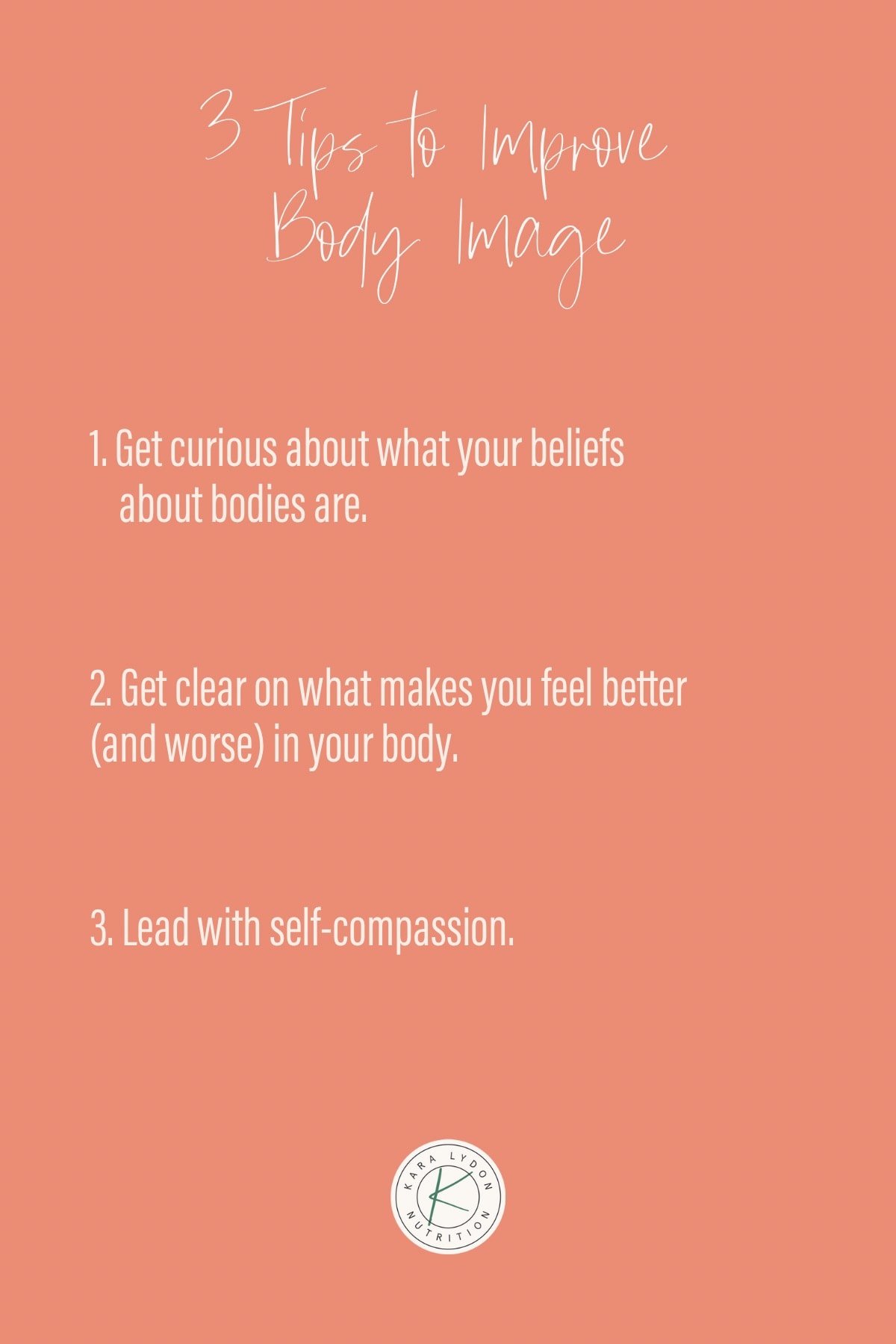
    1. Get curious about what your beliefs about bodies are.

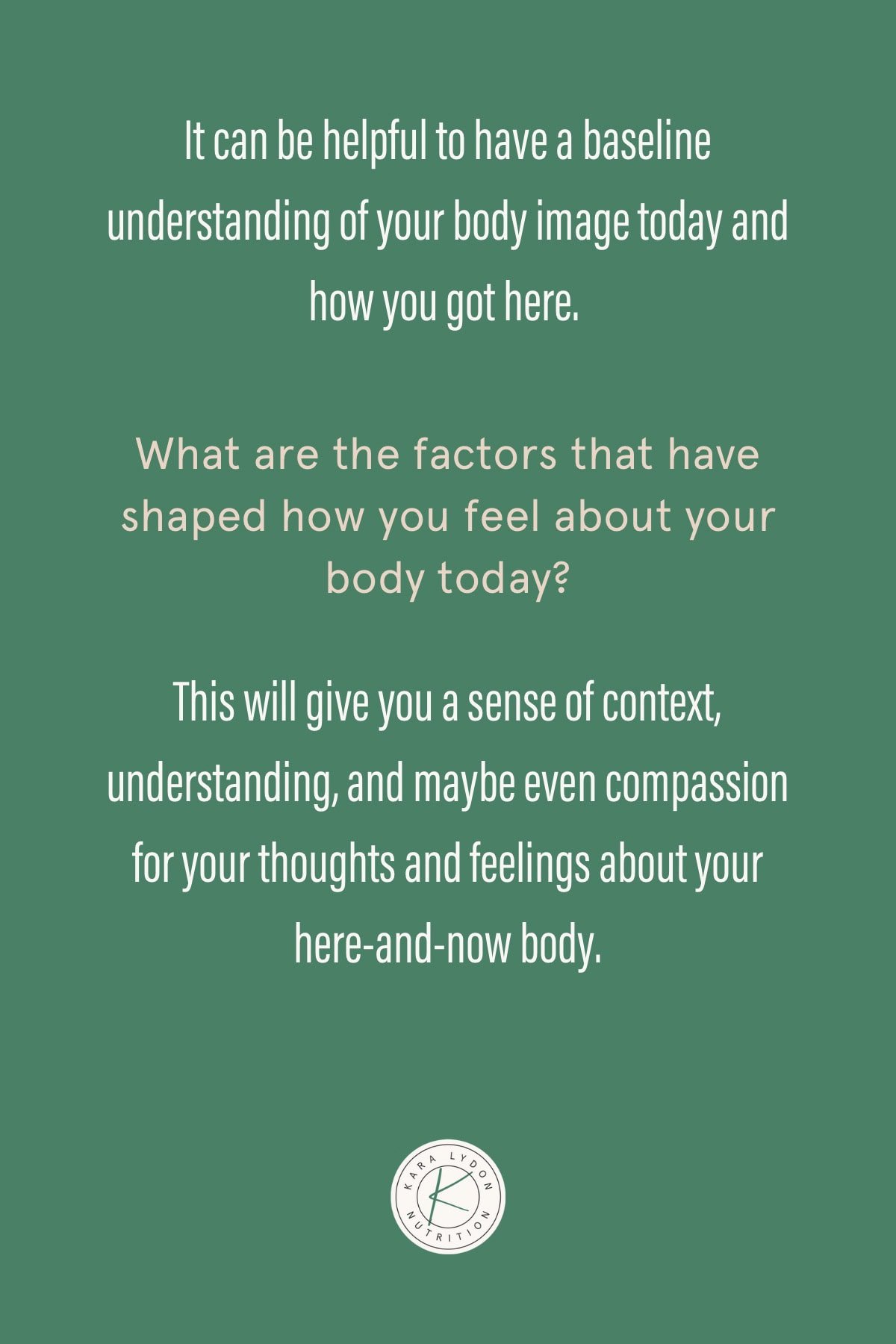
    Before you dive in, I find it can be helpful to have a baseline understanding of your body image today and how you got here. What are the factors that have shaped how you feel about your body today? This will give you a sense of context, understanding, and maybe even compassion for your thoughts and feelings about your here-and-now body.

    Graphic with quote: “It can be helpful to have a baseline understanding of your body image today and how you got here. What are the factors they have shaped how you feel about your body today? This will give you a sense of context, understanding, and maybe even compassion for your thoughts and feelings about your here-and-now body.”Graphic with quote: “It can be helpful to have a baseline understanding of your body image today and how you got here. What are the factors they have shaped how you feel about your body today? This will give you a sense of context, understanding, and maybe even compassion for your thoughts and feelings about your here-and-now body.”

    Isn’t there a saying that in order to know where you’re going, you have to understand where you’ve been? I feel like I didn’t just make that up and I’m not sure who to attribute it to but I think it applies here :).

    Maybe you create a body image timeline where you map out early childhood, school-age, pre-teen, adolescence, young adulthood, adulthood, and jot down any memories of experiences or events during those times in your life that influenced how you felt about your body (positive, negative, or neutral). Maybe you changed a behavior or took some action (i.e. started dieting) because of it and you can write about that too.

    And/or maybe you do some journaling on the following reflection questions:

    What are your current beliefs about bodies?

    Who handed you those beliefs?

    Are those your beliefs or someone else’s?

    Where did you learn that some bodies are better than others?

    How strong is each of those beliefs (rate on scale of 1-10)?

    2. Get clear on what makes you feel better (and worse) in your body.

    Alright ya’ll. Here’s what makes body image so tricky. It’s dynamic and perceptual in nature – it’s constantly changing based on internal and external factors.

    Graphic with quote: "Here’s what makes body image so tricky. It's dynamic and perceptual in nature - it’s constantly changing based on internal and external factors."Graphic with quote: "Here’s what makes body image so tricky. It's dynamic and perceptual in nature - it’s constantly changing based on internal and external factors."

    Here’s an example of how this plays out: 

    You wake up in the morning, you put on a pair of baggy sweatpants, and you sit down next to someone who is bigger than you. In this moment, you might feel smaller and maybe better about your body.

    Later in the day, after you’ve eaten a couple of meals, you’re feeling a little bloated, and now you’re wearing tight jeans. You hop on the train and sit down next to someone who is smaller than you. In that moment, you might feel bigger and maybe worse about your body. Your body size hasn’t objectively changed over the course of a day but the perception of your body has significantly changed.

    Because body image is so perceptual in nature, it can be helpful to have a solid understanding of your perceptual body image triggers – what are the things that make you feel more positive to neutral about your body and what are the things that make you feel more negative toward your body?

    Here are some examples of things that might make people feel better in their bodies:

    hiking

    cooler weather

    wearing cute comfortable clothing

    relatively low stress levels

    yoga

    getting a massage

    taking a shower

    skincare

    Here are some examples of things that might make people feel worse in their bodies:

    social media

    stressful life events

    PMS or being on their period

    being bloated / experiencing GI distress

    comparisons or body checking

    warmer temperatures

    sweating

    not getting dressed in the morning

    What would it feel like for you to make your own list? What would go on it?

    You can use this perceptual body image map to help better understand your experience. If you’re feeling negative toward your body, you could reference your list to help you get a sense of what else might be going on that influenced that. You could also use the map to help you remember what tools or activities help you to feel slightly better in your body so you can pull from them.

    Typically these things aren’t magic fixes that make you suddenly love your body but if you notice they make you feel 5% better about your body, that’s a win! We’re aiming for small subtle shifts, not perfection (because spoiler alert: perfection doesn’t exist).

    3. Lead with self-compassion.

    Self-compassion is part of the foundation of body image healing. Self-compassion involves treating yourself with kindness, being mindful in the moment of emotions without judgment, and remembering that your lived experience is part of being a human and others are struggling with the same things. If you want to learn more, check out my blog post that dives deeper into the the 3 tenets of self compassion.

    Self-compassion can be used every step along the way of your healing journey. This too is a practice though so give yourself grace as you hone this skill.

    Self-compassion involves treating yourself with kindness – this includes your body. This may look like:

    nourishing your body with enough food that feels good

    not punishing your body with rigorous exercise but instead engaging in movement that feels good

    showering regularly and washing your face

    going to bed early so you get enough sleep

    resting when you’re tired or something aches

    Graphic with quote: " self-compassion is part of the foundation of body image healing. Self-compassion can be used every step along the way of your healing journey. This too is a practice though so give yourself grace as you hone this skill. Self-compassion involves treating yourself with kindness - this includes your body.”Graphic with quote: " self-compassion is part of the foundation of body image healing. Self-compassion can be used every step along the way of your healing journey. This too is a practice though so give yourself grace as you hone this skill. Self-compassion involves treating yourself with kindness - this includes your body.”

    Self-compassion can also be utilized when you’re having a tough body image day. Rather than beating yourself up for experiencing negative body image, can you talk to yourself with warmth and kindness – “I’m sorry sweetheart, it’s so hard to sit with these negative feelings.”

    Can you remind yourself that there are so many other people around the world that are also having a tough body image day and can you connect to the collectiveness of this very normal human experience to feel less alone?

    Can you sit with the uncomfortable feelings and let them move through you rather than pushing them away?

    Self-compassion can also be practiced when you’re not further along on your body image healing journey or when you feel you “should” be further along. Can you kindly remind yourself that body image healing is a practice and journey, not something to perfect or a destination to arrive at?

    Can you appreciate this part that tries to manage your healing and wants what is best for you? Can you remind yourself that everyone is on their own healing journey and everyone is circling their own mountain to see the same face over and over. Remind yourself you are not alone on this journey.

    Graphic listing three tips to improve body image. Graphic listing three tips to improve body image.

    What would you add to this list? What has helped you improve your body image? Tell me in the comments below!

    For more support around body image, check out my other posts below:

    Best Body Image Books

    5 Tips to Cope with a Bad Body Image Day

    3 Ways to Navigate When Clothes Don’t Fit You (without another diet!)

    How to Make Your Social Media More Body Positive

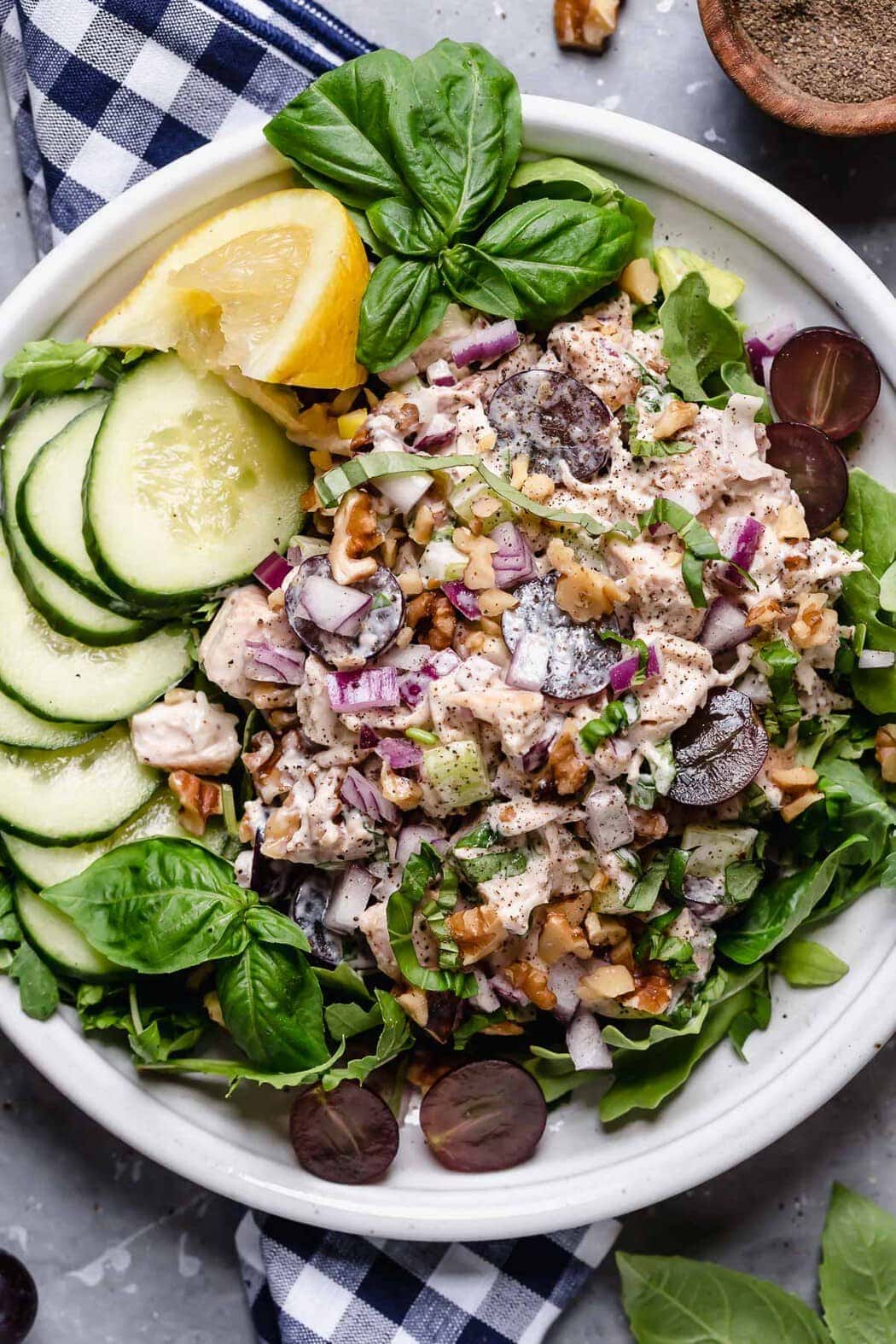
  • Classic Chicken Waldorf Salad (With No Added Sugar)

    Classic Chicken Waldorf Salad (With No Added Sugar)

    Classic Chicken Waldorf Salad (With No Added Sugar)


    Privacy & Cookies Policy

  • What Causes Acne? | Eminence Organic Skin Care

    What Causes Acne? | Eminence Organic Skin Care

    Acne is not a one-size-fits-all condition. Depending on its cause, acne may manifest as occasional pimples or as a more chronic, lifelong issue. In fact, up to 80% of people will experience acne at some point in their lives. One of the best ways to combat acne is to address its root cause. Here are five common causes of acne, along with our tips for banishing breakouts for good.

    What Causes Acne?

    As International Trainer Brian Goodwin explains, acne is an inflammatory skin disease that’s caused by things like excess production of sebum, dead skin cells or harmful microbes colonizing the skin. To complicate the matter, you may be dealing with a combination of these issues. Let’s review these factors and discuss how they play a role in the emergence of breakouts, blemishes and more chronic acne: 

    1. Clogged Pores

    Every pimple begins the same way: with a clogged pore. Each of our pores is made up of a hair follicle containing a sebaceous (oil) gland which performs a key function for skin health. Sebaceous glands release sebum, a waxy, oily secretion that helps to lubricate and soften the skin’s surface. While this is necessary for keeping the skin properly balanced, there can be issues with this process. When sebum travels along the follicle towards the skin’s surface, it can get trapped by dead skin cells blocking its path. Acne occurs when oil and debris combine with trapped bacteria, causing the infection and inflammation that we call a breakout.

    2. Excess Oil Production

    Is your skin extra oily? Oily skin is thought to be caused by a genetic predisposition to overproduce the hormone dihydrotestosterone (DHT) which causes the skin’s sebaceous glands to produce more sebum. Sebum, while often seen as an annoyance for oily skin types, plays a crucial role in maintaining the skin’s moisture barrier and protecting it from harmful environmental factors and microbes. However, when the skin produces too much oil, its pores enlarge and stretch in an attempt to contain the surplus. If excess oil becomes trapped, it can combine with the dead skin and bacteria that have settled inside the pore, causing breakouts. The severity of your acne breakouts can depend on your body’s propensity for excess oil production. 

    3. Bacteria

    Everyone has acne bacteria living on their skin, but not all acne bacteria trigger pimples. According to Medical News Today: “Research suggests that the severity and frequency of acne depend on the strain of bacteria.” The strain of bacteria that contributes to acne is called Propionibacterium acnes, or P. acnes. This bacteria is generally harmless, but under certain conditions (such as in a clogged pore, surrounded by oil and no air) can trigger an immune response that causes inflammation of the surrounding tissues.  

    4. Hormones

    Hormones influence acne at all ages, with hormonal fluctuations often increasing sebum production and leading to breakouts. Changes in the body’s androgen levels, which are common during puberty, menstrual cycles or pregnancy, can trigger acne. Typically, hormonal acne appears on the lower half of the face, such as along the chin and jawline. It’s no secret that many teens struggle with acne. Teen acne, a form of hormonal acne, is caused by changing hormones affecting sebum production. The key difference is that teen acne is closely associated with puberty and often clears up at the onset of adulthood, explains Brian. Acne that persists beyond the age of 25 is referred to as persistent acne. Teen acne can appear on the face, neck, chest and back, while adult acne is more often localized to the face.

    As Brian explains, hormonal fluctuations can alter the balance of sebum’s components, such as fatty acids and triglycerides. Additionally, hormones influence cellular turnover rates and the skin’s inflammatory response, leading to congested pores and potential infections.

    5. Genetics

    Unfortunately, your own unavoidable genetic makeup often comes into play when it comes to breakouts. Some people are genetically more prone to their sebaceous glands getting inflamed by hormones, oil and bacteria. The odds are that if one of your parents had moderate to severe acne, you are likely to experience symptoms as well.

    Acne Treatment Options

    One of the best ways to tackle the causes of acne is through your skin care routine. To keep your skin clear and blemish-free, we recommend using our Acne Advanced 3-Step Treatment System. The products in this innovative collection are designed to treat acne and prevent future breakouts, with results in as little as 28 days. 

    For best results, contact your favorite Eminence Organics Spa Partner for a consultation or an acne facial to get a routine tailored to your skin’s unique needs.

    Do you suffer from acne? How has it affected you, and what has helped you find relief? We’d love to hear your story. Share it with us in the comments and join the conversation on social media.

new online casino
Padişahbet
Padişahbet Güncel Giriş
Padişahbet Giriş
Crypto Casino