Author: admin

  • I Tried Gua Sha For My Puffy Eyes And Here’s What Happened

    I Tried Gua Sha For My Puffy Eyes And Here’s What Happened

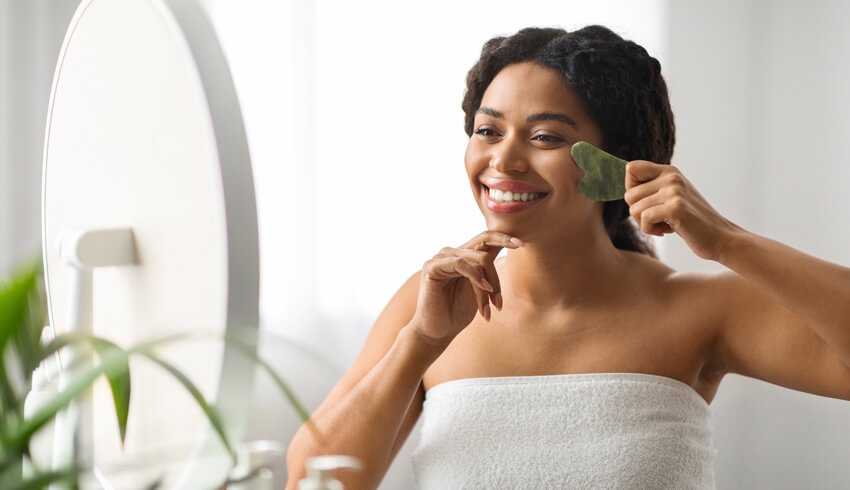
    My undereyes have been puffy for as long as I can remember. As far back as high school, I would apply frozen spoons or cucumber slices to the area hoping to shrink the bags. Since then, I’ve tried to eradicate them with lotions, potions, concealers, lasers and even had my own plasma injected into the area. And while I’ve had some luck camouflaging those pesky, puffy pouches, nothing has worked as a long-term solution. Enter: gua sha, the ancient technique that’s been practiced for centuries. Always eager to try anything in the name of beauty, I decided to stop sleeping on this trend and give it a try. 

    Why Using Gua Sha Can Treat Puffy Eyes

    Like with a lot of skin issues, there can be many factors that contribute to puffiness under the eyes. Some of the most common culprits include allergies, genetics, aging, lack of sleep and lifestyle factors like smoking, drinking alcohol and consuming too much salt. While some of these causes can be controlled (or at least mitigated), others are just a fact of life. Sometimes the puffiness under the eye is the result of fluid retention, but it can also be caused by fat deposits under or around the eye — which can be a lot harder to treat. Lucky for me, my puffiness is a fluid issue, which makes me a good candidate for this gua sha technique.

    By now, you’re probably well aware of the ancient Chinese therapeutic method of gua sha. It’s known to have several health and beauty benefits — from naturally lifting the face to reducing the look of cellulite and even scalp massage. When it comes to the issue of puffy eyes, gua sha is said to improve lymphatic flow and reduce puffiness under and around the eyes by moving the stagnant fluid out of the area. As I mentioned, I have dealt with puffy eyes since I was a teenager, so I was determined to give this method a try. See below for my results!

    Treating My Puffy Eyes

    I attribute my issues to a few things, namely genetics (thanks, Mom!), food allergies and a (self-diagnosed) sluggish lymphatic system. Lucky for me, salt doesn’t make them worse, because I’m not sure even vanity could curb my sushi addiction. I also tell myself that a little caffeine and a couple of cocktails aren’t exacerbating things. Maybe I’m in denial but I’d rather try less extreme solutions than cutting out all of my small vices. 

    Because the level of puffiness fluctuates based on a few lifestyle factors and seems to be more about water retention than anything else, my esthetician recommended trying gua sha at home to help move the stagnant fluid from the area to flush it out of my system. She performed it on me during a facial and talked me through the process so I could repeat it on myself in between spa appointments.

    My At-Home Gua Sha Routine 

    I’ve tried using a gua sha tool on my face in the past to lift the look of my cheeks and help define my jawline. I have noticed small, temporary improvements to the look of those areas, but nothing permanent. Like with a lot of facial massage techniques, the results tend to only last for a few hours. I love to perform them before a big event where I want to look my best, but I’ve never been good about keeping up with the practice on a regular and consistent schedule. This time I committed to trying it for 30 days in hopes of creating a daily habit that might garner longer-lasting results. I followed the steps outlined here and have added a few extra tips that helped amp up my results: 

    Start with a cold gua sha tool, straight out of the freezer. This cold therapy hack helps lessen inflammation and swelling by reducing blood flow to the area. And it just feels so good. 

    I apply Hibiscus Ultra Lift Eye Cream to the area under my eye and my eyelid. It’s a lightweight eye cream that contains ingredients like caffeine that reduces the look of puffiness, plus ice wine and green algae that tighten the appearance of skin. It’s also cool and soothing upon application and provides just the right amount of slip to allow the gua sha to glide along the delicate eye area without tugging the skin. As an employee of Eminence Organic Skin Care, I’ve tried a lot of their eye products, and have been a fan of this cream on its own, so adding the gua sha to the mix takes it to the next level for me. I dab it on the eye area from the outside of the eye in, and then up and along the brow bone. 

    Side note: When using the gua sha at night, I use the Lavender Night Eye Cream. It’s a richer cream and I love the way it softens, moisturizes and revitalizes the look of the area while I sleep. Another favorite is the Marine Flower Peptide Eye Cream. It’s super hydrating and I’ve noticed that it helps with the look of puffiness, even when I’m not using the gua sha. Day or night, I sometimes also add a couple of drops of the Facial Recovery Oil into the mix. It’s so luxurious, deeply nourishing and smells amazing. 
    My Results

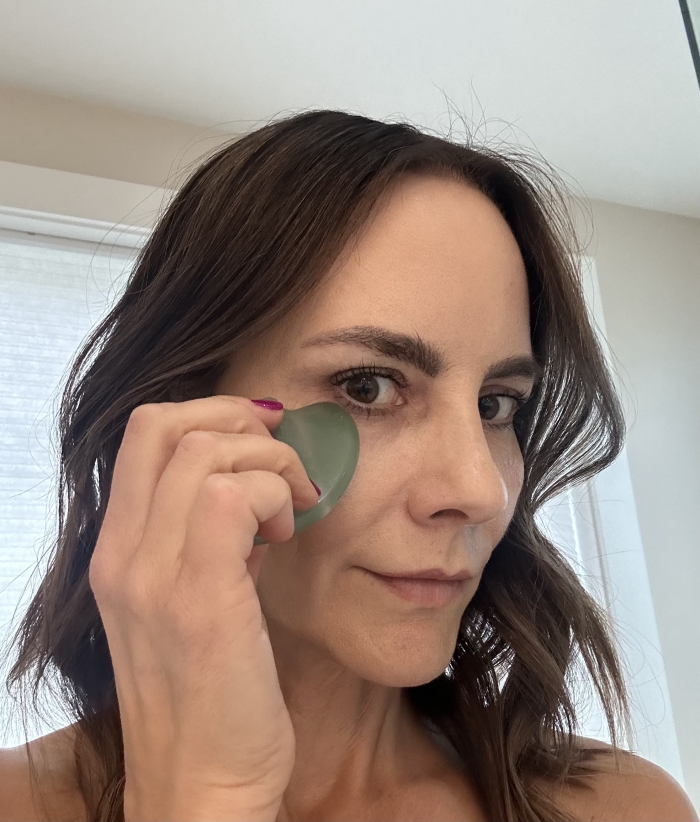
    After four weeks of using the gua sha technique once a day, either at night or in the morning, I have to say, I’m pretty impressed with the results. I’ve definitely noticed a reduction in the puffiness around my eyes, as well as some other benefits. The area is brighter and I look more awake, even after a late night or a less-than-restful sleep. Because I combined the daily gua sha ritual with some of my favorite Eminence Organics’ eye creams and was so committed to using them every single day, I’ve noticed a difference in the way that delicate skin looks. It appears tighter and the fine lines and wrinkles that I’m used to seeing are less noticeable. I think the combination of the gua sha massage and the eye creams really took my results to the next level. 

    Will the results last? Like with a lot of skin care practices, consistency is key. Because I committed to the process and made the time every day, I saw a positive change. But, let’s be real, sometimes life gets in the way. There were mornings when I was rushing to get out the door and had to promise myself I would make time before bed. Some nights I really had to force myself to spend the extra five minutes on my skin care routine. But the results I was seeing were noticeable enough to keep me on track. Will this level of commitment continue? I’d like to think so, but we’ll see. 

    Do you want to target puffiness under and around your eye area? Visit an Eminence Organics Spa Partner near you to find out what products will address your issues. 
  • Why Vitamin C Burns Your Skin and How to Stop It

    Why Vitamin C Burns Your Skin and How to Stop It

    Vitamin C, when used topically in a serum, is widely acclaimed as one of the best ingredients for brightening skin, boosting collagen production, and protecting skin against environmental damage. It’s so popular that even at the 2024 Medical Spa Show that I attended, vitamin C was a huge topic of conversation. However, not everyone is as positive about it as you may think. Whether you’re an esthetician, dermatologist, or just a skincare enthusiast, you’ve likely heard of one major downfall when it comes to this ingredient: the vitamin C acid burn.

    So, what is this? Certain vitamin C formulas, when applied to the skin daily, can cause a burning and stinging sensation, along with redness, skin that’s hot to the touch or a general feeling of irritation. This occurs because a topical vitamin C is eliciting a nervous neural response in your skin. As your skin senses exposure, it tries to warn you against something it doesn’t want– in this case, a low pH product. However, I don’t believe this side effect should discourage you against vitamin C entirely– let me explain.

    Benefits of Vitamin C In Your Skincare Routine

    The addition of a topical vitamin C serum into your skincare routine can be extremely beneficial for your barrier and improve overall skin health. Here are the most notable reasons why.

    Brightens Skin ToneLikely the most revered benefit, vitamin C lessens pigment production in skin, making it look brighter.Boosts Collagen ProductionNot only does this ingredient help protect the collagen you already have by inhibiting enzymes that generally break it down, but it also aids in healthier collagen production.Protects Against Environmental DamageVitamin C’s powerful antioxidant properties neutralize free radicals and protect the skin from damage caused by UV radiation, pollution, and other environmental stressors.Enhances Skin HydrationThis ingredient has also been shown to have moisturizing properties, helping increase hydration levels and plump skin.

    Understanding Vitamin C Sensitivity

    Let’s get to the bottom of why this painful burning and stinging sensation sometimes occurs– and what you can do about it!

    Why Does Vitamin C Burn or Sting?

    The burning sensation is generally caused by three things:

    A really low pH. Low pH levels of 2.5-3.5 can potentially irritate the skin. They can increase the acidity of a serum, leading to a compromised barrier and a higher potential for stinging, especially for sensitive skin.A high quantity of ascorbic acid. This ingredient needs to have a minimum of 8% to have any efficacy in skin. At around 22%, the skin stops being able to absorb it. So most of these vitamin C serums that sting have a low pH and high quantity of ascorbic acid. This acid is a very small molecule, so it can easily get into the skin and disrupt its natural pH balance.A compromised barrier or recent use of actives. People who use active ingredients (retinol, retinoids, exfoliating acids, etc.) and people with compromised barriers are more likely to feel a stinging sensation. This is because when you use exfoliating acids or retinoids, you experience a lot of skin turnover, meaning that the skin on top is more raw and exposed. If you already have a reduced barrier and continue to use vitamin C, you won’t have enough lipids on your skin to help protect it from a product with a low pH. This is going to cause a more negative experience, and in turn, can actually lead to more inflammation.

    Don’t Give Up – There’s a Solution!

    Just because you may be dealing with a vitamin C acid burn, doesn’t mean you have to forego the ingredient entirely. There are still ways to receive all of the benefits of vitamin C– without the acid burn! Let’s discuss.

    What to avoidLow-pH Products: These can lead to long-term inflammation in the skin, causing accelerated signs of aging and increased pigmentation (once your body receives a signal that there’s inflammation, increased pigment production may occur). Look for formulas with a ph range of 5.0-5.8. A reputable brand should tell you the pH if it’s not publicly listed.A No-Pain-No-Gain Philosophy: Unlike retinol, pain (ie stinging) isn’t a sign of vitamin C efficacy but could be a sign of irritation.Vitamin C Sandwiching: While a retinol sandwich is a great way to receive all of the potent benefits of a retinoid without any of the dryness, flaking, or irritation, the same can’t be said for this ingredient. When sandwiching a vitamin C serum between two layers of moisturizer, it actually just impedes the ability of the ascorbic acid, rather than minimizing the potential side effects of vitamin C.What to doLook for Alternatives: There are plenty of vitamin C forms used in skin care, and which one you choose definitely matters. If you are experiencing a vitamin C acid burn, it’s time to look for a more stable formula. Keep reading to determine which one is right for you!

    Finding Stability

    Seeking out a stable vitamin C is the best way to avoid a vitamin C acid burn, but what exactly does this entail?

    What Does A “Stable Vitamin C” Mean?

    When you hear that a form of vitamin C is “stable,” this refers to the ability of the product to maintain its effectiveness over time and exposure to air, light, and temperature. A stable vitamin C will typically maintain its potency longer, be less prone to oxidization, and will likely contain supporting ingredients that increase efficacy.

    Ever noticed your white or beige serum begin to turn yellow or light brown? This means the product has become unstable and begun to oxidize, meaning you are no longer receiving the entirety of its intended benefits.

    It’s important to note that all skincare ingredients eventually expire, even the most stable of vitamin C serums. Make sure you use it before you lose it!

    Why Do Vitamin C Formulations Matter?

    Choosing the right vitamin C treatment may seem a bit complicated, but since vitamin C doesn’t always work the same, it’s important to understand their differences. Vitamin C formulations matter because they can greatly impact the stability, effectiveness, and overall performance of the vitamin C product. Factors such as active versus inactive forms of vitamin C, pH value, additional ingredients, or even texture, scent, and overall feel can greatly affect how your skin responds to a specific product.

    What Makes Vitamin C&E Treatment Different?

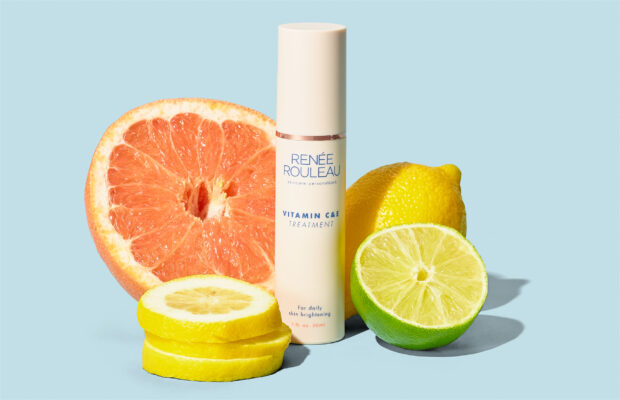
    What’s great about Vitamin C&E Treatment is that it doesn’t use high quantities of ascorbic acid and it has a more skin-friendly pH. Using both lipid and water-soluble forms of vitamin C, this serum provides potent antioxidant activity deep within the epidermal layers.

    Utilizing tetrahexyldecyl ascorbate (THD), this skin-brightening cream ensures a slower release time than water-soluble molecules, meaning a longer window of active vitamin C and a lower potential for irritation. If you’re looking to benefit from all the benefits of vitamin C with none of the burn, this long-time best-seller is the one for you.

    Tips for Choosing Stable Vitamin C Products

    As intimidating as it may be, try not to be discouraged by the vast array of vitamin C products on the market. Here are a few tips for avoiding the pain and finding the perfect serum for you.

    Ingredient Check

    When it comes to common forms of vitamin C in skincare, there are four that come to mind: L-ascorbic Acid, Sodium Ascorbyl Phosphate, Ascorbyl Methylsilanol Pectinate, and Tetrahexyldecyl Ascorbate. Here’s how they differ.

    L-ascorbic acid: Despite being a tried and true ingredient, this is not your best bet when it comes to antioxidant protection. The only active form of vitamin C, L-ascorbic acid is incredibly unstable and, since it’s an antioxidant, it wants to react with almost everything in its environment. This means this ingredient has a high chance of oxidizing before it gets a chance to make it into your skin.Sodium Ascorbyl Phosphate: A great option for skin types that struggle from breakouts, this has been proven to help improve acne, but can still be quite reactive.Ascorbyl Methylsilanol Pectinate: A complex blend of many compounds rather than just a straightforward vitamin C derivative, this form has been shown to strengthen the membrane of skin cells and have improved delivery into skin.Tetrahexyldecyl Ascorbate: This is one of my personal favorites (and the star ingredient in Vitamin C&E Treatment) as it is the only oil-soluble form of vitamin C that I’ve mentioned so far. Because of this, it won’t react until it comes into contact with the oils in your skin, making it the most stable form of these four. Tetrahexyldecyl Ascorbate is also known to penetrate skin 20x more than ascorbic acid!

    Packaging Matters

    As I mentioned, vitamin C serums can be highly unstable, reacting to almost everything from light and heat to oxygen, water, and metals. This is why product packaging can make all the difference.

    This ingredient needs to be packed in opaque or tinted bottles that protect the product from light exposure, as light, especially UV light, can cause it to degrade and become less effective. Ideally, the product should also have an airless pump to minimize air exposure, keeping the serum fresh longer. Both of these will also reduce the risk of contamination, ensuring it can deliver its desired effects to the skin.

    Vitamin C Application Techniques for Comfortable Use

    Want to start your journey toward the best vitamin C for you but worried about the consequences? Here’s the best way to get started!

    Patch Testing

    While trying to find the right vitamin C product for you, it may take a bit of trial and error– but you don’t have to destroy your skin barrier in the meantime. Whenever anyone is trying out a new product, the first thing I do is recommend a patch test. Apply vitamin C to your neck (where skin is the most sensitive) to help determine what types of products or ingredients will cause a negative or allergic reaction on your face. This will help narrow down which skincare product or ingredient to test out in the future.

    In conclusion, while vitamin C is a highly praised skincare ingredient known for its ability to brighten skin, boost collagen production, and protect against environmental damage, some people may experience the dreaded vitamin C acid burn. This burning or stinging sensation can be attributed to factors such as low pH levels, high concentrations of ascorbic acid, or a compromised skin barrier. However, I don’t think this should deter you from reaping the benefits of vitamin C. By understanding the causes of sensitivity and choosing stable formulations, you can incorporate vitamin C into your skincare routines effectively and comfortably. With the right approach, vitamin C can be a valuable addition to any skincare regimen, promoting healthier, more radiant-looking skin.

    I hope you found this post informative! And as always, #obeyrenee

  • Blog

    Blog

    10 Keto-Friendly Desserts You Can Make in 20 Minutes or Less

    by Caitlin H,

    Jun 17, 2024

    10 Keto-Friendly Desserts You Can Make in 20 Minutes or Less

    You might think you can no longer have many of your favorite treats on a low-carb diet.

    These heavenly, delish desserts prove that’s simply not true! All you need to do is swap familiar ingredients with keto-friendly replacements — and voila! You’ll have every confection you desire without going outside the keto diet line.

    Tweet

    5 Ways to Work Out with Your Furry Friend

    by Caitlin H,

    Jun 10, 2024

    5 Ways to Work Out with Your Furry Friend

    Dog owners will be the first to tell you that their beloved furball is more than just a pet to them — in many ways, it’s like a child. There’s a good reason for this. Dogs have their own unique personalities, traits, and quirks. They thrive under routines. And they are capable of loyalty and love beyond most people’s expectations.

    It shouldn’t be a surprise that dogs are good for your health, and there are several fun ways to work out with them.

    Tweet

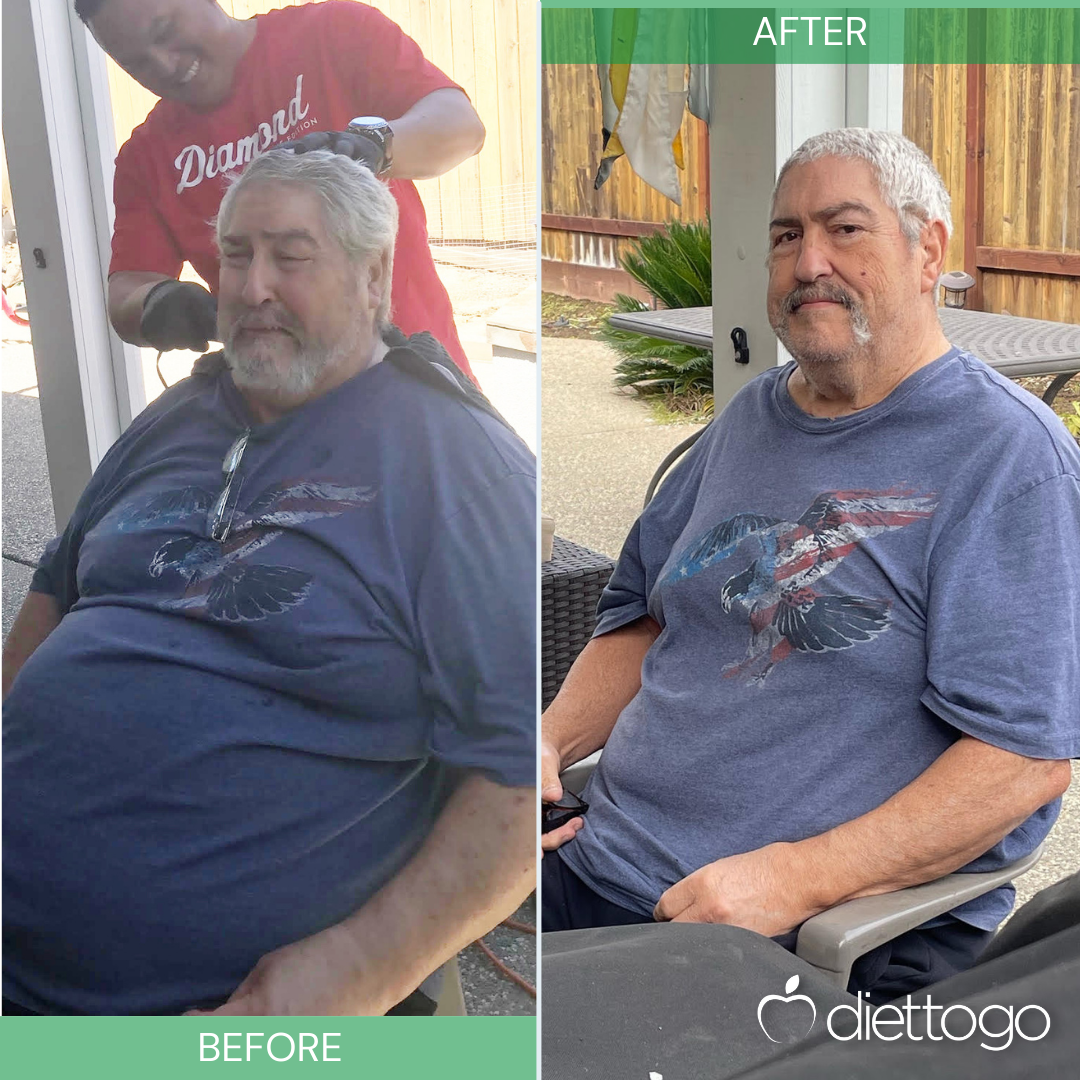
    Man Uses Diet-to-Go to Shed 100+ Pounds Ahead of Hip Surgery

    by Caitlin H,

    Jun 3, 2024

    Man Uses Diet-to-Go to Shed 100+ Pounds Ahead of Hip Surgery

    For many people, a medical scare is the catalyst for making a big life change. That was certainly the case for 73-year-old Rodney Arnold, a retired Sacramento code enforcement officer from Hawaii who has shed more than 100 pounds with Diet-to-Go.

    “I found out I had to have hip surgery,” Rodney said, remembering a doctor’s visit in late 2022. “They wouldn’t touch me unless I lost a lot of weight and my BMI was 30.”

    Tweet

    A Dive Deep into 5 Fish We Love

    by Caitlin H,

    May 27, 2024

    A Dive Deep into 5 Fish We Love

    Fish is a delicious and nutritious protein that often finds its way into healthy diets—and for good reason. It’s a filling main dish packed with a wide range of nutrients. It’s also extremely versatile, affording home cooks and chefs the ability to create unique and tasty dishes that millions of people enjoy daily.

    Let’s dive deeper into the health benefits of five of the most popular kinds of fish and our delicious meals that feature them!

    Tweet

    A Look at the Most Popular Prescription Weight Loss Drugs

    by Caitlin H,

    May 20, 2024

    A Look at the Most Popular Prescription Weight Loss Drugs

    GLP-1 agonist weight loss drugs (think Ozempic and Wegovy) are all the rage right now, available at clinics and spas nationwide. They promise users a quick way to shed pounds, and many studies show they are quite effective in doing just that.

    But do they work long-term? What are the downsides? And are they right for you? Here’s a deeper look at these weight loss drugs, including pros and cons and how to use them most effectively paired with your Diet-to-Go meals.

    Tweet

    Food Cravings? Manage Them With an Intuitive Approach

    by Caitlin H,

    May 13, 2024

    Food Cravings? Manage Them With an Intuitive Approach

    Food cravings are a part of life.

    Whether you find your mind wandering to how nice it would be to enjoy a favorite baked good or feel an insatiable need for a childhood staple, cravings are real.

    For some people, they’re harmless. But for others, they can quickly get out of hand, leading to overeating and excess calories that derail weight loss plans and make achieving goals pretty darn impossible.

    How good are you at managing your cravings?

    Tweet

    10 Delicious, Creative Twists to Elevate Your Oatmeal

    by Caitlin H,

    May 6, 2024

    10 Delicious, Creative Twists to Elevate Your Oatmeal

    Eating a healthy, balanced breakfast is one of the best things you can do to improve your chances of reaching your weight loss goals.

    Experts say people who eat breakfast start their day off right by giving them fuel to get through the morning without succumbing to temptations like office snacks or fast food at lunch.

    And one of the best go-to morning meals — we’re talking easy and delicious — is oatmeal.

    But how do you keep what could be a pretty bland dish from getting boring?

    Tweet

    8 Outdoor Activities to Enjoy the Healing Power of Nature

    by Caitlin H,

    Apr 30, 2024

    8 Outdoor Activities to Enjoy the Healing Power of Nature

    Fresh air. Warm sunshine. Green leaves. Birds chirping happily. The sound of dirt crunching beneath your feet. There’s something uniquely restorative about spending time in nature.

    Being outdoors has been shown to have a number of benefits for your mental and emotional health, like reducing stress and increasing your quality of sleep. Activities in nature are also a boon for your physical health, typically requiring movement and exercise, which can improve your cardiovascular and muscular health.

    Need a suggestion to help motivate you to move outdoors? Whether you’re a fitness expert or are just looking to relax and collect some vitamin D, we have some ideas for you!

    Tweet

    This Carbohydrate is a Boon for Reducing Belly Fat

    by Caitlin H,

    Apr 22, 2024

    This Carbohydrate is a Boon for Reducing Belly Fat

    One of the biggest struggle areas many of us have is undoubtedly around our bellies. Belly fat often seems to be the quickest to burgeon and slowest to go away.

    Unfortunately, studies show belly fat increases the risk of things like type 2 diabetes and heart disease. It also can be uncomfortable and make finding clothes that fit challenging.

    Thankfully, there is good news for those of us who want to target this problematic area — and the solution may lie in boosting this carbohydrate. 

    Tweet

    7 Heart-Pumping YouTube Dance Workouts

    by Caitlin H,

    Apr 15, 2024

    7 Heart-Pumping YouTube Dance Workouts

    If you’re looking for a fun fitness form that engages your entire body — and your mind! — look no further than dancing.

    Dancing is one of the best heart-pumping ways to torch calories while simultaneously improving muscle tone, strength, balance, core strength, and joint health. Plus, your mind stays engaged and sharp as it learns choreography and keeps pace with the steps.

    What’s more: This well-rounded, full-body workout is actually fun! Time flies as you whirl around and step to the beats, ensuring you’re not staring at the clock and watching the minutes tick by until the workout ends.

    Ready to give it a shot?

    Tweet

    Diet Derailed? Bounce Back With These Effective Strategies

    by Caitlin H,

    Apr 8, 2024

    Diet Derailed? Bounce Back With These Effective Strategies

    Many of us set out on a weight loss journey with all the passion, commitment, and dedication we need to succeed.

    But then a day comes where we inevitably fall off the wagon and relapse into old poor eating habits, forgo our fitness classes, and just, kind of, give up.

    What can you do to make it easier to jump back up on the wagon?

    Tweet

    Our 8 Favorite Spring Side Dishes

    by Caitlin H,

    Apr 1, 2024

    Our 8 Favorite Spring Side Dishes

    There’s something special about enjoying brightly colored food that looks just as pretty as the flowers, fruits, and veggies that sprout in spring.

    Take advantage of this bountiful season by creating one of our 8 favorite spring side dishes — delicious items like roasted carrots, avocado deviled eggs, pasta salad, and more — all of which you can bring to any upcoming event to leave your guests feeling satisfied and asking for more.

    Tweet

    Healthy Meal Delivery Works Best for These Types of People

    by Caitlin H,

    Mar 25, 2024

    Healthy Meal Delivery Works Best for These Types of People

    The healthy prepared meal delivery market has exploded in recent years. This market consists of companies that send customers fresh or frozen prepared meals that are individually portioned and aim to support a healthy diet. Most providers offer a range of meal plans for unique diets, such as vegetarian, low-carb, calorie-controlled, Mediterranean, and more. Convenience and the time-saving aspect of the meals are likely significant factors pushing the industry’s growth.

    So, what types of people can potentially gain the most from freshly prepared, healthy meals delivered right to their door?

    Tweet

    How to Enjoy Restaurants and Parties While Losing Weight

    by Caitlin H,

    Mar 18, 2024

    How to Enjoy Restaurants and Parties While Losing Weight

    Undertaking a weight loss journey means adjusting your diet and focusing on eating healthy meals. It also may mean incorporating regular fitness routines into your daily schedule. And it always means dedication and a commitment to a better lifestyle.

    While there will be challenges along the way, one of the most significant you’ll likely face is navigating familiar social situations that typically involve eating out and diet-derailing food. The people who successfully lose weight learn how to navigate these social situations in a classy way that keeps them on track. And we can all learn something from how they do it.

    Tweet

    Reduce Your Sugar Intake with These Tips

    by Caitlin H,

    Mar 11, 2024

    Reduce Your Sugar Intake with These Tips

    Sugary foods are prevalent in our world. A staggering number of the packaged foods and beverages purchased by U.S. households contained added sugars. In addition, a large percentage of U.S. food supply products contain either caloric or low-calorie sweeteners.

    With sugar being so prevalent in regularly purchased products, it may seem impossible to escape consuming high-sugar foods regularly, which can be problematic for your health. Experts say that eating foods with too much sugar can cause a host of issues.

    So how can you reduce the amount of sugar you’re eating?

    Tweet

    Feeling Down? Remedies to Improve Your Mood

    by Caitlin H,

    Mar 4, 2024

    Feeling Down? Remedies to Improve Your Mood

    This is often the time of year when many of us are counting down the days until daylight saving brings us longer days and spring brings warmer weather. Sometimes, the wait also brings with it feeling incredibly down, sad, and perhaps even depressed. And that’s more than understandable.

    Thankfully, there are things you can do to improve your mood and combat depression. Here are seven effective mood remedies backed by science.

    Tweet

    What Happens to Your Body When You Lose 10 Pounds?

    by Caitlin H,

    Feb 26, 2024

    What Happens to Your Body When You Lose 10 Pounds?

    When it comes to losing weight, there’s a certain exhilaration that hits you when you get on the scale and see that your first 10 pounds are gone.*

    For people trying to lose 50 pounds or more, that first 10 pounds is a significant milestone. You’ll probably feel excited, flushed, and — hopefully — proud of your success. It’s confirmation that you can — and will — reach your goals.

    And while the mental and emotional benefits are worth paying attention to, the physical benefits of losing 10 pounds are also quite impressive.

    We broke down seven things that happen to your body immediately after losing 10 pounds — changes to keep top of mind along with the well-earned exhilaration to keep you motivated and going strong.

    Tweet

    Tailoring Your Fitness to Your Age

    by Caitlin H,

    Feb 19, 2024

    Tailoring Your Fitness to Your Age

    You know that exercise is essential, with countless studies showcasing how it can improve everything from heart health to immunity, skin vitality, and more. But if you’re getting on in life, there’s a good chance you’ve noticed any movement becomes a bit more difficult the older you get — whether you’ve ever been an avid exerciser or not.

    The reality is that while you should always strive to make exercise an integral part of your life, it’s going to look different at various stages in your life — and that’s more than okay.

    We’re here to help you figure out what type of exercise might be appropriate for you to try!

    Tweet

    7 Lifestyle Tips to Lower Bad Cholesterol

    by Caitlin H,

    Feb 12, 2024

    7 Lifestyle Tips to Lower Bad Cholesterol

    Cholesterol plays a vital role in your body, ensuring your body’s blood cells can replicate and you get essential vitamins.

    But high cholesterol levels can have the opposite effect, increasing your risk of serious diseases that lead to strokes, heart attacks, and even death.

    Wouldn’t you like to have a few easy lifestyle tips you can implement immediately to lower cholesterol levels and possibly add years to your life?

    Tweet

    Satisfy Your Valentine’s Sweet Tooth with These Sweet Recipes

    by Caitlin H,

    Feb 5, 2024

    Satisfy Your Valentine’s Sweet Tooth with These Sweet Recipes

    Valentine’s Day is right around the corner. If you plan on busting out the cooking skills for a quiet night in with your sweetheart, adding a delicious, light dessert at the end of the meal will show them you’re next-level. Or, perhaps you want your kiddos to take the dessert of the year to their Valentine’s Day class party.

    Either way, you can’t go wrong with our list of eight healthier Valentine’s Day dessert recipes to satisfy your sweetheart’s sweet tooth.

    Tweet

  • 5 Tips to Break the Binge-Restrict Cycle

    5 Tips to Break the Binge-Restrict Cycle

    Stuck in a never-ending cycle of dieting, feeling out of control around food, and shame? You might be caught in the binge-restrict cycle. Learn what the cycle is, the science behind it, and five tips to break free from it.woman in white tee shirt with one hand on stomach and another hand holding food with a plate of food in front of her

    What is the Binge-Restrict Cycle?

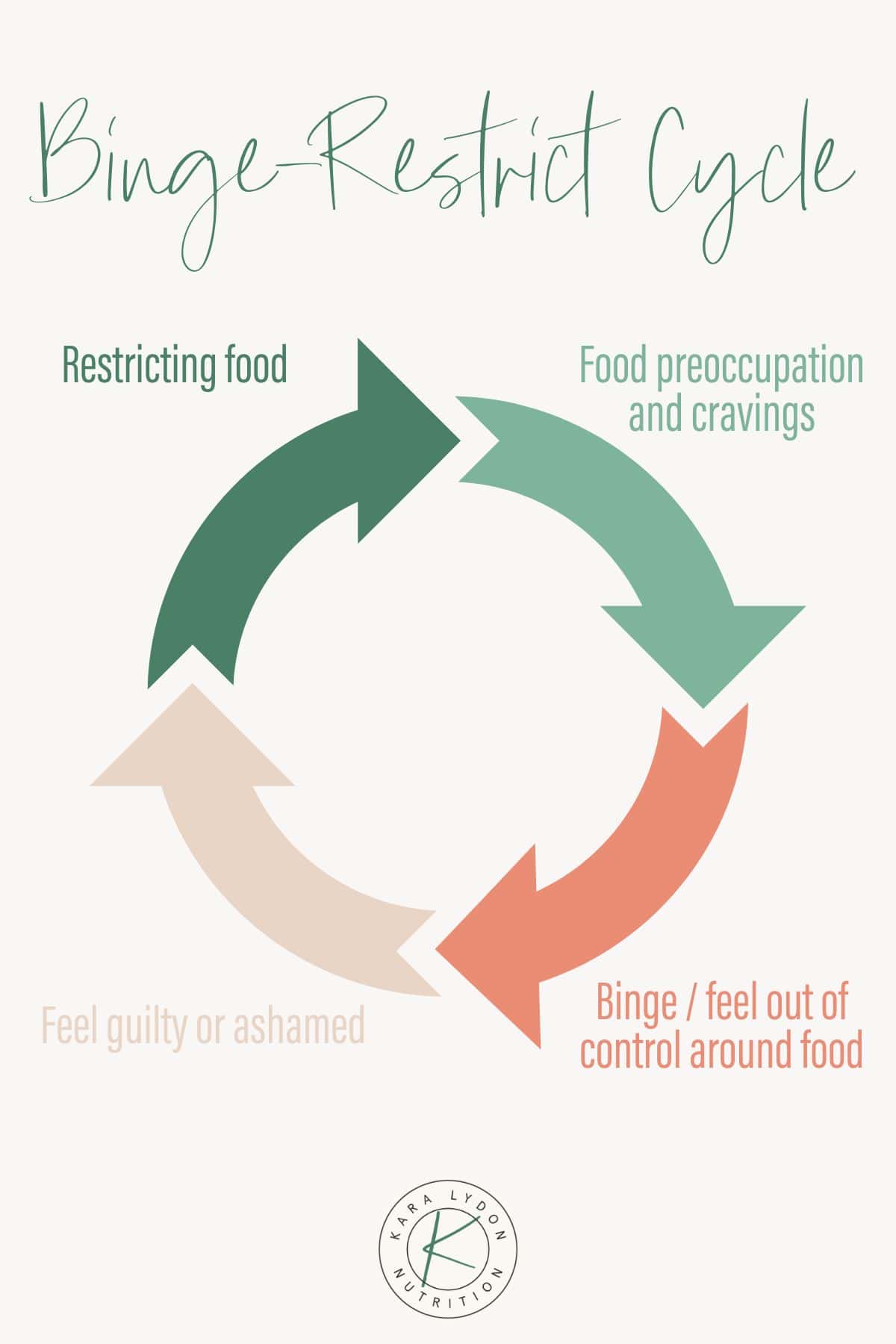
    The binge-restrict cycle occurs when a person oscillates between restricting food and binging or overeating food to a point of discomfort. Often folks who have been dieting and restricting their food intake find themselves in this cycle.

    We can think of this cycle having four steps:

    1. Restricting food

    Maybe you’ve been on a diet for a while or maybe you recently started a new diet. You’ve been cutting back on portion sizes and tracking your calories on an app. You’re eating significantly less than you used to and maybe you feel a sense of pride around that (because our culture says you’re morally good for “watching” what you eat).

    2. Food preoccupation and cravings

    Now you’ve been restricting for some time and you start to notice you can’t stop thinking about food. You’re constantly wondering when your next meal is going to be and you’re ruminating on what you should choose to eat. It’s hard to focus on other things because you’re so preoccupied with thoughts about food. 

    You also start to notice intense cravings for food, specifically carbohydrates. It becomes harder and harder to ignore them because the cravings are so loud. 

    3. Binge / feel out of control around food

    With the cravings being so intense and your body being so deprived of energy, you wind up binging or overeating to the point of physical discomfort. It feels like such a release (and relief!) while you are eating and maybe you experience a bit of a high during.

    4. Feel guilty or ashamed 

    After you binge, you feel so guilty and ashamed of yourself. You start beating yourself up for not having more “willpower” or “discipline”. You promise yourself you will “get back on track” tomorrow and be really strict with food to make up for it.

    Graphic illustrating the four steps of the Binge-Restrict Cycle. Graphic illustrating the four steps of the Binge-Restrict Cycle.

    What is restriction?

    Restriction looks like limiting your food intake in some way. Here are some examples of behaviors that would fall in line with restriction:

    counting calories
    cutting out food groups
    depriving self of favorite foods
    watching or limiting portion sizes
    skipping meals
    mental restriction, aka labeling a certain food as bad and feeling guilty for eating it

    What is a binge?

    According to the Diagnostic and Statistical Manual of Mental Disorders-5 (aka the DSM-5), which has its own limitations and is not very inclusive, an episode of binge eating is characterized by both of the following:

    Eating, in a discrete period of time (e.g., within any 2-hour period), an amount of food that is definitely larger than most people would eat in a similar period of time under similar circumstances

    The sense of lack of control over eating during the episode (e.g., a feeling that one cannot stop eating or control what or how much one is eating)

    A binge-eating episode is associated with three (or more) of the following:

    Eating much more rapidly than normal

    Eating until feeling uncomfortably full

    Eating large amounts of food when not feeling physically hungry

    Eating alone because of being embarrassed by how much one is eating

    Feeling disgusted with oneself, depressed, or very guilty after overeating

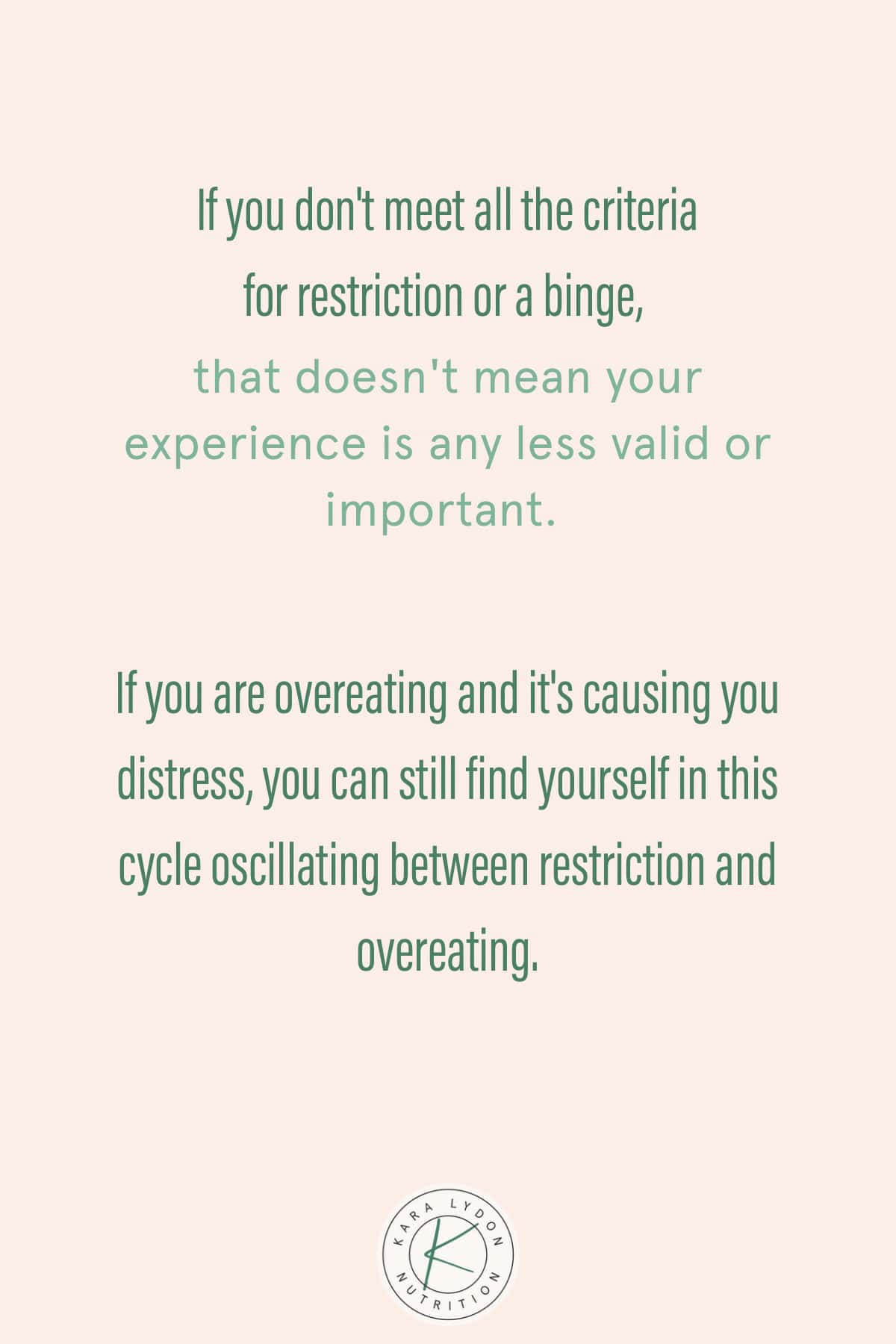
    If you don’t meet the criteria listed above, that doesn’t mean your experience is any less valid or important. If you are overeating and it’s causing you distress, you can still find yourself in this cycle oscillating between restriction and overeating.

    Graphic with quote: "If you don't meet all the criteria for restriction or a binge, that doesn't mean your experience is any less valid or important. If you are overeating and it's causing you distress, you can still find yourself in this cycle oscillating between restriction and overeating."Graphic with quote: "If you don't meet all the criteria for restriction or a binge, that doesn't mean your experience is any less valid or important. If you are overeating and it's causing you distress, you can still find yourself in this cycle oscillating between restriction and overeating."

    The science behind this cycle

    Why do you crave carbs so intensely while restricting? You’re not doing anything wrong. It’s not a moral failure. It’s actually a physiological adaptation to starvation.

    When you restrict food intake, your body will go through a number of physiological adaptations to help you survive and maintain homeostasis (or balance). These adaptations may include increasing the hunger hormone, ghrelin, lowering your metabolism, and releasing a chemical called neuropeptide Y (NPY).

    NPY is secreted by your brain and increases your motivation to eat, delays satiety, and simulates food intake with a preference for carbs. Because NPY delays satiety you may feel like you can eat a lot of carbohydrate foods at once, which can feel like a binge.

    But this is not an issue of control. It is an evolutionary survival mechanism. Our bodies are wired to try to survive famines and food shortages. They don’t know the difference between a famine and a diet.

    Research has also shown that restricted access to food and even the anticipation of restriction is more likely to lead to binge-like behaviors. One study showed that when restrained eaters were told that they would begin a week-long, low-calorie diet starting immediately after their participation in a cookie taste-rating task, they ate more cookies than the unrestrained eaters and the restrained eaters not asked to diet afterwards.

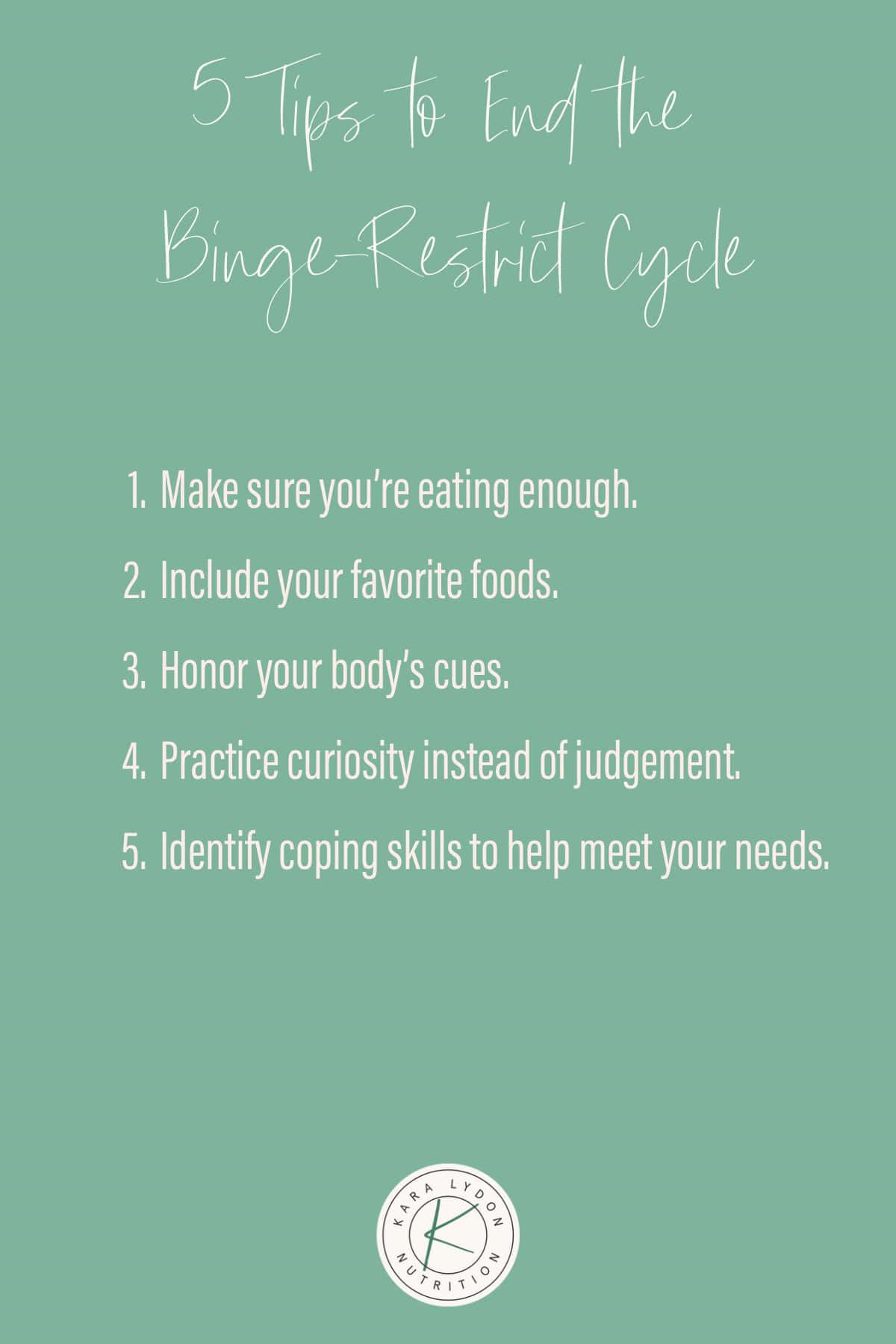
    5 Tips to End the Cycle

    1. Make sure you’re eating enough.

    It’s rare that binging will occur without any restriction or deprivation; therefore, the antidote to binging is eating enough and nourishing yourself adequately. Make sure you are eating regularly and consistently, ideally every 3-4 hours.

    Ensure that your meals and snacks include a source of carbohydrate, protein, and fat. Choose foods that help keep you satiated and satisfied. 

    2. Include your favorite foods.

    Research shows us that deprivation of certain foods can heighten your pleasure response to them, making you more susceptible to a binge. Even if you are eating adequately, if you are still avoiding certain foods, you are still restricting.

    Give yourself permission to include your favorite foods in your day-to-day eating. Incorporating them into your day can help to take them off the forbidden food pedestal and make them feel more neutral. 

    3. Honor your body’s cues.
    Begin to familiarize yourself with what hunger feels like in your body. Does it show up as growling in your abdomen or fatigue or irritability? There are many ways hunger can show up in your body – to learn more check out my post on Am I Hungry? Signs of Hunger to Watch for.

    Honor your hunger cues by feeding your body when it speaks to you. Don’t wait to eat until your diet plan says it’s time or you’re starving. Honor your hunger when you’re noticing gentle hunger signs on the hunger fullness scale.

    4. Practice curiosity instead of judgment.

    What do binge episodes bring up for you? Often times they are followed by a lot of judgment, shame and guilt. These feelings, although very human, don’t serve you and don’t inspire change.

    See if you can practice bringing a spirit of curiosity following a binge. Can you ask yourself how you were feeling physically, emotionally, and energetically before the binge? Was there a trigger? Did you eat enough earlier in the day? Can you get curious about what you may have been needing in that moment before the binge?

    5. Identify coping skills to help meet your needs.

    Curiosity can help you to identify your needs in the moment. Typically there is a physiological need (more food!) and often times there can be an emotional need too. Ask yourself what is it that I really need at this moment?

    Are you seeking relaxation?
    Do you need connection?
    Do you need soothing or comfort?
    Are you looking for spaciousness?
    Do you need a sense of pleasure or enjoyment?

    If you are able to identify a need, see if there are ways you might be able to meet that need outside of food. 

    If you’re seeking relaxation, maybe you take a nap, or lay on the couch and read a book or watch TV.
    If you need connection, maybe you call a friend or ask a partner for a hug.
    If you need soothing or comfort, maybe you take a warm bath, light some candles, play relaxing music, or try some self-massage.
    If you’re looking for spaciousness, maybe you go for a walk by yourself to a quiet spot or you ask your family for some alone time.
    If you need a sense of pleasure or enjoyment, maybe you go dancing or go to a concert.

    Graphic listing 5 tips to end the Binge-Restrict Cycle.Graphic listing 5 tips to end the Binge-Restrict Cycle.

    If you are stuck in the binge restrict cycle, you may meet the criteria for Other Specified Feeding and Eating Disorder (OSFED). To learn more about warning signs of an eating disorder and for resources on eating disorders, check out my post 6 Warning Signs of an Eating Disorder.

    Even if you don’t meet the criteria for OSFED and you’re struggling with this cycle, you deserve help and support. Our team of non-diet, weight-inclusive dietitians are ready to help you on your journey to food peace and freedom.

    For more blog posts like this check out:

    What is the hunger fullness scale?

    The Science on Dieting and Weight Loss

    Am I Eating Enough? 8 Signs You’re Undereating

    Am I hungry? Signs of hunger to watch for

  • The Most Hydrating Foods You Can Eat

    The Most Hydrating Foods You Can Eat

    The Most Hydrating Foods You Can Eat


    Privacy & Cookies Policy

  • Ultimate Breakfast Tacos | Nutrition Stripped

    Ultimate Breakfast Tacos | Nutrition Stripped

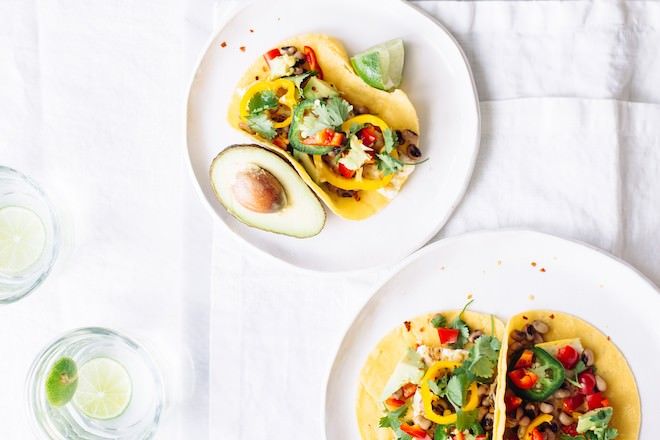
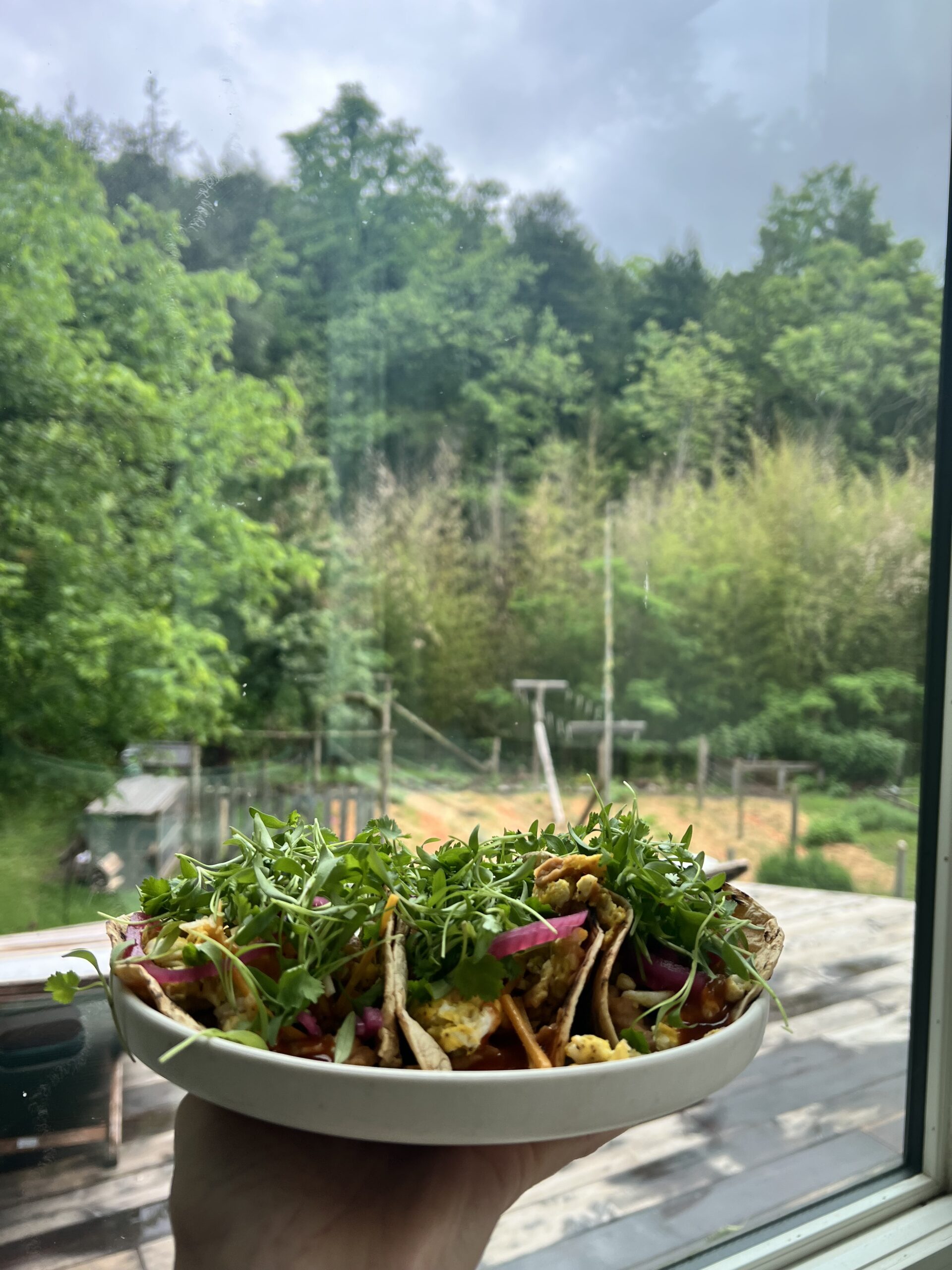
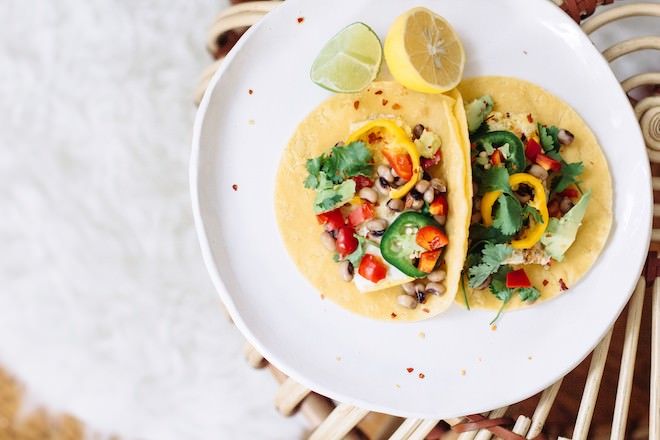
    Try these delicious, quick, and easy ultimate breakfast tacos for any time of day. They’re rich in protein, fiber, and healthy fats.

    This recipe for the ultimate breakfast tacos includes a flexible template to make your tacos following the Foundational Five formula for a balanced meal.

    The foundation of any taco is choosing a great tortilla, whether you’re making them from scratch at home, supporting a local supermercado, or choosing your favorite specialty store-bought tortillas such as grain-free varieties. I’m partial to corn tortillas, but you can choose whatever fits your preference for this recipe.
    Ultimate Breakfast Taco Ingredients

    Let’s break down the core ingredients needed to make a delicious and nutritionally balanced breakfast taco using the Foundational Five.

    For protein, I enjoy scrambled eggs the most. However, you can get creative and choose fish, chicken, tofu, tempeh, or any other quality protein you like.

    For fat, avocados are great to use, you may also enjoy ingredients like cheese or sour cream.

    For non-starchy carbohydrates (fiber), I enjoy using cilantro microgreens, pickled red onion, lettuce, tomato, jalapeno, sauteed bell peppers, and sliced radish. Have fun with the vegetables you choose to top your tacos with knowing each of them will contribute to boosting the fiber of this meal, which is important for all meals!

    For starchy carbohydrates, the tortilla type you choose will provide carbohydrates, additionally, I enjoy and recommend refried or pinto beans for an added fiber boost. 

    For the Flavor Factor, try fresh lime juice, salsa, and hot sauce. 

    I hesitate to call this a “recipe” because it’s a simple template for building your taco following these guidelines.
    You may also enjoy making these Nutrition Stripped recipes you may enjoy when making these ultimate breakfast tacos.
  • Is Sulfur Good For Acne? Why This Ingredient Is Your New Best Friend

    Is Sulfur Good For Acne? Why This Ingredient Is Your New Best Friend

    Struggling with acne can feel like a never-ending battle, but what if we told you there’s a time-tested ingredient that could change the game? Enter sulfur – a naturally occurring element that’s been a skin care hero for centuries. From its antibacterial powers to its anti-inflammatory magic, sulfur offers a multitude of benefits for acne-prone skin. Let’s dive into the science behind this potent ingredient and why it deserves a spot in your skin care routine.

    Does Sulfur Help Treat Acne?

    While you may know sulfur for its distinct scent, it also operates as a topical acne treatment. Like benzoyl peroxide and salicylic acid, sulfur targets oil and dead skin cells by drying out the skin’s surface and absorbing excess sebum, effectively preventing clogged pores. While drying out the skin may sound intensive, sulfur is gentle on the skin, making it a preferred choice for those with sensitive skin.

    Additionally, sulfur’s exfoliating properties that remove dead skin cells reduce the likelihood of pore blockages. As Eminence Organics Product Support Representatives explain, “Sulfur has natural antibacterial, anti-inflammatory and exfoliating benefits to reduce the appearance of acne.” However, before you start any new acne treatment, it’s always a good idea to consult with a dermatologist to ensure it’s appropriate for your skin type and condition. With that said, let’s explore in detail how sulfur works to treat acne.

    How Sulfur Treats Acne

    Sulfur as a Drying & Antibacterial Agent

    Sulfur is a gentle yet effective treatment for mild acne. As a drying and antibacterial agent, it removes excess oils and kills bacteria, reducing inflammation and alleviating uncomfortable symptoms. This dual action helps prevent the formation of new acne and stops inflammation before it starts.

    Sulfur as a Keratolytic Agent

    Sulfur acts as a keratolytic agent, breaking down and exfoliating the outer layer of skin by dissolving dead skin cells. This not only smooths and clears the look of the skin but also enhances the absorption of other skin care products, improving their effectiveness.

    With its multiple benefits, let’s delve into how sulfur effectively targets and treats different types of acne. 

    Targeting Different Types of Acne with Sulfur

    Treating Mild Acne 

    As Healthline suggests, whiteheads and blackheads are common, mild forms of acne. They occur when oil and dead skin cells clog pores. Sulfur addresses these issues by reducing sebum and removing dead skin cells. According to Healthline, sulfur is a reliable over-the-counter (OTC) option for these non-inflammatory acne types.

    Treating Moderate Acne

    Moderate acne includes papules and pustules, which form due to a breakdown in the pore walls. Papules are small and solid, while pustules are larger and filled with pus. Sulfur might not be potent enough to tackle these more stubborn forms of acne. For moderate acne, dermatologists often suggest stronger treatments like benzoyl peroxide.

    Treating Severe Acne

    Nodules and cysts represent severe acne, developing deep under the skin and often causing significant pain. OTC products, including sulfur, are typically ineffective for these types. The American Academy of Dermatology recommends prescription treatments, such as antibiotics or isotretinoin (Accutane) for severe acne.

    Suitability for Different Skin Types

    Sulfur is generally safe for a wide range of skin types, including sensitive skin. However, like any active ingredient, it can cause irritation. It’s advisable to start with a once-daily application, gradually increasing to two or three times per day. Be mindful of potential dryness or irritation and adjust usage accordingly.

    Are There Potential Side Effects?

    As mentioned, sulfur is gentle but it can still cause dryness and irritation. The distinctive sulfur smell is often masked in modern products, but it’s a good idea to test any new skin care products before full use. Conduct a patch test by applying the product to a small area, like the inside of your arm, and waiting for 24 hours. If no adverse reactions occur, it’s likely safe to use on your face.

    Recommended Products Containing Sulfur

    Sulfur can be found in a variety of skin care products, from spot treatments to masks and cleansers. Our Product Support Representatives recommend the Acne Advanced Clarifying Masque, a two-in-one mask and spot treatment that contains sulfur that has natural exfoliating benefits to reduce the appearance of acne. This unique clay masque utilizes potent anti-acne ingredients to treat active acne and prevent future breakouts. Three types of purifying clay combine to absorb oil and reduce shine, while soothing basil oil helps to eliminate surface-level bacteria. You can also find this product as a part of the Acne Advanced 3-Step Treatment System. 

    Please, always perform a patch test before incorporating a new product into your skin care regimen.

    Visit your nearest Eminence Organics Spa Partner to determine which products will work for you based on your skin issues and skin type. 

  • Does This Ingredient Really Help?

    Does This Ingredient Really Help?

    As an esthetician with 35 years of experience with acne, I understand the challenge of finding the right products and ingredients to clear and prevent the appearance of breakouts. After all, from cysts to pustules and papules, breakouts are simply not equal. However, there is one ingredient that is my go-to because it truly works. I’ve seen clients experience incredible results, but I was curious to dive into the science behind the ingredient so I recently tested it in the lab– and I couldn’t believe what I saw! Read on to learn all about my favorite ingredient, Tea Tree Oil.

    What Is Tea Tree Oil?

    Originating in Australia, but now found in parts of India, New Zealand, and China, tea tree oil has an illustrious, history in medicine and beauty. A result of steam-distilling tea tree leaves, this ingredient is known for its versatility across skincare. In fact, long before we learned how to extract tea tree oil, the aboriginal people of Australia used tea tree leaves to treat bruises, skin infections, wounds, and insect bites.

    Much like other plant-based compounds, such as willow bark, chamomile extract, and witch hazel, there are a lot of studies backing tea tree oil as helpful for acne-prone skin. Derived from the Australian plant Melaleuca alternifolia, tea tree oil has three important features that make it beneficial for skin: it is anti-inflammatory, antibacterial, and it can work as a solvent to help break up buildups of dirt, oil, or debris clogging the pores.

    How Tea Tree Oil Combats Acne

    Antibacterial Properties

    Tea tree essential oil is proven to be a powerful antibacterial, anti-fungal, antiviral, and anti-parasitic (this is why it’s such a powerful insect repellent!). These properties are predominantly due to Terpinen-4-ol. This compound is notably excellent at breaking down the protective barrier surrounding bacteria, attributing to their loss of membrane integrity and function and essentially breaking down bacteria’s defense mechanism.

    How We Tested Tea Tree Oil’s Acne-Fighting Capabilities

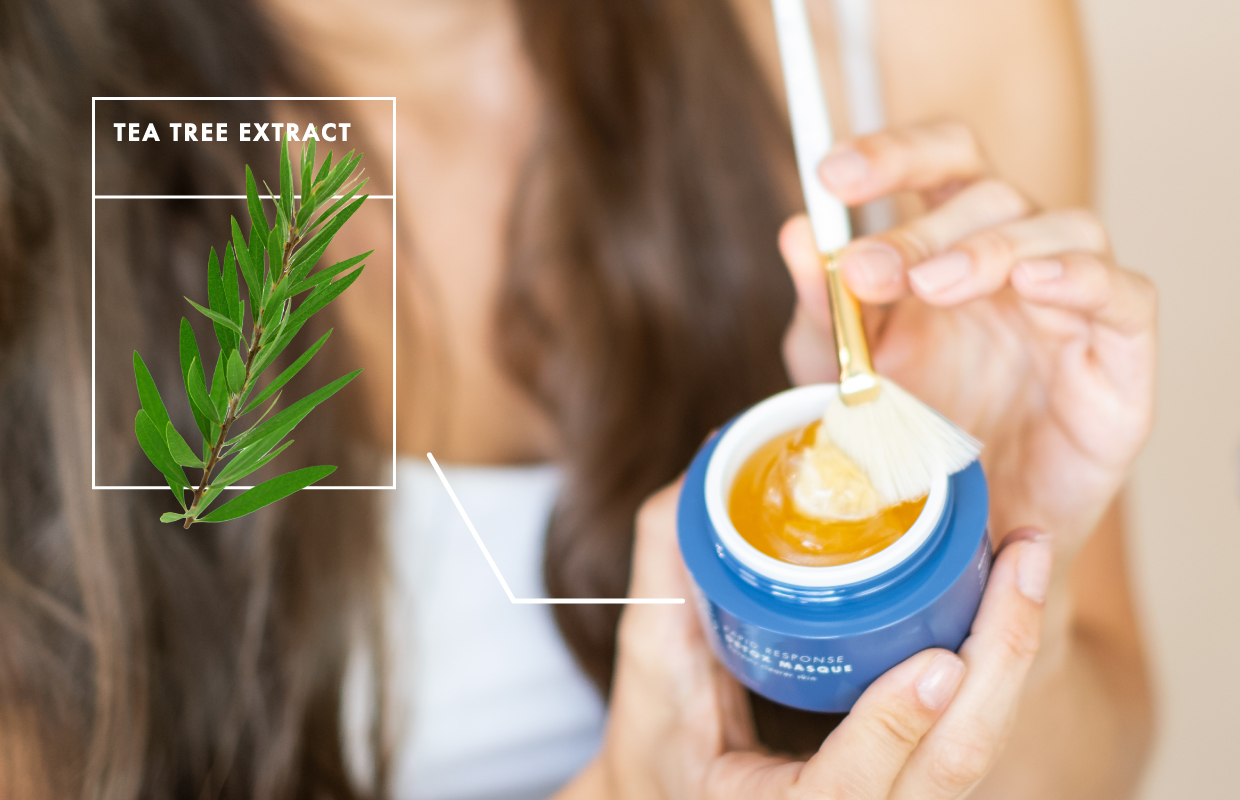
    With tea tree oil being the star ingredient in one of our best-selling products, Rapid Response Detox Masque, it only makes sense to officially test the efficacy of its blemish-fighting properties. So, what did this process look like? Buckle up, science nerds!

    Testing begins by growing real acne bacteria (C. acnes), the kind that leads to breakouts, in a broth until there are enough bacteria present to conduct a study. Once this is attained, that broth is exposed to Rapid Response Detox Masque. An instant (or near instant) measurement is then taken, which we call t=0, that will determine how quickly the product goes to work. After 7 minutes, or t=7, the amount of bacteria remaining in the broth will be compared to t=0, determining the percentage of acne-causing bacteria controlled.

    The efficacy of Rapid Response Detox Masque ultimately comes down to three measurements: the initial amount of bacteria, t=0, and t=7.

    The Test Results

    The initial amount of bacteria was 2.7 x 10^6. At t=0, we counted 2.6 x10^6, meaning there was a 3.7% reduction in bacteria almost immediately! This may not sound like a lot, but it’s unrealistic to expect total control of acne-causing bacteria immediately and this is a promising start.

    After just 7 minutes, or t=7, the final measurement was taken to calculate the amount of acne-causing bacteria left in the petri dish. And the results are in… we counted 3.0 x 10^4, which is a 98.89% reduction. Yes, you read that right. A 98.89% reduction in acne-causing bacteria. Wow, even I was shocked!

    Side-by-side comparison of two petri dishes to show if tea tree oil does help with acne. The petri dish on the left, labeled "t=0," is filled with a dense cluster of bacteria. The petri dish on the right, labeled "t=7 minutes," shows significantly fewer bacteria, illustrating the effectiveness of the tea tree oil product after 7 minutes.Side-by-side comparison of two petri dishes to show if tea tree oil does help with acne. The petri dish on the left, labeled "t=0," is filled with a dense cluster of bacteria. The petri dish on the right, labeled "t=7 minutes," shows significantly fewer bacteria, illustrating the effectiveness of the tea tree oil product after 7 minutes.
    The left image shows the petri dish immediately following the addition of Rapid Response Detox Masque (t=0) and the right image shows the same petri dish 7 minutes later (t=0). The amount of acne-causing bacteria (white dots) is significantly fewer in t=7 min.

    The Takeaway

    Okay, enough of the technical jargon. The bottom line is this: Rapid Response Detox Masque not only works instantly to control acne-causing bacteria, but it also clears skin by balancing any bad bacteria on the surface in just seven minutes. Formulated with both tea tree and manuka oils, this mask works as a total reset to balance skin and minimize the appearance of active breakouts.

    Practical Guide to Using Tea Tree Oil for Acne

    Using Tea Tree Oil Directly vs In Products

    Now that you’ve seen the results when tea tree oil is used as an ingredient within a formula, let’s dive into what it looks like when using tea tree oil in its pure form.

    When it comes to using essential oils, like tea tree oil, eucalyptus oil, lavender oil, etc., you should never apply them directly to skin. Since tea tree oil is an oil-soluble, aromatic fraction from a tea tree leaf, the terpenes within it are extremely strong compounds that can cause sensitization when not diluted. In fact, these oils are actually only efficacious at such a low level already that there would never be a need to put 100% solution on your skin. Tea tree oil will always be better within a product with several other ingredients since essential oils have dermal limits. Remember, more does not always mean better!

    If you already have pure tea tree oil on hand and you don’t want it to go to waste, you can always dilute it with a carrier oil, such as jojoba, rosehip, or coconut oil. This will act as a hydrating counter-force to any of its drying effects. I recommend using 99 grams of carrier oil for every 1 gram of tea tree oil.

    Application Tips

    If it’s your first time experimenting with tea tree oil, it’s essential to perform an at-home patch test to ensure it’s a compatible essential oil for your skin. While generally a harmless ingredient, everybody’s skin is different, so It’s better to be safe than sorry!

    If you start to experience any redness, sensitivity, or irritation, it’s important to discontinue use.

    For some skin types, such as those with an imbalance of acne-causing bacteria that lead to breakouts, this may be a good option for preventative care. However, I generally advise against putting tea tree oil on anything other than active breakouts, as ingredients like salicylic acid and benzoyl peroxide are usually better at prevention. This is why I generally promote salicylic acid products, like BHA Clarifying Serum, for breakout prevention and Rapid Response Detox Masque for more immediate, active breakouts. However, any of these ingredients would be a better option than using nothing at all.

     How Long Does Tea Tree Oil Take to Work?

    While tea tree oil generally goes to work right away, the speed in which you see results will almost always depend on which stage of a blemish’s life cycle you are in. For example, if you are dealing with a lot of active breakouts, then you are already in the midst of a cycle and experiencing congested pores and inflammation. This means that even if you use a tea tree oil product, it still takes time for your skin to turnover and for the inflammation to subside.

    Unfortunately, this means you won’t be experiencing any miraculous overnight transformations (dang!), but it does mean that you have instantly moderated acne-causing bacteria on the skin, taking you one step closer to clearer, healthier skin.

    Precautions and Side Effects of Using Tea Tree Oil

    Believe it or not, many people are buying tea tree oil that isn’t really tea tree oil. Tea tree oil has a unique chemical composition that is primarily composed of terpenes, a compound very specific to this essential oil. There are a few terpenes that are critical for tea tree oil, not only giving it its characteristic medicinal odor but also helping carry out the benefits that tea tree oil can provide in skincare. It’s critical to know where the tea tree oil in your products is sourced from to reap the full benefit of the ingredient.

    Hint: Real tea tree oil will have a high Terpinen-4-ol content and low cineol content–or, look for tea tree oil guaranteed to be real Australian tea tree oil!

    Tea Tree Oil Alternatives for Skin Health

    Maybe you experience allergic reactions or maybe you simply choose to steer clear of tea tree oil, either way, this ingredient may not be everyone’s perfect match. Unfortunately, there are not a lot of great tea tree dupes due to its very specific chemical profile. However, these are a few ingredients that I think can help achieve similar results.

    Manuka Oil

    From the genus Leptospermum scoparium, manuka Oil also originates from a type of tea tree species. With impressive antimicrobial properties, a high level of terpenes, and a scent that’s often compared to, if not preferred over, traditional tea tree oil, this makes for a worthy alternative.

    Fact: Rapid Response Detox Masque also has manuka oil in it, making its formula effective against multiple types of bacteria!

    Eucalyptus Oil

    Eucalyptus oil has a very similar profile to tea tree oil but contains different ratios of terpenes. Similarly, it also has antibacterial and anti-inflammatory components, making it a good option for acne-prone skin with an imbalance of oil production.

    So, Does Tea Tree Oil Help with Acne?

    Yes, it sure does. As an acne specialist, I know this ingredient is safe enough to use twice daily if desired but is generally best when used during active breakouts. The study we conducted with a specific product, the Rapid Response Detox Masque, highlights its potential to control acne-causing bacteria in just 7 minutes. When used correctly, tea tree oil can be a valuable addition to your skincare routine. I really urge you to try it to see if you can achieve healthier, clearer-looking skin. I know this post was a lot of information but I truly hope you found it helpful.

  • 5 Breakfasts To Make With Caraway Bakeware

    5 Breakfasts To Make With Caraway Bakeware

    5 Breakfasts To Make With Caraway Bakeware – The Real Food Dietitians


    Privacy & Cookies Policy


  • Why You Have Dark Spots On Your Face

    Why You Have Dark Spots On Your Face

    Call them age spots, liver spots, black spots or sun spots. No matter what name they go by, these patches are often signs of skin damage. Here’s what you need to know about dark spots and what’s going on with your skin when hyperpigmentation occurs, why it happens and what skin care solutions to consider. 

    What Causes Dark Spots? | How To Prevent Dark Spots 

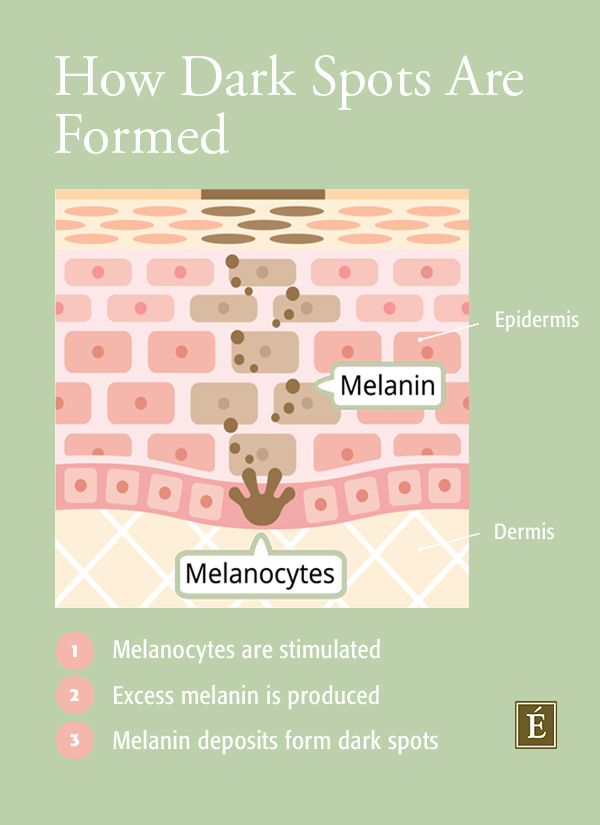
    Infographic on how dark spots are formed

    What Causes Dark Spots?

    Whether your skin tone is dark or light, your skin contains a pigment called melanin. Produced by cells called melanocytes, melanin acts as a form of protection for the skin. However, when hyperpigmentation occurs, your skin produces excess melanin which forms deposits, creating spots and patches darker in color than the surrounding skin. Although hyperpigmentation affects people of all skin colors, it tends to affect darker skin types more frequently. Here are three reasons why you could be suffering from dark spots:

    Sun Exposure

    The number one cause of dark spots is sun damage. When stimulated by harmful UV rays, melanocytes react by releasing melanin which acts as a natural sunscreen. Melanin is useful because it absorbs the energy from UV rays and redistributes it. However, the sun can trigger the production of too much melanin, causing dark spots and patches of skin.

    The sun is not just the root problem for sun spots, it also causes the dark marks that we call age spots or liver spots. This type of hyperpigmentation is also caused by sun damage, accumulated over many years of exposure.“As you age,” according to Harvard Health Publishing, “years of being in the sun start to add up.” Most common in adults over the age of 55, these tan, brown or black spots tend to speckle the areas most exposed to the sun: face, hands, back, feet and shoulders. Aging can also intensify the appearance of hyperpigmentation for two reasons. First, as we age, melanocytes decrease in number but increase in size and pigment production. Second, older skin tends to look thinner, paler and more translucent, emphasizing the appearance of dark spots.

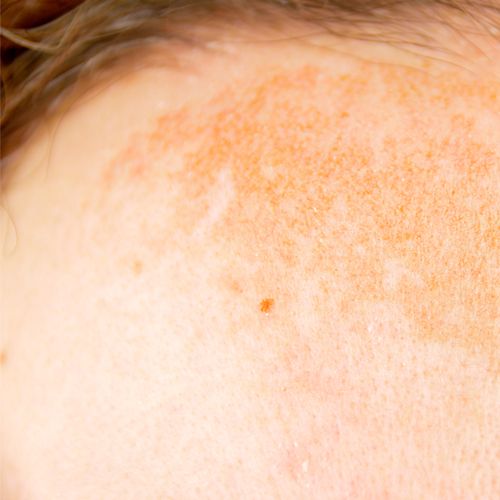
    Closeup on hyperpigmentation or dark spots on forehead

    Hormones

    When hormone levels zigzag up and down, one of the most common side effects is a change in pigmentation called melasma. Frequently seen during pregnancy, hormonal therapies or even changes in birth control, a rise in hormones stimulates the production of melanin. Pregnant women often develop dark patches on the nose, cheeks, jawline, forehead or chin, creating a pattern called “mask of pregnancy” or “chloasma.” This type of hyperpigmentation typically lasts until pregnancy ends or hormonal levels return to balance. 

    Exposure to the sun and heat can worsen the appearance of this hormonally-triggered hyperpigmentation. If you suffer from melasma and hope to unwind in a sauna or a session of hot yoga, you may want to rethink your chillaxing plans. A high-temperature environment can affect your hyperpigmentation and dark spots, helping dark patches enlarge and spread.

    Inflammation

    Dark spots can sometimes develop after inflammation or an injury to the skin, especially for those suffering from acne, eczema, allergic reactions or other skin conditions. Termed post-inflammatory hyperpigmentation, this type of discoloration is the skin’s natural response to inflammation. After a wound occurs, the skin becomes inflamed and, as it heals, the skin naturally produces excess melanin which darkens the skin. 

    Hyperpigmentation due to inflammation is especially common after breakouts. As the irritated skin heals from acne, a dark spot is left behind, ranging in color from pink to red, purple, brown or black. The worse the inflammation, the larger and darker the spot can be. Also, there’s a reason why the experts warn you to avoid picking your acne. Popping those pimples can increase the likelihood of developing pimple inflammation or a dark spot.

    How to prevent dark spots

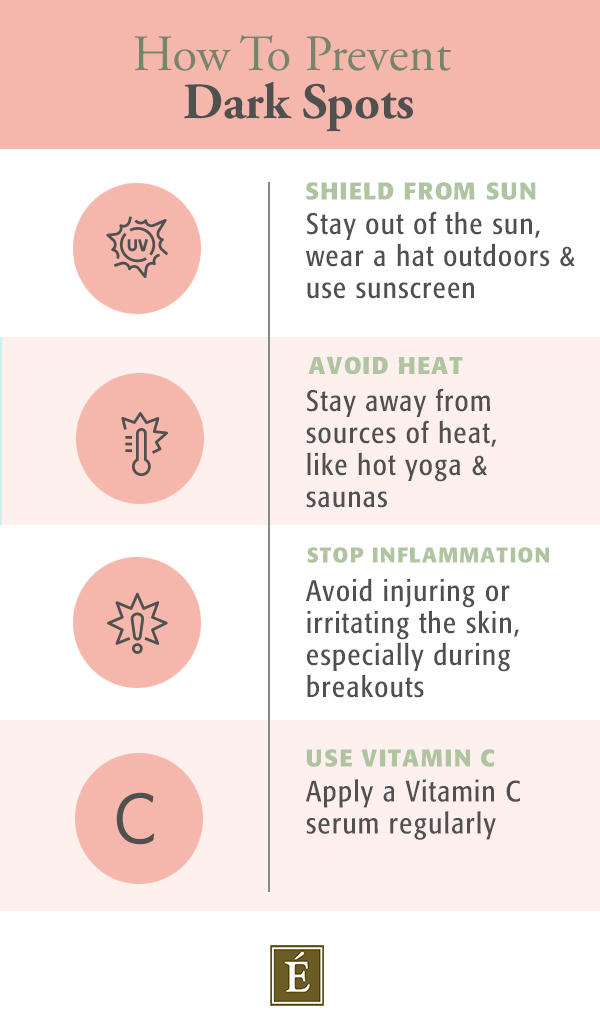
    How To Prevent Dark Spots (Hyperpigmentation)

    Protecting your skin from further damage is just as important as reducing existing hyperpigmentation. These are our top tips for preventing further dark spots from appearing on the skin:

    Shield Yourself From The Sun

    Brian Goodwin, International Educator at Eminence Organic Skin Care, says that time in the sun plays a “significant role” in the development of hyperpigmentation. It’s easy to underestimate its true impact. “Since we typically see the results of a day in the sun after we’ve retreated indoors, you may not realize that your consistent sun care habits (or lack thereof) are responsible for the formation of hyperpigmentation,” he says. 

    Since sun damage is one of the top causes of dark spots — including age spots  preventing exposure to UV rays is essential to preventing hyperpigmentation. This means staying out of the sun, wearing a hat outdoors and slathering on sunscreen. By avoiding or blocking UV rays that stimulate the production of melanin, dodging the sun is one of the best ways to prevent dark spots.

    Avoid Heat

    UV rays are not the only triggers for melanin production. Sources of heat can also stimulate melanocytes to produce more pigment. Avoid activity with major heat exposure and keep the skin cool to reduce this potential problem for dark spots.

    Stop Inflammation

    Because inflammation is another major reason for hyperpigmentation, you’ll want to stop any harmful habits that injure or inflame the skin. Pimple picking is a no-no, as are any other activities that aggravate your complexion.

    Use Vitamin C Regularly

    Experts advise that a topical antioxidant like a Vitamin C serum helps with the look of dark spots when applied on a regular basis. Because Vitamin C interferes with melanin production (and provides so many other benefits for the skin!), keeping a bottle of this antioxidant-rich skin care product on hand is another essential step for preventing hyperpigmentation.

    With this guide on the whys and hows of hyperpigmentation, we’re confident that you can even your skin tone and treat any pesky spots. Do you suffer from dark spots? Visit your nearest Eminence Organics Spa Partner to get a personalized skin care consultation.


    This article was originally written in June 2017. 

Padişahbet Güncel Giriş
Crypto Casino
Padişahbet Giriş
Padişahbet
new online casino