Blog

  • Your Moisture Barrier is Actually Healthier Than Ever—Here’s Why

    Your Moisture Barrier is Actually Healthier Than Ever—Here’s Why

    In all my 30+ years of being an esthetician, I have never seen as many people come to me with concerns over sensitive skin as I have in the last few years. I’m almost certain that we have social media to thank for this, as the term “damaged moisture barrier” has been burned into our collective psyche. There’s no doubt that having a robust moisture barrier is a key component of healthy skin, and on the one hand, I am glad people have a better understanding of this concept. I think it helps prevent skin issues that can be caused by user error, such as over-exfoliation. 

    But when it comes to damaged skin barriers, I advise everyone to take a step back and calm down. People have reached a bit of a fever pitch thinking their barriers are either damaged all the time or damaged beyond repair (spoiler alert, your skin is resilient and can always bounce back!). Remember, a “damaged barrier” is only a modern-day term for having dry, sensitive skin– it’s nothing to lose sleep over and it’s far from a permanent condition. Our barriers are not as damaged as we think they are. To understand why, let’s take a little trip down memory lane. 

    Skincare in the ‘80s

    Let me tell you, the skincare industry has come a long way since I entered the scene as an esthetician in 1988. The average skincare routine consisted solely of three steps: cleanse, tone, and moisturize. Don’t think this sounds too bad? Let’s take a closer look.

    Back in the ‘80s, cleanser options were far and few. You could either use a super drying bar soap or a foaming cleanser that was sure to be loaded with drying sulfates. The binders that are used in bar soap give it a pH that isn’t compatible with our skin, making them notoriously harsh and drying. Even worse, these cleansers were paired with a Buf Puf, or what basically served as a Brillo Pad for your face! Back then nobody knew what a moisture barrier was, leading people to scrub and scrub at their skin– especially if they were acne prone. We now know that acne is an anti-inflammatory condition and that irritating it like this is the last thing we want to do.

    When it came to toners, they were entirely astringent back then (anyone remember SeaBreeze or Ten-O-Six?). To get that astringent effect, they usually had drying alcohols in them. One of the most popular cleansers at the time was Clinique No. 2, which contained not only alcohol but also acetone. Anytime I heard that one of my clients was using this toner, I would demonstrate its ability to remove my nail polish right in front of their eyes. It didn’t take long to conclude it’s definitely not something you want on your face!

    I’m a big fan of toners for these five reasons, but modern toners are alcohol-free and deliver hydrating, nourishing ingredients into the skin.

    Lastly, moisturizers were not something that those with oily, acne-prone skin were concerned about using to keep their skin hydrated. This only contributed to overall dryness. 

    Skincare in the ‘90s and ‘00s

    The ‘90s and early aughts ushered in a new crop of popular products, but most of them were just as bad. 

    Clarisonic

    In terms of exfoliation, the Buf Puf was just replaced by Clarisonic. It was advertised that you should use it twice a day and in turn, became the reason I saw so many people rubbing their skin raw. 

    Facial Scrubs

    Facial scrubs also became popular during this time. However, most of them consisted of jagged bits of walnut shells or apricot pits. To the surprise of many, I actually still think facial scrubs can be extremely beneficial, especially for hyperpigmentation. This was an unpopular opinion for a long time because people were scarred– both literally and figuratively– by old-school scrubs. I still believe they can be very beneficial, but it’s all about using a modern scrub with gentle particles.

    Proactive

    Proactive was another product that quickly rose to fame, likely due to repetitive TV commercials and illustrious endorsements from everyone’s favorite celebrities. If you had acne, you were using proactive. But their products were heavy on drying ingredients like benzoyl peroxide, and they didn’t provide much compensation in the way of moisture. 

    Exfoliating Acids 

    They may be one of the most widely used skincare actives today, but let’s not forget how exfoliating acids started! When acids first came onto the scene, no one had any idea how to use them properly. They were sold at incredibly high percentages, and the formulas weren’t very well stabilized because the importance of pH with these products wasn’t yet well understood. 

    I came to learn this firsthand in 1992 when I got my hands on a pure 2% AHA glycolic acid gel. This was revolutionary at the time because these acids were fairly unknown (even among skincare professionals!). Per the instructions, I kept it on my skin for 10 minutes, rinsed it off, then wiped my face with a damp washcloth. As I wiped, I noticed my skin was peeling off. I was excited, thinking it was just really effective. Come to find out, I was actually wiping off new skin cells. The next day, my skin was oozing badly and I developed scabs on my face. It took a month for everything to fully heal. 

    Retinoids

    I was also around when retinoids went mainstream for the treatment of wrinkles and photoaging. They had historically been used to treat acne, but the FDA eventually approved them for anti-aging (I even met the dermatologist who was instrumental in getting them approved). In 1990, ABC News broke a story about how there was an acne prescription that was being used off-label for the treatment of wrinkles. Everyone rushed out to get it and started using it with little to no education. The next few weeks I was booked solid with all these clients who were running to their esthetician to repair all the dryness, sensitivity, and damage that had been caused. I had a client come in once with super dry skin from using a prescription retinoid, and when she sat down and smiled at me, her nasolabial folds literally cracked and bled right in front of my very eyes. There was only one strength of retinoid available at the time (intended for oil, acne-prone skin) meaning that those prone to dryness were stuck using a retinoid that was way too strong for them.

    Where We’re At Now (and Why Your Barriers are Safer Than Ever)

    Needless to say, everyone is much more educated about how to use active ingredients now. Exfoliating acids are now available in tons of different strengths, with stabilized formulas, and additional hydrating and soothing ingredients. Astringent toners have been replaced with hydrating essences. Physical scrubs are now gentle and well-formulated. Different types of acids, like lactic and mandelic, are an option for even the most delicate skin types. And retinoids? There are so many different types of retinoids available now. Again, all different kinds of strengths and bases—some more gentle and hydrating than others depending on your needs. With a wealth of education available about how to properly use retinoids, people now know how to mitigate side effects slowly (like applying moisturizer underneath). Even makeup is a lot more nourishing than it used to be! Back when matte was the look, foundation makeup was largely contributing to dryness. Now, a lot of makeup has skincare ingredients in it.

    The moral of the story is that products now are far gentler than they’ve ever been before. This means that how people use them and how brands promote their products is very important to focus on. For example, an exfoliating acid serum could have a great, gentle formulation. But, if you’re using it every single day of the week, you’re still going to get a compromised barrier. 

    Education In Skincare

    Consumers are more educated than ever before, and one reason is that brands lean much more heavily into product education, which I’ve always thought was super important. I think the main danger now is that while information is more readily available than ever, there’s so much of it that it can be a double-edged sword. People get information from sources that aren’t reputable, and their skin can become compromised due to user error. (And yes, people are still seeing DIY skincare recipes involving putting lemon juice on their skin. One of the many reasons I’m not a fan of DIY skincare.)

    How Products Are More Efficacious Now

    Simply put, products are more efficacious now because we understand the skin’s needs a little better and there are more options to choose from. This means you can find products that are suitable for your unique skin instead of everyone having access to the same few products like back in the day. I based my whole brand on the idea that everyone’s skin is unique and has its own needs, that’s why I created the Nine Skin Types. Because products are less harsh we’re working in sync with mother nature. Never go against her, always work with her! It’s all about listening to your skin and not overdoing it.

    Wondering what to do if you’ve damaged your barrier? If you overdo it and end up compromising your moisture barrier, here’s how to fix it. 
  • Blackened Corn | Kara Lydon

    Blackened Corn | Kara Lydon

    Ready in just 15 minutes, this blackened corn is perfect for a summer side dish. Charred in a cast iron pan with spices like smoked paprika, oregano, thyme, and garlic powder, this corn is packed with flavor and heat!

    blackened corn in tan and blue bowl garnished with cilantro and crumbled feta cheese

    Why I Love This Recipe

    This blackened corn is loaded with flavor and is so simple to make in just one skillet and in only 15 minutes!

    With fresh summer corn charred to perfection, it has a nice crunch and kick of heat from the cayenne powder that is balanced by sweetness from the brown sugar.

    With the abundance of corn we get in the summer in our CSA box, it’s nice to have different ways to prepare corn other than just straight up corn on the cob.

    Delicious on its own but can be leveled up with a hefty sprinkling of feta or cojita cheese and cilantro. It’s a refreshing summer side that doesn’t skimp on flavor! 

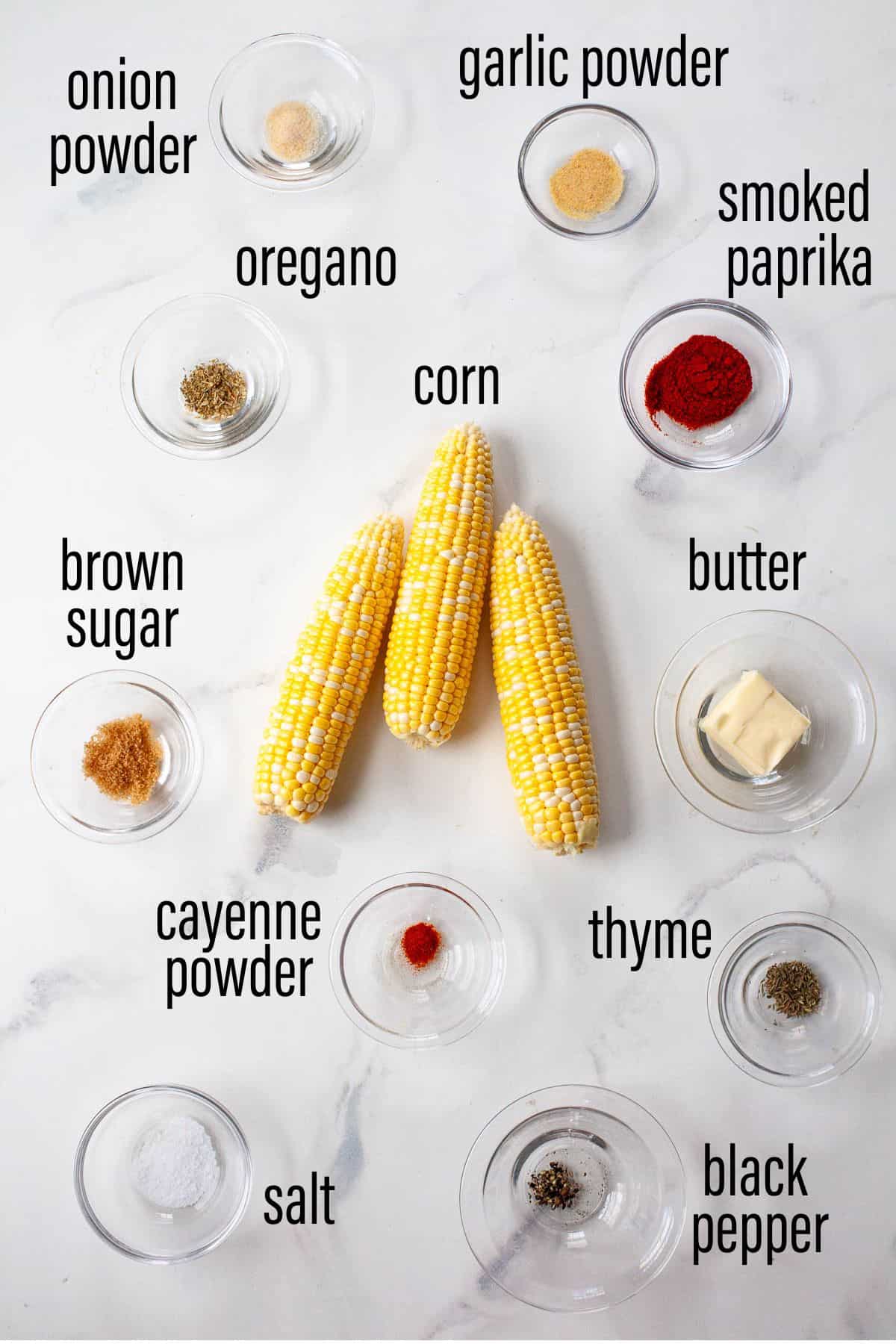
    Ingredients You’ll Need

    Notes on Ingredients

    corn: corn is at its best in late summer but if you don’t have fresh on hand, feel free to use frozen (defrosted first) or canned (drained and rinsed)

    butter: acts as a flavor enhancer by absorbing the aromatic and spicy notes from the seasonings

    smoked paprika: adds a smoky, woodsy flavor with a tiny bit of sweetness

    cayenne powder: this fiery spice gives heat to any dish

    garlic powder: flavor enhancer 

    onion powder: also adds a punch of flavor to the corn

    thyme: adds layers of flavor to the corn without being overwhelming

    oregano: gives a bold and pungent flavor 

    brown sugar: balances the heat from spices and adds a hint of sweetness

    salt and pepper: essential flavor enhancers 

    Equipment You’ll Need (affiliate links – if you make a purchase I receive a small commission):

    Cast iron pan

    How to Make Blackened Corn

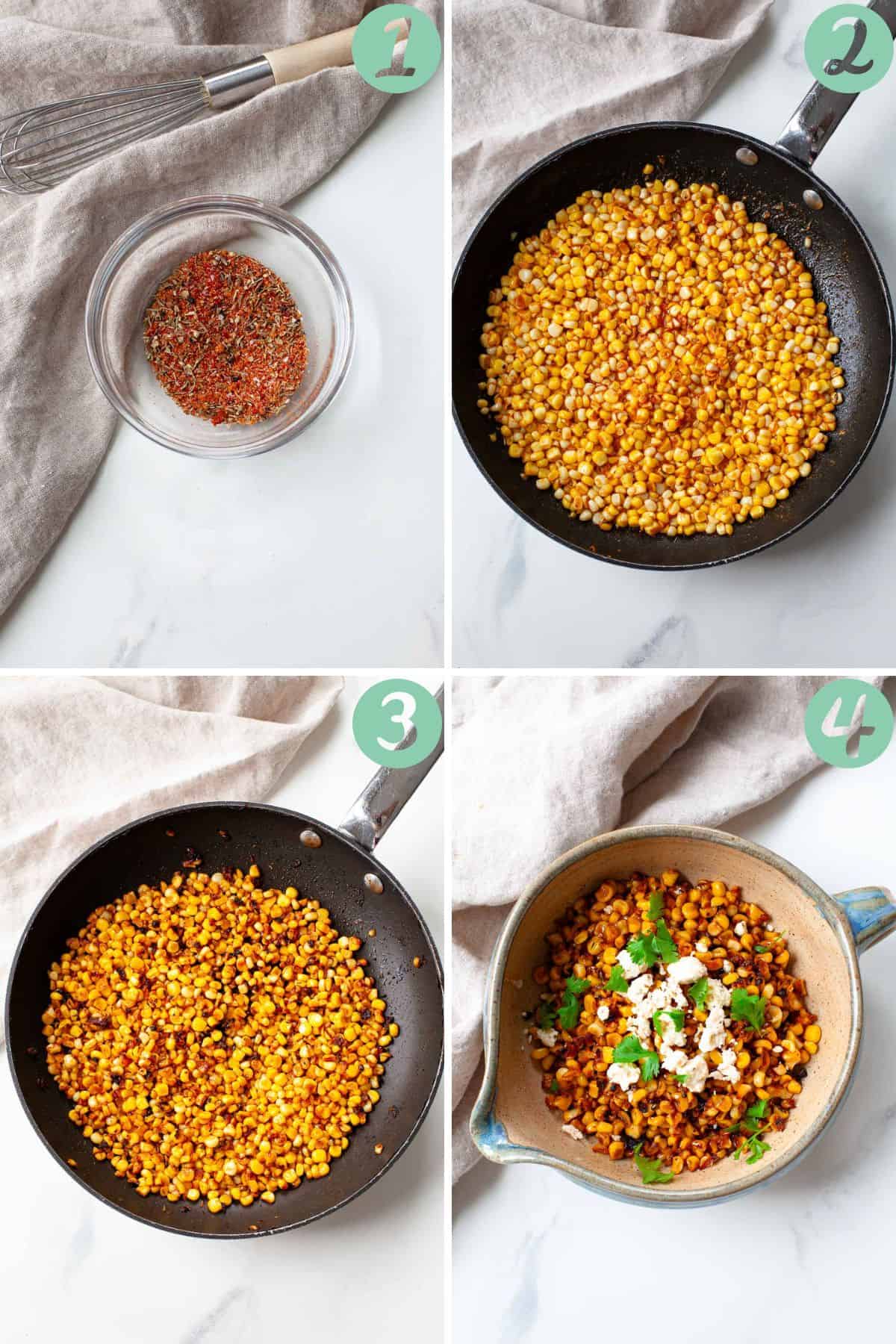
    step by step graphic of how to make blackened corn

    Combine spices. Whisk together smoked paprika, cayenne powder, garlic powder, onion powder, thyme, oregano, brown sugar, salt and pepper in a small bowl. 
    Add corn and spices to pan. Add butter to cast iron or nonstick pan over medium heat. Once melted, add corn and spices and stir until coated.
    Cook corn until charred. Cook corn, stirring occasionally, until browned and starts to pop, about 10 minutes.
    Serve. Serve corn warm or cold with and top with feta or cojita cheese and cilantro, as desired.

    Expert Tips

    I love elevating this recipe with some fresh cilantro and hefty sprinkling of feta or cojita cheese. You can use parsley too if you’re not a cilantro fan.
    Frozen corn works just as well as fresh corn – just be sure to defrost in the refrigerator over night first and drain any excess water. If you’re in a time crunch, you can defrost frozen corn in the microwave too.

    Recipe FAQs

    How do you char corn without a grill?

    Use a wide cast iron or nonstick pan, add butter, and get it hot! Once you add the corn to the pan turn it every few minutes, getting a nice sear on all sides. 

    How can I jazz up corn?

    Spice it up! Use a combination of sweet and spicy like brown sugar or honey with smoked paprika, cayenne, and black pepper. You can even add a little more heat with some diced fresh jalapeños! Feel free to get creative with fresh herbs like parsley or cilantro or even add crumbled feta cheese on top. 

    Does corn have any health benefits?

    Corn is high in insoluble fiber, which can help to regulate bowel movements and maintain healthy blood sugar levels. 

    blackened corn in bowl with handle topped with fresh cilantro and crumbled feta cheese beside kitchen towel

    Storage and Preparation

    Blackened corn leftovers can be stored in an airtight container in the refrigerator for up to 3-4 days or in the freezer for up to 3 months.

    To reheat corn, place it in the microwave for 60-90 seconds or reheat it in a pan over medium heat with a little butter or olive oil for a few minutes until warmed through. If frozen, defrost in the refrigerator overnight before reheating.

    Recipes that Pair Well

    Vegan Chickpea Burgers

    Baked BBQ Salmon

    Chicken Pesto Flatbread

    Air Fryer Whole Chicken

    Shrimp and Veggie Kabobs with Wild Blueberry Barbecue Sauce

    close up image of blackened corn garnished with cilantro and feta cheese in bowl with blue rim

    For more corn inspiration, check out my other recipes below!

    6 Ingredient Corn and Tomato Salad

    Slow Cooker Chipotle Corn Chowder

    Blackened Salmon Tacos With Corn Avocado Salsa

    The Best Mexican Street Corn Dip

    Summer Peach Corn Salad

    If you like this recipe, please be sure to comment and give it a 5 star rating below. If you make it, share it on Instagram and tag me @karalydonrd and I’ll re-share it with my followers! If you want to save this recipe for later, be sure to pin it on Pinterest!

    Don’t miss a recipe! Sign up to receive my monthly newsletter with a round-up of recipes from the previous month and get my FREE guide when you sign up: Rediscover the Joy in Eating: 5 Simple Steps to Stop Stressing Over Food + Enjoy Every Bite.

    Print

    clock clock iconcutlery cutlery iconflag flag iconfolder folder iconinstagram instagram iconpinterest pinterest iconfacebook facebook iconprint print iconsquares squares iconheart heart iconheart solid heart solid icon

    Description

    Ready in just 15 minutes, this blackened corn is perfect for a summer side dish. Charred in a cast iron pan with spices like smoked paprika, oregano, thyme, and garlic powder, this corn is packed with flavor and heat!

    1 1/4 teaspoons smoked paprika
    1/4 teaspoon onion powder
    1/4 teaspoon garlic powder
    1/4 teaspoon thyme
    1/4 teaspoon oregano
    1/8 teaspoon cayenne powder
    3/4 teaspoon brown sugar
    1/4 teaspoon salt
    Pinch of black pepper
    2 tablespoons butter
    4 ears of corn, shucked and kernels removed (about 3.5 cups kernels)*
    Optional: feta or cojita cheese and cilantro, for garnish

    In a small bowl, whisk together smoked paprika, onion powder, garlic powder, thyme, oregano, cayenne powder, brown sugar, salt and pepper until combined.
    In a large nonstick or cast iron pan, add butter over medium heat. Once melted, add corn and spices and stir until coated.
    Cook corn, stirring occasionally, until corn is browned and starts to pop, about 10 minutes.
    Serve warm or cold and garnish with optional toppings like feta or cojita cheese and cilantro.

    Notes

    You can use frozen corn as well – defrost the corn before cooking.

    Prep Time: 5 minutesCook Time: 10 minutesCategory: SideMethod: Cast ironCuisine: Summer

    Keywords: blackened corn, charred corn, blackened corn without the grill, cast iron corn

  • 24 High-Fiber Foods To Eat For Digestive Health

    24 High-Fiber Foods To Eat For Digestive Health

    24 High-Fiber Foods To Eat For Digestive Health


    Privacy & Cookies Policy


  • Glycolic Acid in Your Skincare – Mario Badescu Skincare Blog

    Glycolic acid is another one of those active skincare ingredients that’s often talked about and touted for its skin benefits. If you’re looking for a way to get smooth, radiant, and youthful-looking skin, glycolic acid could be the answer you’re looking for. Glycolic Acid is a type of alpha-hydroxy acid (AHA) that has an ability to exfoliate skin and refine its tone and texture.  

    How Does Glycolic Acid Work?

    Glycolic acid works by breaking down the bonds between dead skin cells, allowing them to be more easily removed from the surface of the skin. This process helps to improve the texture and appearance of the skin, making it look brighter, smoother, and more radiant.

    Glycolic Acid has the smallest molecule of all AHA’s which means it can absorb into the skin and exfoliate even better than other AHA’s this also makes it more tolerated on the skin. 

    Glycolic Acid – unlike Salicylic Acid (a BHA) can be slightly more tolerable on the skin depending on the product’s individual formulation and the concentration of ingredients.  Glycolic Acid works more at the surface level of the skin to refresh and renew whilst Salicylic Acid is more targeted towards blemishes and breakouts.  

    Skincare with Glycolic Acid

    Glycolic acid can be found in many skincare products including cleansers, toners, serums, and moisturizers. 

    In Mario Badescu Skincare Glycolic Acid stars as an ingredient in many of our products.

    Glycolic Treatment Gel : Glycolic Gel is a concentrated glycolic acid treatment which can help to remove pore clogging impurities. Its lightweight gel formula makes it ideal for problematic skin with blemishes and breakouts. 

    Glycolic Renewal Complex: Our Glycolic Renewal Complex is a unique overnight cream which helps to retexturize skin with the power of Glycolic Acid, combined with Papaya Extract to help further renew skin and provide fruit enzyme powered exfoliation and a range of moisturizing ingredients of honey our renewal complex softens and rehydrates and reveals brighter and smoother skin.  

    Glycolic Acid Toner: A toner can be one of the best delivery methods for glycolic acid. Use it after cleansing to refresh skin as it helps to balance and brighten with Glycolic Acid as its core ingredient. The alcohol-free formula also includes an infusion of Grapefruit extract and Aloe Vera helps to diminish the appearance of premature aging and uneven, congested skin. 

    Glycolic Foaming Cleanser: Our Glycolic Foaming Cleanser works to deeply cleanse and exfoliate the skin. With a concentrated AHA-Glycolic Acid base it’s a cleanser that helps to super cleanse skin (and as such should be used 1 to 3 times a week at the most). Functioning as a brightening cleanser it helps with dullness, clogged pores, hyperpigmentation and deeply cleanses away impurities, oils and dirt whilst helping to refine pores. 

    Glycolic Eye Cream: Eye creams with glycolic acid are few and far between as it’s a formula that requires special consideration to get right. Our rich and emollient eye cream with glycolic acid helps retexture the skin and improve the look of lines, wrinkles, and uneven skin tone making it ideal for a lackluster eye area. Reduce the appearance of fine lines, wrinkles, and dark circles around the eyes. For nourishment and hydration it also contains antioxidant-rich ingredients like aloe vera, avocado oil, and green tea extract.

    Benefits of Glycolic Acid for Skin

    Exfoliates the Skin

    Glycolic Acid can work as a chemical exfoliant – as the acids work to break down dead skin cells on the surface of the skin exfoliating can help to refresh and renew the skin for a healthier look. 

    Improves Skin Texture

    Glycolic acid can also help to improve skin texture – this is due to the process of removing dead skin cells on top of the skin and also deeply cleansing pores thus it leaves the skin feeling smoother (and this can also help your makeup apply smoother and look more seamless).

    Brightens the Skin

    Glycolic acid can also help to brighten the skin by removing dead skin cells and revealing the brighter, smoother skin that lies beneath. The brightening properties make it a particularly great ingredient for those with discoloration, dullness, and pigmentation. 

    Glycolic Acid FAQ

    Q: Is glycolic acid safe for all skin types? 

    A: Glycolic acid is generally safe for all skin types, although those with sensitive skin may want to use it in lower concentrations or less frequently. 

    Q: How often can I use glycolic acid products?

    A: The frequency of use will depend on the concentration of glycolic acid in the product and your skin type. Certain products with a lower concentration of glycolic acid may be used daily, while those with higher concentrations function more as a glycolic acid treatment of sorts and may need to be used less frequently. Consider starting out with a lower frequency of use and gradually increase the frequency as your skin becomes more tolerant – but always ensure you follow the instructions on your product!

    Q: Should I use glycolic acid in the morning or night? 

    A: Glycolic acid products are generally best used in the evening as they do have exfoliating properties and they may increase sun sensitivity. When using products with glycolic acid in your skincare routine be sure to use a broad-spectrum sunscreen with at least SPF 30 on a daily basis. 

    Whether you’re looking to exfoliate the skin, improve its texture, reduce the appearance of fine lines and wrinkles, brighten the skin, or hydrate it, glycolic acid could be the answer you’re looking for.

    *Not recommended for use with topical prescriptions, acne-erupted or sensitive skin.

    Categories: Skin Care |
    Permalink

  • Skin Care Routine For Your 20s – Why Starting Now Is Important

    Skin Care Routine For Your 20s – Why Starting Now Is Important

    While the turmoil of teenage skin may be behind you, it may be a surprise that your skin still needs attention. Learn about skin care routines in your 20s and why starting to take care of your skin now is a good idea. 

    Your twenties: An exciting era full of change, and your first official decade as an adult. And while the turmoil of teenage skin may be behind you, it may come as a surprise to find that your skin still needs a little TLC. Whether you already have a skin care routine in place, or you want to lay down the groundwork to nourish, protect and address areas of concern, this is a great time to solidify some good habits with natural skin care products from Eminence Organics. 

    It’s never too early to create a skin care routine – and starting skin care in your 20s is ideal. In an interview with Marie Claire, New York cosmetic dermatologist Dr. Paul Jarrod Frank explained it like this: “A 60-year-old who has never done anything and buys a $200 antiaging cream just isn’t going to see the same results as someone who has been taking care of her skin throughout earlier aging stages.”

    What Happens To Your Skin In Your 20s

    Sun damage, adult (and hormonal) acne, dry spots – these are just some of the challenges you might experience with skin during your twenties. Pile that on top of physiological changes, daily stress and environmental damage and pollution, and it’s no wonder your skin is rebelling!

    So, why are the twenties such an important time to start with a proper skin care routine? It’s during this period that skin begins to show signs of:

    Damage due to pollution levels
    Increased breakouts causing the appearance of hyperpigmentation and scarring
    UV exposure
    Poor diet
    Stress

    As you go through your twenties, you might notice that skin care products that once worked well on your teenage skin are no longer as effective. Oil levels are fluctuating and that, combined with environmental pollution, can result in an increased chance of clogged pores and breakouts. In addition, excess sun exposure in your late teens is now showing up in the form of dry patches and sun spots. Fine lines might also be creeping in around the eyes or forehead as a result of dehydration or increased water loss. And if that’s not enough to get you on the skin care train, this is also the decade when collagen production begins to slow.

    During this period, choosing skin care products that offer protection against free radicals and replenish skin cells is important. Eminence Organics Lead Skin Care Trainer Natalie Pergar explains, “Products full of antioxidants will provide long-term protection of the skin 
 by preventing damage from free radicals, they can help reduce surface inflammation and boost collagen production to keep skin cells plump and youthful.”   

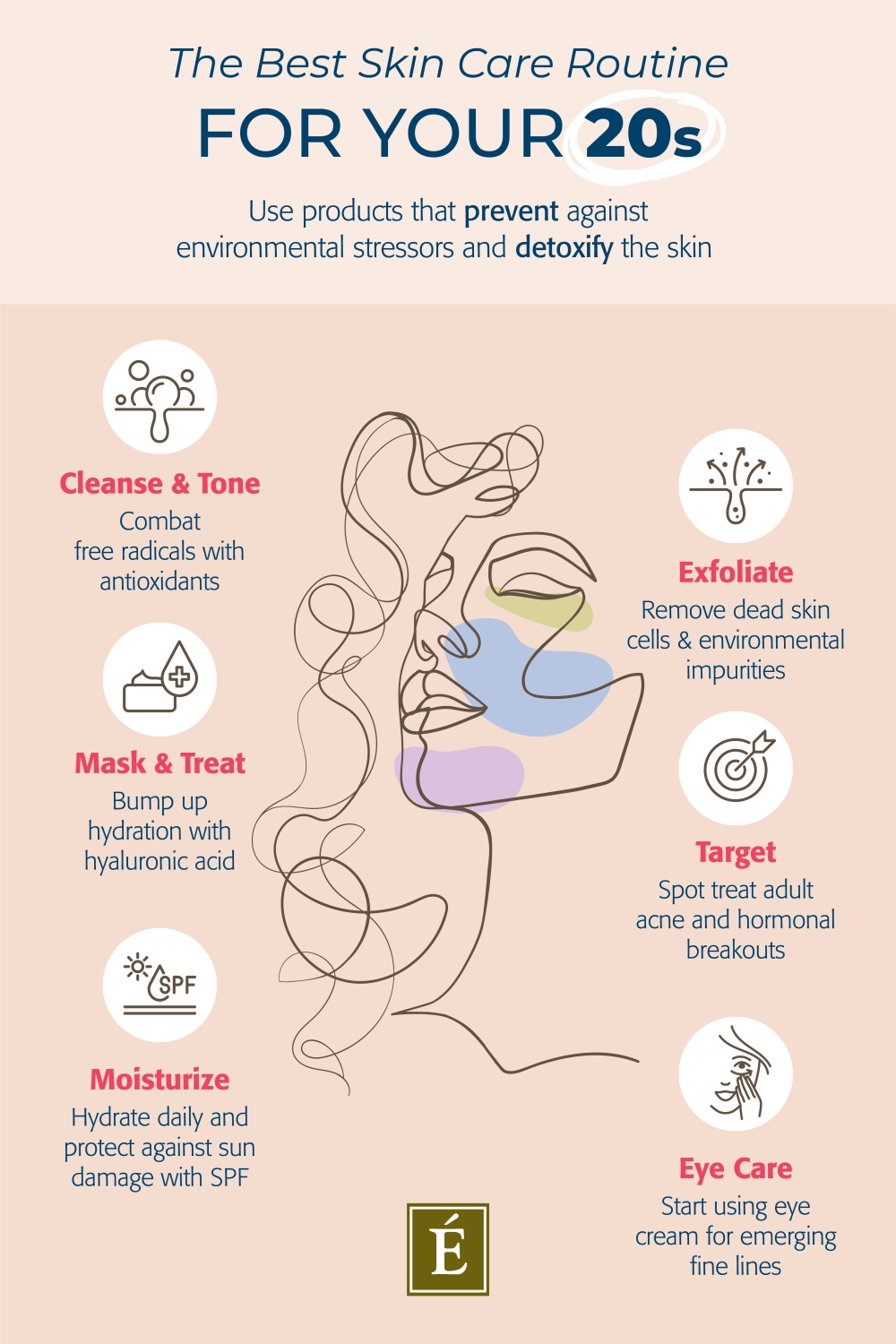
    The Best Skin Care Routine For Your 20s

    Creating a skin care routine at this point in your life doesn’t have to be overly complicated, but should include some essentials. Every effective routine features these steps:

    Cleanse & Tone – Use a gentle cleanser or exfoliating wash to rinse away buildup and makeup without overstripping natural oils from the skin. Formulas with antioxidants are especially helpful as they combat free radicals and slow down signs of aging. Follow that up with a refreshing boost of revitalizing mist in the morning.

    Exfoliate – Keep your skin looking radiant and fresh by exfoliating two to three times a week. Exfoliants help reduce buildup of dead skin cells (which contribute to breakouts) while buffing away environmental impurities that come into contact with the skin. Looking to save a step? As mentioned, you can always reach for an exfoliating wash. 

    Mask & Treat – Masks are exceptional for skin health because they contain concentrated levels of nutrients and vitamins to give your skin a healthy and vibrant glow. Choose a mask that combats dry spots and restores moisture with a hydrating formula. 

    Target – Targeted treatments are great for addressing specific areas of concern, especially adult acne. Intensive formulas help with breakouts that could still be plaguing you, even well after your teenage years. 

    Moisturize – Healthy skin is hydrated skin! An antioxidant-rich moisturizer or serum seals in natural hydration while replenishing skin down to deeper levels. For even more benefit, look for a moisturizer that contains sunscreen to protect against sun damage and treat your lips to a hydrating formula for optimal moisture.

    Sunscreen – If your moisturizer doesn’t contain an SPF, don’t skimp on this step! Sun protection is an important part of a skin care routine because it shields against damaging UVA and UVB rays and slows the appearance of aging. Start now and you won’t regret it! 

    Eye Cream – While the previous steps are the essentials for skin care in your twenties, you might also feel inclined to boost your routine with extra products to serve as a preventative measure. The Eminence Organics Product Support team suggests adding an eye cream for this age group since the very first signs of fine lines can start to appear in your twenties, and an eye cream or serum can help treat them early on. 

    Do you have an effective skin care routine for the twenties age group? Share with us in the comments or through social media. Or, if you’re still looking for a routine personalized for you, visit an Eminence Organics Spa Partner for professional recommendations.

    Not in your 20s? Find skin care information for your age group: 

    This article was originally written in December 2019.

  • The Best Ingredients For Oily Skin—Start Using These Now!

    The Best Ingredients For Oily Skin—Start Using These Now!

    Do you struggle with constantly shiny skin? Are you having to reapply your makeup every few hours? Is accidentally leaving your blotting sheets at home a cause for panic? Chances are you have oily skin (Skin Type 1-4), generally characterized by excess oil production and visibly larger pores (most commonly in the T-zone). This type of skin is also more prone to clogged pores and blemishes. While your skin type boils down to a few unchangeable factors, such as genetics and age, a thoughtful skincare routine and the right ingredients can do wonders for managing oily skin and preventing breakouts.

    How To Tell If You Have Oily Skin

    Yes, all people produce oil, also known as sebum, as it is a way for our bodies to excrete waste out of the skin. This is how your skin protects and moisturizes itself. Sebum is key to preventing moisture loss and maintaining barrier function. Dry skin types naturally produce very little sebum on their own (not to be confused with dehydrated skin, which lacks water).

    But what constitutes a true, oily skin type? I’m here to help you understand oily skin and its many facets. While we can’t always identify it by appearance– as some people experience thin, slick, and shiny sebum, and others matte, waxy sebum–there are a few other factors that we can keep in mind.

    Pore Size

    The size of your pores is generally the first place to start when determining if you have oily skin. The larger the pore, the more oil you will produce. This is because oil and sweat expand the pore walls, causing them to stretch out. The good news? You can minimize the appearance of your pores over time.

    Acne

    Not all people with oily skin will have acne, however, almost everyone with acne has oily skin. Oil laying on top of the skin breeds bacteria, leading to clogged pores and breakouts. Clogged pores ultimately result from hardened oil and dead skin cells falling into the pore instead of properly shedding.

    Age

    Sebum production can also change with age, usually decreasing in production as you get older. In general, your skin type is likely to change every seven to nine years. One study found that sebum production increases during teenage years, declining for women during menopause and rapidly decreasing for men a bit later in life. Since sebum provides natural lubrication for the skin, using hydrating serums and the right moisturizer for your skin type is important to your routine as you get older. I’ve always said that so many skin problems are a direct result of not allowing your skincare routine to grow alongside you. While certain products may have been the key to solving relentless hormonal acne in your teens, they likely won’t deliver the same results as your skin matures and develops new problems.

    Still unsure if your skin is classified as oily? I encourage you to take the Skin Type Quiz! With just a few simple questions, you can learn more about your skin, as well as receive personalized product recommendations. 

    Ingredients To Use For Oily Skin

    While we can’t change our skin type or minimize our pores (just their appearance), there are still ingredients that can help decrease oil production and minimize breakouts. So, let’s dive into the specific ingredients that you should use to care for your oily skin. 

    Salicylic Acid

    Salicylic acid is one of the golden ingredients for skin, and rightly so. Most people associate it with being an oil-soluble BHA that dives into the pores to sweep out oil and reduce the formation of acne. While this is true (and a great reason to use it as a spot treatment!) salicylic acid is useful in so many other ways.

    One of the best parts about salicylic acid is that it can provide nearly instant results. For starters, it is great for softening the outer layer of skin. This ingredient provides conditioning benefits that not only improve how the skin looks but also how it feels. It clears clogged pores and lessens visible bumps and breakouts in products like Pore + Wrinkle Perfecting Serum. Salicylic acid is also an excellent superficial exfoliant. It works to slough dead cells off the outer layers of skin, providing an instantly smoother, brighter complexion.

    While many people hold the superstition that all exfoliating acids have to be at a low pH, salicylic acid provides wonderful exfoliating effects at a neutral pH. A great example of this is the AHA/BHA Blemish Control Cleanser which uses salicylic acid as an exfoliating BHA to clean oil from the skin as well as exfoliate and remove dead skin.

    There are also a few benefits to salicylic acid that may take a few weeks to notice. For one, this ingredient has noticeable anti-inflammatory effects that are great for those that suffer from acne and signs of inflammation. It will also communicate with the cells and tell them to reduce the amount of sebum they are producing. This not only removes the oil from the pores but also helps decrease the overall amount of oil produced on the skin. Pretty incredible, right?

    Niacinamide

    Niacinamide is an ingredient that can do far more for your skin than most people know. One study published in the Journal of Cosmetic Laser Therapy found that daily application of two percent niacinamide significantly reduced the rate at which the body produced sebum as well as reduced overall sebum levels in only 4-6 weeks. Niacinamide’s sebum-reducing properties are also great for those that struggle with the occasional oil-induced breakouts.

    Sodium PCA

    Sodium PCA is another great ingredient because this one is actually an inherent part of sebum that is produced within the skin, meaning it’s a natural component already. PCA is a great material on its own, but when combined with sodium, it makes for an even better delivery system into the skin. It also serves as a humectant, which will help draw moisture up into the skin without the use of other lipids. 

    Witch Hazel

    While witch hazel has built itself an unpleasant reputation for being drying and irritating, this misunderstood ingredient is actually a great option for those with oily skin. If it still stings to think about (those ‘90s toners were no joke), I think it’s important to note that products no longer formulate with harsh concentrations of 100% witch hazel. New formulations combine a small amount of witch hazel with hydrating ingredients, allowing you to reap the ingredient’s oil-cutting benefits without drying out your skin. Witch hazel’s astringency effect is great for tightening pores, healing the skin, and reducing inflammation, making it a hero product for those with excess oil.

    While toners like Balancing Skin Tonic are the most classic method for delivering witch hazel, masks like Energizing Clay Masque and moisturizers like Daily Mattifying Solution are great alternatives with the same astringent benefits!

    Panthenol

    Lastly, Panthenol is an amazing ingredient when it comes to reducing inflammation. It is also non-comedogenic, making it a great choice for those struggling with acne. It’s great for improving skin conditions and reducing any scarring associated with acne.

    Ingredients To Avoid For Oily Skin

    Now that you know oily skin’s ingredient heroes, it’s time to discuss the equally important matter of which ingredients to avoid when caring for oily skin. Here are a few ingredients that I recommend keeping out of your routine
 

    Drying Alcohols

    You may be thinking that the goal when dealing with oily skin is to dry it out, but this is not the case. Products containing drying alcohols are only going to strip your skin entirely of sebum, causing it to go into panic mode and produce even more. After all, sebum provides that natural lubrication that keeps your skin healthy. We don’t want to eliminate it, we just want to keep it at manageable levels.

    Strong Cleansers

    Many foaming or gel cleansers are still formulated with ingredients like Sodium Lauryl Sulfate, Sodium Laureth Sulfate, or Ammonium Laureth Sulfate. While these ingredients are surfactants, meaning they are cleansing agents that cut oil from the skin, they are not in alignment with your skin’s natural pH. These ingredients will strip too much water out of your skin with every wash, leaving you with damaged, dehydrated skin.

    Mineral Oil and Petrolatum

    Oily and acne-prone skin types should steer clear of mineral oil and petrolatum due to their comedogenic properties. These ingredients are very occlusive and are likely to trap dead skin cells and sweat into your skin, leading to clogged pores. 

    Isopropyl palmitate and Isopropyl Myristate

    These are esters that are commonly used as a thickening agent in moisturizers and hair care. While they are not necessarily a no-no for oily skin, those with acne should try to avoid them due to their comedogenic properties. They may feel lighter than traditional oils, however, they are known to cause clogged pores and contribute to breakouts with repeated use. 

    The most important thing to keep an eye out for when researching products is to pay attention to where your information is coming from. A lot of skincare do’s and don’ts can be demonstrated with science, but a lot of it just comes down to experience. It’s critical to look at who you’re receiving information from and what qualifications they have. At the end of the day, you can spend a lot of money on products falsely advertised for oily skin and still end up disappointed when you’re not getting the results you wanted.

    Next, learn how to spot-treat a pimple at every stage.

  • 5 Tips to Cope with a Bad Body Image Day

    5 Tips to Cope with a Bad Body Image Day

    Bad body image day? Or week? Or month? We’ve all been there. And summertime is especially hard for body image. Sharing five helpful tips to cope with a poor body image day.

    Summer is THE hardest season for body image so if you find yourself struggling right now please know that you are NOT alone.

    Why is summer so tough for body image? 

    It’s freaking hot out so you’re going to want to wear less clothing. Less clothing means more of your body is exposed, opening you up to more vulnerability.
    It’s swimsuit season – need I say more?
    Summer is a season for more social outings and gatherings. This can bring up a lot of insecurities, especially if your body changed over the winter and you’re seeing people who you haven’t seen in some time.

    Our culture doesn’t make it any easier on us either. We’re bombarded with ads telling us to get “bikini ready”, fitness instructors telling us to “get those six pack abs for the beach,” and wellness influencers selling us on “feeling our best this season” by purchasing their detox tea.

    No wonder you feel so much pressure to change your body come summertime.

    Rather than looking for a quick weight loss fix which will ultimately lead to weight regain, what if you chose to work with your body instead of working against it?

    What if you chose to cope with a poor body image day instead of trying to “fix” your body?

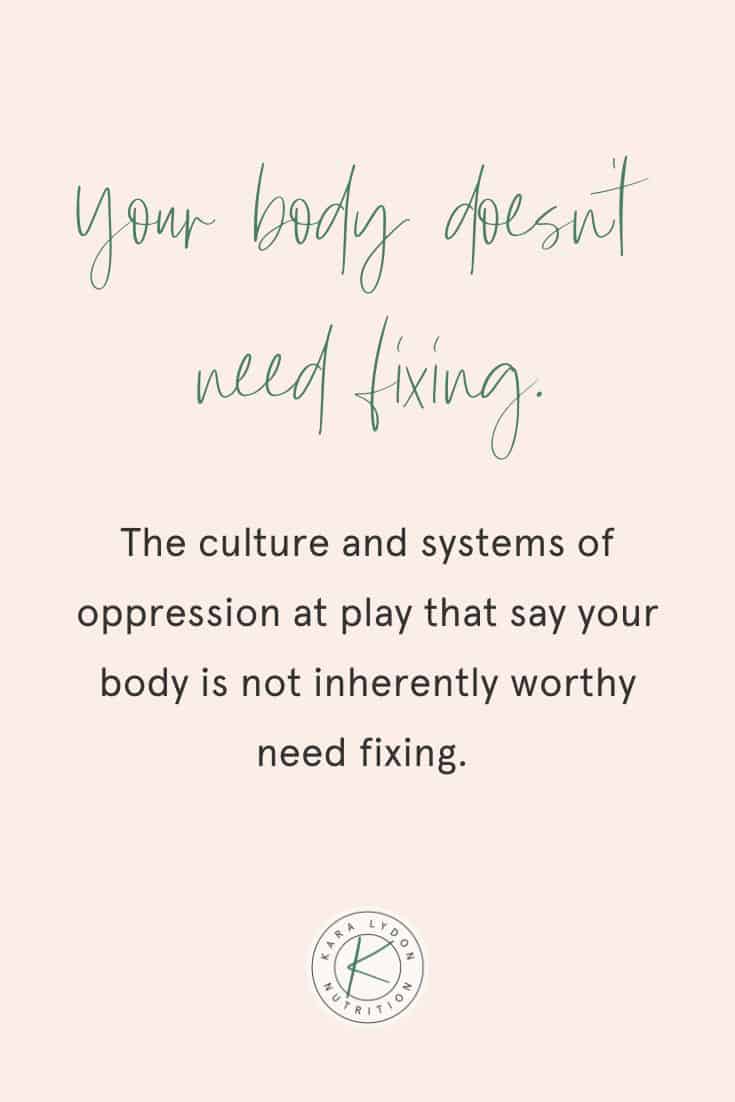
    Your body doesn’t need fixing. The culture and systems of oppression at play that say your body is not inherently worthy need fixing. 

    Graphic with quote: "Your body doesn't need fixing. The culture and systems of oppression at play that say your body is not inherently worthy need fixing."

    5 Ways to Cope with a Bad Body Image Day (or Season)

    1. Sit in the suck

    There is healing and value in sitting in the suck (as body image therapist Bri Campos refers to it). We need to validate our emotions. To let grief and sadness and anxiety wash over and through us.

    There is a profound valid grief that comes up in the acknowledgment that we live in a fat-phobic society that does not accommodate for fat bodies.

    Allow yourself to feel your feelings – give them space. Maybe you process them in therapy (with a fat positive therapist or dietitian).

    Sweeping your emotions under the rug is only going to create a build-up and once there’s no room left under that rug, those repressed emotions are going to feel BIG and intense because they’ve been bottled up for so long.

    You can’t toxic positivity your way out of a bad body image day. Give yourself grace and validation for how you are feeling. Hold yourself with tenderness.

    2. Know what your “off ramps” are.

    Poor body image can feel like you’re driving on a rotary and you just keep going around and around and around because you don’t see any off ramps (shout out to Marci Evans for this analogy!). You’re stuck in it and you’re having a hard time seeing a way out.

    Although it’s important to honor and sit with your feelings, you don’t want to be in your feels 24-7. When you’re ready to shift off the rotary, remember what your off ramps are – these are tools, skills, practices, and actions that make you feel better.  

    Your off ramps (or body image toolbox) will be unique to you. Here are some examples that might resonate with you (feel free to add them to your rotary!):

    meditation
    dancing
    singing
    art
    walking outside
    getting in nature
    stretching
    drinking water
    taking a shower
    swimming
    calling a friend
    loving on a pet
    writing or journaling
    lifting weights
    yoga
    listening to a favorite podcast
    getting a massage or using self-massage
    lighting a candle
    buying fresh flowers
    utilizing a mantra
    practicing gratitude
    taking a nap or resting
    reading a favorite book
    sipping warm tea
    wrapping yourself in a cozy blanket
    visiting your favorite coffee shop

    3. Aim for 5 percent better.

    What small act can you take today to make yourself feel 5% better? I love the concept of 5% better because it takes some of the pressure off.

    When it comes to body image, there are so many body positive messages telling you to love your body, and it creates another unrealistic ideal to aspire to. It’s another thing to feel like you’re failing at.

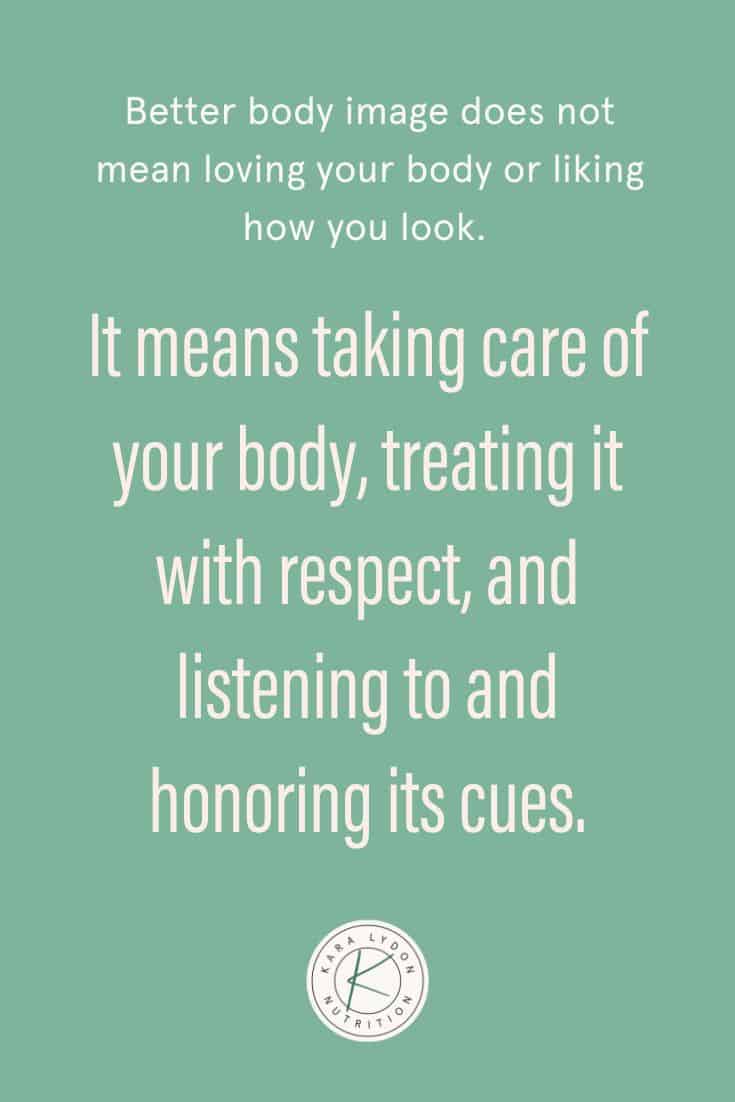
    Better body image does not mean loving your body or liking how you look. It means taking care of your body, treating it with respect, and listening to and honoring its cues.

    Graphic with quote: "Better body image does not mean loving your body or liking how you look. It means taking care of your body, treating it with respect, and listening to and honoring its cues."

    You don’t need to aim for feeling 100% better because that’s also not realistic given the oppressive culture we live in. But can you engage in something that makes you feel 5% better? You’re aiming for a subtle shift. A small act.

    Hilary Kinavey and Dana Sturtevant, authors of Reclaiming Body Trust, tell their clients and members of their community to aim for C- work. Once again, we’re not looking for A+ body image work – that’s going to set us up for perfectionism and black-and-white thinking, which is inherent in diet culture and white supremacy.

    Can you aim for C- body image work? Can you aim for feeling 5% better today?

    4. Practice self-compassion and mindfulness.

    Mindfulness allows us to sit with what is without judgment. This goes back to what I was talking about earlier with sitting in the suck. Notice what feelings are coming up for you in the moment and give them space to move through you.

    Mindfulness also allows us to remain open and curious – perhaps you can get curious around what prompted the bad body image day. Was there a trigger?

    Maybe you saw some photos of yourself on Facebook that you didn’t like. Maybe you’re at that time in your cycle when you’re extra bloated. Maybe you spent too much time scrolling on Instagram comparing your body to others.

    Knowing your triggers can also be helpful in coping with bad body image days. It allows you to name what’s happening and provides some context. “Oh that makes a lot of sense I’m having a bad body image day today because I’m on day 14 of my cycle.”

    Information and data collecting can feel empowering too because it helps you feel less helpless around why you might feeling a certain way.

    You might also dig a little deeper – if the narrative in your head says “I feel fat”, see if you can dig a little deeper and ask yourself “what else am I feeling right now?” You might notice you’re feeling burnt out after a few really busy weeks at work, maybe you’re feeling a lot of grief after the loss of a loved one, maybe you’re feeling stressed out because of a conflict with a friend.

    Body image is often a window into our deeper emotional experiences. You focus on body image because it’s familiar and it feels like there’s something you can change or fix. And it feels easier to fixate on the body than it does on the deeper, more painful emotions that maybe there is no immediate fix for.

    Graphic with quote: "Body image is often a window into our deeper emotional experiences."

    Again this is an opportunity to practice self-compassion. Talk to yourself with kindness and understanding. “Oh sweetie, of course you’re feeling bad about your body right now. You’ve had a really stressful couple weeks at work and you’re totally burnt out. It makes complete sense you don’t feel good in your body right now.”

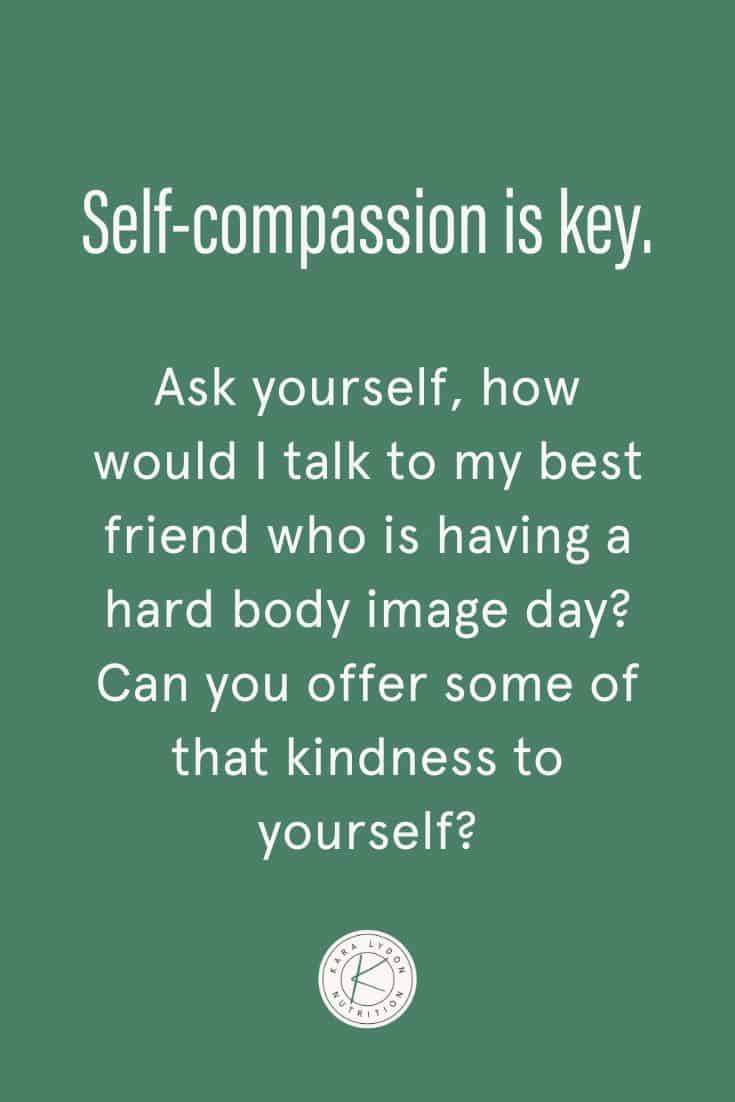
    Self-compassion is key. Ask yourself, how would I talk to my best friend who is having a hard body image day? Can you offer some of that kindness to yourself?

    Graphic with quote: "Self-compassion is key. Ask yourself, how would I talk to my best friend who is having a hard body image day? Can you offer some of that kindness to yourself?"

    5. Name it to distance from it.

    As humans we have a tendency to over identify with our thoughts. A bad body image day might lead you to say things to yourself like:

    I have the worst body image.

    I hate my body.

    I’ll never have a good relationship with my body.

    I’m so gross. 

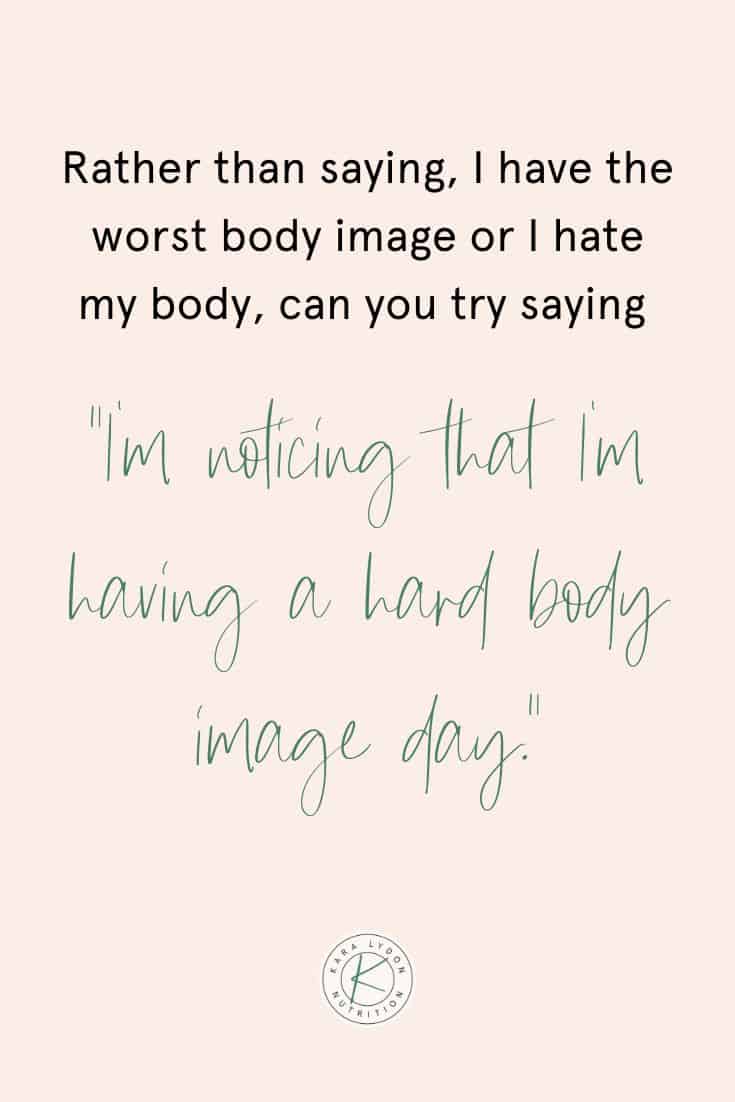
    Rather than saying, I have the worst body image or I hate my body, can you try saying “I’m noticing that I’m having a hard body image day.”

    Graphic with quote: "Rather than saying, I have the worst body image or I hate my body, can you try saying 'I'm noticing that I'm having a hard body image day.'"

    Not only does this create a little bit of distance from the thought but it also serves as a reminder that this feeling is fleeting and temporary. It does not need to define you.

    Were these tips helpful? If so, let me know in the comments below. I’d LOVE to hear from you!

    For more body image related blog posts:

    3 Ways to Navigate When Clothes Don’t Fit You (without another diet!)

    How to Make Your Social Media More Body Positive

    Can You Lose Weight with Intuitive Eating?

    Never miss a blog post! Sign up to receive my monthly newsletter with a round-up of blog posts from the previous month and get my FREE guide when you sign up: Rediscover the Joy in Eating: 5 Simple Steps to Stop Stressing Over Food + Enjoy Every Bite.

  • The Best Instant Pot Shredded Chicken Recipe

    The Best Instant Pot Shredded Chicken Recipe

    The Best Instant Pot Shredded Chicken Recipe


    Privacy & Cookies Policy


  • Glowing Skin in NYC: A Review of the Mario Badescu Facial

    If you’re looking for the best facial NYC has to offer, look no further than the Mario Badescu Skin Care Salon! I recently received the most luxurious 60 minute European Facial that left my skin glowing and revitalized. From steaming of the face to extractions and targeted treatments to address my dark spots, skin dullness and sun damage from many days soaking in the sun without SPF (bad! I know) – I was left feeling like a beautiful, glowy goddess and was beyond pleased with the results. My skin felt rejuvenated, refreshed and ready for the day. The esthetician even applied a moisturizer with SPF to my face as the last step, to keep my skin protected from sun rays that I now know can cause UVA and UVB damage. If you’re looking for an amazing facial experience in Manhattan, read on for my review of the Mario Badescu European facial!

    The Mario Badescu Skin Care Salon

    Upon my arrival at the skin care salon, I was greeted by a receptionist and introduced to my facialist Maria – as she was preparing my room, I was seated in the waiting area for a few minutes. During my short wait, I noticed the wall dazzled with photographs of celebrities and supermodels with short notes of thanks for their beautiful skin. It made me feel like an A-list celebrity awaiting my turn for a skincare makeover. 

    Maria was sweet and welcoming, she brought me to a warm sunlit room and gave me a soft robe and a headband to change into as preparation for my facial spa experience. It was serene and felt like an oasis in the middle of busy Manhattan, relaxing ambient music could be heard softly playing in the background – I was already letting go of all my stress and worries, even before the facial began! After changing, I layed down and was ready for my pampering. 

    What is a Mario Badescu European Facial?

    I chose the world renowned 60-minute European facial, that is meant to deeply cleanse, purify and improve the appearance of stressed and tired skin. It consists of detoxifying steam to open the pores and prepare your skin for extractions, removal of all the impurities, blackheads and whiteheads you might have,a very relaxing face and neck massage that will lift stress and ease tension, followed by a combination of customized masks chosen by your facialist to address the specific skin concerns you want to focus on. 

    The Steps of the Facial

    Consultation: Maria assessed my skin type and concerns and recommended a customized facial that targeted my dark spots from sun damage as well as skin dullness and lack of radiance. 

    Cleansing: To prepare my face, Maria removed make up, dirt and oil with a gentle foaming cleanser ensuring a clean canvas for the rest of the treatment.

    Exfoliation: Following cleansing, she applied a gentle botanical exfoliating scrub to remove dead skin cells, brighten the complexion, and encourage cell turnover.

    Steam: I already felt relaxed and cozy, as the warm, soothing steam was directed at my face for about 10-15 minutes, it opened up my pores and prepared the skin for extractions. I was so relaxed, I almost fell asleep!

    Extractions: My facialist Maria began to gently remove blackheads, whiteheads, and other impurities from my skin using specialized tools.

    Massage: After extractions, she performed a relaxing facial massage and neck massage to increase circulation, reduce puffiness, and improve the overall appearance of my skin. All my stress lifted, and I felt so peaceful. 

    Mask: Maria applied customized masks to my skin designed to address my specific concerns with skin dullness and sun spots – one was a Glycolic Acid Mask and the other was a Vitamin C Treatment. The masks were left on for several minutes to allow the ingredients to penetrate the skin and work their magic. 

    Toning: After masking, she applied a cucumber toner to my skin to restore the pH balance and prepare my face for moisturizer.

    Moisturizer with SPF: To protect my newly revitalized skin from sun damage, my facialist Maria applied a lightweight, oil-free moisturizer with SPF 30 which is a non-greasy moisturizing sunscreen. It left my skin feeling soft, supple, hydrated and protected from UVA / UVB damage. 

    The Results

    Overall, the European Facial at Mario Badescu Skin Care Salon was an experience I’ll never forget. The serene atmosphere, personalized attention, and expert techniques used by my facialist Maria left me feeling like a VIP celebrity. My skin looked and felt rejuvenated, hydrated, and protected from the damaging effects of the NYC sunshine. If you’re looking for a truly transformative facial experience in NYC, I highly recommend giving the Mario Badescu European Facial a try at their bespoke Skin Care Salon in Manhattan. Booking an appointment online or by phone is super quick and it’s the perfect midday pick me up that could be easily carved into your busy schedule. What are you waiting for? Book your facial today and you won’t be disappointed! 

    Categories: Skin Care |
    Permalink

  • Breakouts Around Your Mouth: What Is Causing Them?

    Breakouts Around Your Mouth: What Is Causing Them?

    Have you noticed acne around your mouth? Or maybe you’re dealing with uneven texture or redness. While acne near the mouth is an issue for some, there are other common causes of texture, redness and bumps in that area. Read on as we explore the different types of skin issues that can develop around the mouth, how to identify them, what causes them and how to treat them.

    Acne Around The Mouth 

    Acne is a skin condition that can show up as blackheads, whiteheads, pimples and other blemishes. The four main factors that contribute to acne according to the Mayo Clinic are excess oil (sebum) production, clogged hair follicles, bacteria and inflammation. On top of this, there are certain things that may trigger or worsen acne, including hormonal changes, certain medications and stress. 

    While it can often be confused for other issues, especially when it’s limited to a certain area like the lips, jawline and chin, acne around the mouth tends to look like “typical” acne. Along with redness, you’ll see pustules (whiteheads) and some congestion (comedones or blackheads). This could be triggered by a few things. Touching your face with your hands can introduce acne-causing bacteria to your skin, as can using things around the mouth that may be covered in bacteria (cell phones and some musical instruments). Additionally, certain ingredients in products like lip gloss can clog pores and contribute to acne in the area, according to Byrdie. 

    New York-based dermatologist, Dr. Hooman Khorasani, tells us: “The most common form of acne found on or around the lip is non-inflammatory comedonal acne, where white or black comedones are often seen. Comedonal acne results when the hair follicles on the lip margins are occluded. The most common culprit lies in the application of occlusive products such as Vaseline, lip balm, makeup or other comedogenic creams. Treatment involves discontinuing the application of the occlusive agent, as well as application of topical tretinoin and exfoliation.” 

    Another common cause of acne around the mouth is wearing a mask. Heat and moisture can get trapped against the skin, irritating the oil glands, which can result in pimples — or “maskne” as it has come to be known in the post-2020 era. Bacteria thrive in a moist and humid environment, making frequent maskers (like spa professionals and hospital workers) susceptible to breakouts in the area. Wearing makeup under a mask doesn’t help and neither does reusing masks without washing them (with gentle detergent) after each wear. 

    Hormones can also be the culprit when it comes to blemishes along the chin and jawline. Though we often associate acne with our teen years, hormonal acne can appear at any time and is caused by an excess of hormones due to menstruation, pregnancy and increased androgen levels. These fluctuations result in inflammation, excessive oil production, clogged skin cells and bacteria production. While it tends to appear in the T-zone during puberty, hormonal acne typically forms along the chin and jawline in adults. 

    Whatever the cause, make sure to keep the area clean. A swipe of the Clear Skin Willow Bark Exfoliating Peel is a great way to minimize breakouts in the area, especially under a mask or face covering. It contains gentle salicylic acid that removes surface impurities and dirt from the skin and willow bark to improve the look of the skin in the area. 

    How To Treat Acne Around The Mouth

    If this is what you’re seeing around the mouth, cleansing and exfoliating the area is the best way to treat it. Our Acne Advanced Cleansing Foam is a great place to start. It contains encapsulated salicylic acid which gently exfoliates and tones the look of uneven skin. Follow it up with the Acne Advanced Clarifying Mask and Acne Advanced Clarifying Hydrator and you’ll be good to go. 

    Our Clear Skin Probiotic products are another option for treating acne around the mouth. Try the Clear Skin Probiotic Cleanser, which gives a soft, gentle foaming action, and follow it with the Clear Skin Probiotic Moisturizer. Creamy and lightweight, it applies really nicely to the skin. Both use tea tree oil, willow bark extract and cucumber to help treat the skin. 

    Perioral Dermatitis

    Perioral dermatitis is a red rash that can appear around the mouth. Signs of this condition include scaly, dry and flaky skin with swollen, inflamed bumps called papules — no wonder it can easily be mistaken for acne. This rash is most common in young women between the ages of 15 and 45. 

    Some of the causes of perioral dermatitis include the use of topical steroid creams, hormonal changes and dysfunction in the epidermal layer. It can also be triggered by ingredients in products that you use in the area, so changes in toothpaste, irritants from shaving cream and even certain types of chewing gum can bring on this uncomfortable condition. Other things that can aggravate it include coffee, alcohol and spicy foods. While eliminating these things from your life isn’t always easy, it can make a big difference once the cause is identified. Pro tip: Brush your teeth before you wash your face so that any potential irritants can be rinsed away. 

    Another common ingredient that can cause or exacerbate the condition is SLS, or sodium lauryl sulfate, which is used in many facial cleansers. Eminence products contain no SLS, so making the switch to one of our organic cleansers can be a good first step. 

    It’s best to cease and desist if any of these culprits are in your rotation. In other words, if you’ve changed something about your routine lately, you may be able to trace it back to one thing and eliminate that. 

    Perioral dermatitis may last for months or even years without treatment. There is no cure, but long-term remissions are possible. It is recommended that you consult your doctor or dermatologist if you suspect the rash or breakouts around your mouth are not acne. Sometimes the rash disappears, then reappears. The same treatments that worked the first time are likely to work again.

    Watch as our Lead Skin Care Trainer, Natalie Pergar, discusses the difference between acne around the mouth and perioral dermatitis, and suggests some products that help treat acne around the mouth. 


    Are you dealing with breakouts or a rash around your mouth? Visit an Eminence Organics Spa Partner to find out whether it’s acne or something else, how to treat it and when to see a dermatologist.  


Padißahbet Giriß
Padißahbet
Betnano Giriß
Crypto Casino
Padißahbet Giriß
new online casino
Padißahbet GĂŒncel Giriß