Author: admin

  • 3 ways to practice self compassion around the holidays

    3 ways to practice self compassion around the holidays

    The holidays can feel overwhelming and stressful. The antidote? Add self compassion to your holiday wishlist this year. In this post, we’ll talk about three ways to practice self compassion around the holidays.

    The holidays can be a joyful, magical time filled with special traditions and they can be a time of stress and burnout. With all the cultural expectations of holiday cards, gift giving, shopping, traveling, decorating, and parties, it can start to feel overwhelming.

    And when you’re overwhelmed and stressed out, your relationship with food can take a toll. Maybe you’re not feeling hungry because your stomach is in knots or maybe you’re eating past comfortable fullness each night because it provides some temporary relief.

    One of the most helpful tools we have (IMO) during seasons of life that feel chaotic is the practice of self-compassion. If you’re not familiar with self-compassion, check out Dr. Kristin Neff’s work and book and my blog post How to practice self compassion.

    You can practice self compassion at any time of the year (and I highly encourage you make this a lifelong practice!) but here are three specific ways you can practice self-compassion around the holidays:

    1. Talk to yourself like you would to a dear friend.

    Didn’t have time to wrap all the gifts? Late sending out holiday cards (or maybe you *gasp* don’t send them at all!)? Unable to make every holiday party this year? Maybe you’d typically beat yourself up over it and criticize yourself. Maybe you have a mean girl voice that says “you’re pathetic – how could you not get your act together to make that happen?”

    Practicing self-compassion involves treating yourself with kindness. One tangible way to do this is to speak to yourself like you would a best friend. If your best friend came to you and said I feel awful, I didn’t have time this year to send out holiday cards, would you tell her she’s pathetic? Of course not! You’d probably tell her that it’s fine – that it’s a silly expectation and they all end up in the garbage anyway. 

    We are our toughest critics. If you catch yourself judging yourself during the holidays for something you didn’t do or something you ate, can you talk to yourself in a kind and loving way, like you would a dear friend?

    graphic with quote: "We are our toughest critics. If you catch yourself judging yourself during the holidays for something you didn't do or something you ate, can you talk to yourself in a kind and loving way, like you would a dear friend?"

    2. Regularly check-in with yourself. 

    Another tenet of self-compassion is mindfulness – paying attention to the present moment, on purpose, without judgment or criticism (paraphrased from Jon Kabat Zinn).

    When you allow yourself the time and space to check-in, you may notice different thoughts or feelings you’re having and be able to observe them. Otherwise, you either brush them under the rug (until they overflow) or you over identify with them and get swept away by them.

    graphic with quote: "When you allow yourself the time and space to check-in, you may notice different thoughts or feelings you're having and be able to observe them."

    While there’s nothing wrong with emotionally eating from time to time, if you find that every night during the holiday season you’re turning to food to help soothe, you may benefit from practicing more mindfulness.

    Perhaps you allow yourself the gift of a pause and before you grab the box of cookies, ask yourself what is it that I’m feeling right now? Can I sit with this feeling and just be with it for a minute or a few minutes? What is it that I need right now? Maybe the answer is still cookies and that’s okay. But you might notice a different answer like slowing down, space, alone time, a hug, connection, love.

    Mindfulness might allow you the space to choose a different coping tool in your toolbox. The more you can check-in with yourself, notice what’s coming up, and tend to your needs, the better off you’ll be to manage the busyness of the holidays.

    3. Remind yourself that most people struggle to some extent during the holidays.

    When you’re feeling down because your grandmother commented on your weight (again!) or you’re stressed because you ate too much pecan pie or you’re feeling guilty because you’re not taking care of yourself very well, remind yourself that you are not alone.

    Say it with me, I. Am. Not. Alone.

    The third tenet of self compassion is common humanity, reminding yourself that you are not alone in your struggles. That as humans we are all flawed and imperfect and we all experience suffering. It’s the human experience.

    And the human experience around the holidays tends to be stress! 

    If you find yourself wondering why you struggle to enjoy this time of year while it seems everyone else is having fun and finding joy, remind yourself that others are struggling to set and uphold boundaries with their families around food and weight talk, others are feeling guilty about their food choices, others are not finding time for self care. Other people are feeling anxious, or sad, or frustrated.

    It’s not all joy, all the time, this time of year. It’s normal to experience a wide range of emotions. Remind yourself of that when you start to feel lonely or like you’re the only one having this very human experience.
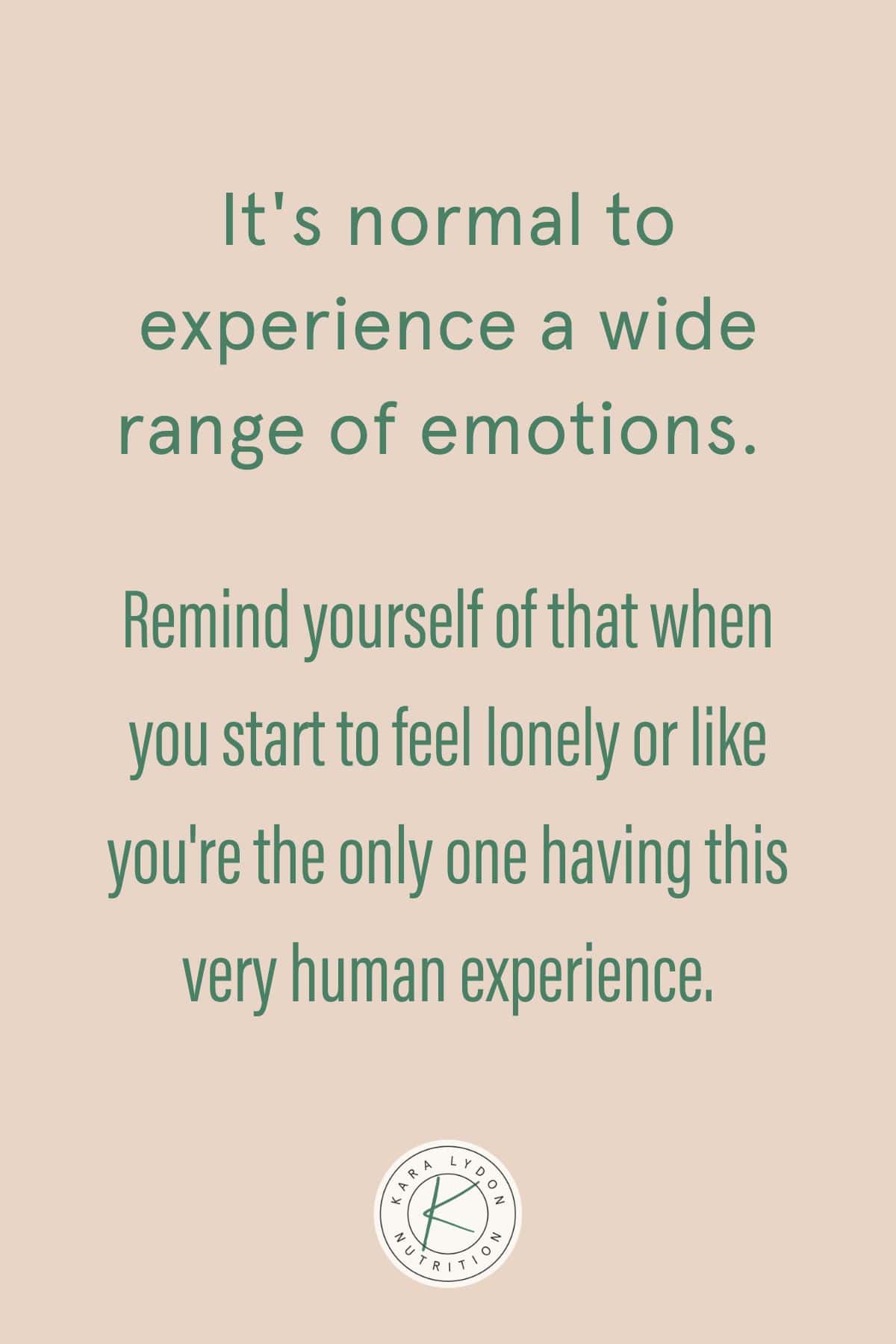
    graphic with quote: "It's normal to experience a wide range of emotions. Remind yourself of that when you start to feel lonely or like you're the only one having this very human experience."

    This time of year is A LOT. Be gentle with yourself. Lots of grace. Lots of self-compassion. Remember, it’s a practice, not a destination. Be careful not to add self-compassion to your list of things you’re “failing at.”

    Which area do you want to work more on this month? How do you practice self-compassion this time of year? Tell me in the comments below!

    Graphic listing 3 ways to practice self compassion around the holidays.

    For more holiday and intuitive eating tips, check out my posts below!

    3 Ways to Navigate Diet Talk Around the Holidays

    5 Tips for Staying Well Nourished This Holiday Season

    3 Tips for Setting Health Goals for the New Year that Are Actually Sustainable

    6 Ways to Find More Enjoyment in Eating

    3 Ways to Navigate When Clothes Don’t Fit You (without another diet!)

  • Gluten-Free Peanut Butter Blossoms (Egg Free Option)

    Gluten-Free Peanut Butter Blossoms (Egg Free Option)

    Gluten-Free Peanut Butter Blossoms (Egg Free Option) – The Real Food Dietitians


    Privacy & Cookies Policy


  • Tea In Skin Care: 7 Types For A Healthy Complexion

    Tea In Skin Care: 7 Types For A Healthy Complexion

    A cup of tea is a perfect pick-me-up in the afternoon but did you know it’s also a great pick-me-up for your skin? From fighting free radicals to reducing the appearance of fine lines and dissolving dead skin cells, tea has become a popular skin care ingredient. Read on to find out whether this ancient elixir is your skin’s cup of tea. 

    A Brief History Of Tea 

    The story of tea begins in China in 2737 BCE. According to legend, Chinese emperor and renowned herbalist, Shen Nung, was sitting beneath a tree when some leaves from the tree blew into water that was being boiled for drinking. He decided to try the infusion that had accidentally been created. The tree was a Camellia sinensis, and the resulting drink was what we now call tea.

    All traditional teas are still made from the leaves and buds of different varieties of the Camellia sinensis plant — originally from the borderlands of northern Burma and southwestern China. The difference between teas lies in how they are processed — whether they are fermented or not, for instance — and this determines their oxidation levels. Green teas are not oxidized at all, while black teas are very oxidized. In terms of beauty benefits, green tea and matcha are very poplular, but black tea, white tea and kombucha are also potent allies for your skin.

    What Are The Benefits Of Tea For Skin?

    Tea has bioactives that have been scientifically proven to hydrate skin and protect it from aging and environmental harm. Antioxidant tea polysaccharides fight free radicals and absorb and retain moisture. Tea polyphenols protect skin by absorbing ultraviolet radiation and diverting it from doing epidermal damage. Polyphenols dive deep into the skin, putting up roadblocks around destructive enzymes that work against the skin’s “body-building” collagen and elastin. They protect your skin’s hydration by boosting hyaluronic acid and their anti-inflammatory activities improve microcirculation. So we’ve established that tea is your skin’s best friend, now we’ll spill the tea on which blends will help you!

    Green Tea

    A perfect accompaniment to sushi, green tea is grown mostly in Japan. Green tea leaves are harvested, withered and steamed so that they stay green and unoxidized. There is an abundance of good things for the skin in this type of tea, especially EGCG, a polyphonic compound that is a powerhouse for the skin. It is known to have antioxidant, anti-inflammatory and anti-bacterial properties. It protects against the redness that UVB rays produce and is being studied for its role in healing wounds and lessening scarring. EGCG also has a remarkable ability to get inside the skin and stay there, mostly in the stratum corneum, where it actively moisturizes and smooths skin roughness and wrinkles.

    Matcha Tea

    Another Japanese export, matcha tea is green in color, but grown differently from regular green tea. About a month before harvesting, it is covered from direct sunlight to increase chlorophyll and amino acid levels. Intensely nourishing matcha tea powder is regenerative for tired, damaged skin that is low on oxygen. It also fights inflammation and protects skin from harmful free radicals.

    White Tea

    Young tea buds and leaves are harvested only once a year in early spring to make white teas like Bai Mu Dan (White Peony) and Yin Zhen Bai Hao (Silver Needle). The leaves and buds are minimally processed — not oxidized or rolled — which means that nothing has been bruised or twisted to damage cell walls and release the plant’s juices. As well as having strong anti-inflammatory and anti-bacterial properties, white tea extracts in skin care products are believed to boost hyaluronic acid action for a plumper, more hydrated-looking complexion.

    Black Tea

    Black tea, like pu’er from China’s Yunnan province, is the most oxidized of the teas because it is produced from leaves that are harvested, dried, rolled, ground and fermented. Black tea extracts are new to the skin care game and their tannins appear to protect skin from environmental damage as well as perform anti-bacterial, nourishing and hydrating functions. Other teas do that as well but black tea has one feature the others don’t: caffeine. Caffeine in skin creams stimulates microcirculation and helps reduce the look of puffiness under the eyes.

    Kombucha

    A by-product of black tea, kombucha is produced by fermenting black tea with sugar, yeast and bacteria. As a beverage, probiotic kombucha builds an ideal bacterial environment in the gut that aids digestion. And it can do something similar for your skin. According to dermatologist Dendy Engelman, MD, FACMS, FAAD, kombucha “… is excellent for balancing the skin’s microbiome by promoting a healthy ratio of good bacteria.” This is great if you are prone to acne or rosacea. Kombucha is also a natural exfoliant and antioxidant.

    Darjeeling Tea 

    Often referred to as the “Champagne of teas,” true Darjeeling is grown exclusively in select tea plantations at the foothills of the Himalayas spread across the Darjeeling district of West Bengal, India. It is said that this tea grows at the highest elevation of all teas and that it is the altitude that creates an ideal environment for the tea plant, giving these teas a unique flavor and aroma. The natural antioxidant properties found in Darjeeling tea can promote healthy skin, while the polyphenols are known to combat inflammation.

    Pineapple Tea

    One more tea that is making its name in the beauty world is pineapple tea! It is made by boiling pineapple rinds, which extracts an enzyme called bromelain that is very helpful for digestion, but also has exfoliating properties for the skin — which makes pineapple tea a rising beauty star on TikTok. Bromelain dissolves the proteins that bind together dead skin cells with minimal irritation for clear, radiant skin. If you’re looking for the benefits of bromelain, our Pineapple Refining Tonique is where you’ll find them.

    Tea For Different Skin Types

    Dry skin

    Tea-infused products in your daily beauty routine can really up your skin’s game, and there seems to be a type of tea for every type of problem. Those with dry skin that is sensitive to pollution, cigarette smoke and the sun’s UVA and UVB rays should look to beauty products with extracts of hydrating green tea, white tea and oxygen-revitalizing matcha tea.

    Oily Skin

    Oily skin that is prone to acne will respond well to products with anti-bacterial and anti-inflammatory extracts of matcha, kombucha or white tea that detox the skin. Or try green tea, which is known to reduce the production of sebum.

    Mature Skin 

    Mature skin can benefit most from how black tea can plump the look of skin and green tea retains moisture. White tea will also gently plump and reduce the appearance of fine lines. Any of these varieties will suit your skin to a “tea.”

  • Perfect Pomegranate Margarita (With Mocktail Option)

    Perfect Pomegranate Margarita (With Mocktail Option)

    Perfect Pomegranate Margarita (With Mocktail Option)


    Privacy & Cookies Policy


  • Winter Skin Care For Different Skin Types

    Winter Skin Care For Different Skin Types

    How Does Winter Impact The Skin? | Winter Skin Care Routine Basics | Dry Skin | Oily Skin | Normal Skin | Sensitive Skin | Combination Skin

    Winter is the season to change up your skin care routine. When Frank Sinatra on the radio starts crooning that “the weather outside is frightful,” it’ll be around that time of year when freezing temperatures and extreme heating start to wreak havoc on your skin. To prepare your skin for winter, here are the best winter skin care routines you can use depending on your skin type. 

    Winter Skin Care: How Does Winter Impact The Skin?

    Thanks to the weather’s increased dryness in winter, hydration in the skin drops and transepidermal water loss (TEWL) increases. TEWL refers to the process of water passing from the dermis through the epidermis and evaporating through the skin barrier. Without the added moisture of sweat and humidity, colder weather can easily strip the skin of natural oils, causing dry and irritated skin and even a compromised skin barrier. Thankfully, you can avoid this with certain products to keep the moisture in. Before we dive into specific product recommendations for each skin type, here are the foundational steps that each skin care routine follows:

    The Winter Skin Care Routine Basics

    For all skin types, a good winter skin care routine is made up of a few key steps:

    Cleanse 

    Cleanse with a gentle cleanser to remove any dirt, makeup or buildup that can lead to breakouts or congested skin.

    Tone

    Tone with either a toner, mist or essence to complete the cleansing step, add an extra layer of hydration and treat any other concerns you might have. 

    Exfoliate

    Exfoliate with a chemical exfoliant to smooth off any dead or flaking skin exacerbated by winter. This step is especially useful during the cooler months when the skin can be at its driest.

    Mask

    Your skin requires extra hydration during the colder months. To replenish your skin, you should ideally mask once or twice a week. 

    Boost

    Boost your skin with a product that offers targeted treatments, such as a serum or facial oil. 

    Moisturize

    Moisturize morning and night to keep your skin balanced during winter. Ensure you’ve applied moisturizer on your face and body, particularly after a shower when hot water dries out the skin.

    Eye Care

    Use a rich eye cream to hydrate the thinner, more delicate skin around the eye area. 

    Supporting your skin with the right products is a great way to navigate any winter dullness. Although replenishing lost hydration is vital for all skin types in winter, you don’t want a one-size-fits-all approach to your skin care routine. Each skin type has its own unique symptoms and challenges. Read on to discover the best winter routines and tips for each skin type. 

    A Winter Skin Care Routine for Dry Skin

    Winter can be a tricky time for dry skin types who may notice that their skin feels tighter and more stripped of moisture than normal. The skin may become more flaky, itchy and rough on your face and body. The ultimate goal in winter for drier skin types is to increase moisture and keep the skin’s moisture barrier intact. To achieve this, our Product Support Representatives recommend this winter routine for dry skin:

    Cleanse with the Firm Skin Acai Cleanser
    Tone with the Birch Water Purifying Essence
    Exfoliate with the Firm Skin Acai Exfoliating Peel
    Mask with the Yellow Sweet Clover Anti-Redness Masque
    Restore with the Rosehip Triple C+E Firming Oil
    Moisturize with the Coconut Age Corrective Moisturizer
    Care for the eye area with Snow Mushroom Moisture Cloud Eye Cream

    Our Best Tips For Caring For Dry Skin in Winter

    Invest in a humidifier to add moisture back into the air.
    While we understand the appeal of extremely hot showers, you’re better off sticking to warm to lukewarm showers. Hot showers draw even more moisture from the skin and strip away the little oil your skin had in the first place. 
    Keep exfoliation to one or two times a week to avoid over-exfoliating.

    A Winter Skin Care Routine For Oily Skin

    If you have oily skin, you’re no stranger to excess shine, visible pores and breakouts. Your skin produces more oil and is greasy to the touch. Your makeup may also absorb very quickly into the skin, but what remains also slides off quickly. Our Product Support Representatives recommend the following skin care routine to prevent breakouts and minimize greasiness:

    Cleanse with the Stone Crop Gel Wash
    Tone with the Stone Crop Hydrating Mist
    Exfoliate with the Clear Skin Willow Bark Exfoliating Peel
    Replenish with the Stone Crop Masque
    Boost with the Cornflower Recovery Serum
    Moisturize with the Echinacea Recovery Cream  

    Our Best Tips for Caring for Oily Skin In Winter

    Don’t avoid face oils or moisturizers throughout the winter. Even oily skin benefits from some extra hydration during the driest part of the year. As licensed medical esthetician Kim Hart tells What’s Up Mag, adding oil to your skin will keep the skin soft and supple so that the skin looks and feels less greasy. 
    Year-round, cleansing is a necessary step for removing any dirt or buildup that can lead to breakouts or congested skin. 
    Even oily skin may experience dryness and flakiness during the colder months, which may be helped by using a replenishing mask (such as the Clear Skin Probiotic Masque listed above). 

    A Winter Skin Routine for Normal Skin

    You may not notice the effects of colder air in the same way other skin types do. But, you still want to increase moisture to avoid developing dry skin symptoms like flaky or itchy skin. Follow this skin care routine to maintain your healthy skin: 

    Our Best Tips For Caring For Normal Skin in Winter

    A Winter Skin Routine For Sensitive Skin

    Sensitive skin is very susceptible to winter’s wrath. Those who sit on the sensitive side will likely notice dry, itchy or irritated skin due to a decrease in skin moisture. Combat your winter woes with this sensitive skin care routine: 

    Our Best Tips For Caring for Sensitive Skin in Winter

    Like our dry skin friends, be mindful of long, hot showers which can dry out your skin and lead to irritation and itchiness. 
    If there is any time to start looking a little closer at the ingredients of your skin care, it is now. Steer clear of products that include drying ingredients like alcohol or soap. 
    Patch test all new products. It’s always worth double-checking new products with your dermatologist and patch test before using one on your face. 

    A Winter Skin Routine For Combination Skin

    With less humidity in the air, winter can be a tricky time for combination skin. Those with combination skin have the difficult task of managing both excess oil and dry areas. Try out this skin care routine for combination skin:

    Our Best Tips For Caring For Combination Skin in Winter

    If you have dry skin patches, avoid using loofahs, and allow your exfoliating products to do the work. Loofahs may be too harsh on your skin during winter if your skin is already very dry and your skin barrier is potentially compromised.
    Like our oily skin types, don’t skip on using serums and oils because you’re worried about putting creams or oils on the oilier sections of your skin. These moisturizing products help you maintain balanced moisture levels for more supple-looking skin.
    Some companies offer foaming cleansers that are marketed towards combination and oily skin, but often they contain sulfates such as sodium lauryl sulfate, which irritates all skin types. Check your ingredient list. 

    If you’d like to learn about your unique winter skin care needs, book a consultation with a licensed esthetician at an Eminence Organics Spa Partner near you.

  • Gluten Free Christmas Cookies

    Gluten Free Christmas Cookies

    Gluten Free Christmas Cookies


    Privacy & Cookies Policy


  • 5 Signs Your Skin Is Reacting And How To Fix It

    5 Signs Your Skin Is Reacting And How To Fix It

    When the Greek philosopher Heraclitus famously said: “Change is the only constant in life,” maybe he knew that TikTok was coming. After all, in this world of viral trends and beauty blogs, it seems we are always changing things up in our routines — revamping our skin and body care habits, introducing new food recipes and trying out the latest beauty products. While these changes can level things up in our lives, there are situations where that new skin care product, food or routine could be the source of unwanted skin reactions. Let’s examine the range of reactions that can occur with changes in our routines and identify which are typical and harmless and which might be signs of a more significant concern.

    Skin Care Products | Dietary Changes | Weather | New Ingredients | Stress

    Is My Skin Reacting? 5 Triggers That Cause Reactions

    When it comes to reactions that show up on the body, some are instant and obvious and others can take longer to appear. While an immediate reaction can be jarring, it can make for an easier diagnosis. For example, if you try a new food one night and wake up swollen or itchy the next morning, there’s a good chance you can trace the reaction back to that food. Other reactions can be more sneaky, showing up days or even weeks into a new routine. 

    Signs can vary but often appear on the skin in the form of a rash or cracked skin, redness, swelling, stinging, burning, raised bumps, flaky skin or breakouts. Sometimes the reaction coincides with pain or itching, but not always. Let’s do a deep dive into the different things that can cause skin to react, how to spot reactions and when to seek help.

    1. Reactions To Skin Care Products

    With so many skin care and beauty products out there, it’s tempting to switch things up and try whatever is new or viral. After all, if people are talking about it, then it must be good, right? Unfortunately, just because a skin care product becomes popular, it doesn’t mean it will work for you. 

    Some of the reactions that are common with new skin care products include redness, irritation, itching and acne breakouts. These can be caused by a number of things including:

    If your skin reacts badly to a beauty product, your first instinct is probably to stop using it immediately. However, there are certain products that might cause skin to react temporarily. This is where some sleuthing can come in. Take a peek at the ingredients — maybe you’ve reacted to something in the past and this is a reminder that your body doesn’t agree with that ingredient. Eminence Organic Skin Care products are made without many of the synthetic ingredients that can cause irritation and reactions as we uphold our mission of using the best organic and Biodynamic® ingredients. A reminder to always read the label or ingredients list before trying a new product.  

    And be mindful of what the reaction is. If it’s swelling, pain and redness, your best bet is to stop use immediately and consult your dermatologist. If the new product causes your skin to break out, maybe you’re just purging. If there’s mild redness and peeling, same idea (hello, retinol) and your skin may just need a couple of weeks to get used to the new product or ingredient. If the breakout is around your mouth, it could be perioral dermatitis (more on that later) and you may need treatment.

    Always do a patch test before trying a new product and definitely err on the side of caution and contact your doctor if you’re unsure. As you can see, there’s no one-size-fits-all diagnosis. 

    2. Reactions to Dietary Changes

    Food reactions, which often manifest on the skin, can be uncomfortable and annoying. This happens whether you’re experiencing a negative response to a new food, or gradually realizing that a certain food doesn’t suit your body chemistry.

    Tingling or itching in the mouth can be a telltale sign that all is not well, as can a raised, red itchy rash on the body, the face or the scalp, or swelling of the eyes or lips. While food reactions are generally mild and go away when you stop eating the food, any extreme reactions like breathing difficulties, extreme swelling and light-headedness should be treated as emergencies. 

    When it comes to these skin reactions, your best bet is to avoid the foods. Some common triggers include gluten, dairy, eggs and soy, and it’s worth getting tested (or doing an elimination diet) to get to the root cause of the issue. 

    What you eat can show up on your skin in other ways too. Some foods are inflammatory (sugar, wheat, dairy and salt, among others) and reducing intake can cause a reduction in puffiness and flaky skin. Eating a balanced diet — filled with good fats from salmon, nuts, seeds and avocados, lots of fruits and vegetables and lean proteins — is the best way to maintain the look of healthy, glowing skin (in other words, your skin is reacting in a good way). And don’t forget to drink enough water. 

    3. Reactions To Weather 

    If you’ve ever had a sunburn in the summer or dry, itchy skin in the winter, your skin has reacted to weather. While usually these reactions are easy to identify, they can be dangerous and you’re better off avoiding them altogether if possible. 

    Too much time in the sun with too little sunscreen can result in an almost immediate redness, swelling, followed by blistering of the skin, itch and peeling. It can be uncomfortable and even dangerous. According to the Skin Cancer Foundation, “even one blistering sunburn in childhood or adolescence more than doubles your chances of developing melanoma later in life.” And don’t forget, you can also get a sunburn when it’s cloudy out. This is your reminder to wear SPF all year long, even indoors, and cover the skin with protective clothing — especially when spending time outdoors in the hot sun. 

    If you’re faced with a sunburn, our Product Support Team has some recommendations for ingredients that can help soothe, calm and treat the skin. Aloe vera, stone crop and botanical hyaluronic acid are soothing and moisturizing for dry, irritated skin. Vitamins C and E are important for sun damaged skin relief and recovery. Vitamin C is an antioxidant that fights free radical damage, preventing damage caused by UV rays. Vitamin E visibly diminishes the appearance of wrinkles and uneven skin texture. Chamomile and echinacea are known to provide relief for sunburned skin, and coconut oil has moisturizing, antiviral and antibacterial properties.

    While hot sun can cause your skin to react, the opposite end of the spectrum, cold weather, can do a number on it as well. Cold air can leave skin dry, chapped and even cracked. And indoor heating and hot baths can further strip moisture from the skin. To combat the dryness and other issues that come up during the winter, treat your skin with hydration and exfoliate to get rid of dry, flaky skin. Find a whole winter skin care routine here.

    4. Reactions To New Ingredients

    Sometimes the smallest tweak to your routine can cause a reaction. Something as simple as a new laundry detergent or toothpaste could send your skin into a tizzy. Certain ingredients just don’t work for some people, so it’s important to consider that if a reaction seems to come out of nowhere. If a reaction happens in a certain area, consider any changes you may have made. A new toothpaste, irritants from shaving cream and even certain types of chewing gum can bring on a condition called perioral dermatitis, a red rash that can appear around the mouth. Often mistaken for acne, this unsightly and often painful condition could be a reaction. If you can trace a breakout to a new product, cease and desist immediately and symptoms should clear up. If not, see your dermatologist to discuss treatments. 

    Body washes, lotions and laundry detergents often contain additives and chemicals like preservatives, parabens, colors, emulsifiers and fragrance that can cause sensitivity or allergic reactions that present as itching, hives or rashes. Always read product labels before trying new things and rest assured that Eminence Organics products are free of animal by-products, petroleum, propylene glycol, harmful fragrances and colorants and parabens. Another common ingredient that can cause or exacerbate the condition is SLS, or sodium lauryl sulfate, which is used in many facial cleansers. Eminence products contain no SLS, so making the switch to one of our organic cleansers can be a good first step. 

    If your skin is reacting and you’re not sure of the cause, consult with your dermatologist to get to the root cause or if you suspect an allergic reaction. 

    5. Reactions To Stress 

    Much of what we know about how stress affects the body is via symptoms like elevated heart rate, stiff or tense muscles, low energy and digestive issues. But stress also plays a significant role in how your skin looks and feels, whether you experience tension on a chronic level or not. There are a few ways it can show up — from irritation and rashes to eczema, dry skin, acne and dark circles under the eyes. The best way to combat stress in your life is to address it from all angles. Meditation and yoga can help, as can exercise and a healthy diet filled with non-inflammatory foods and lots of water! When stress shows up on skin, it’s important to look into which aspects of your life might be contributing and see what tweaks you can make — after all, health is about the full body, inside and out.

    Are you dealing with skin reactions and not sure what is causing them? For a skin care routine tailored to your unique skin type and concerns, book a consultation with a licensed esthetician at an Eminence Organics Spa Partner near you.

  • Vegan Loaded Sweet Potato – The Foodie Dietitian

    Vegan Loaded Sweet Potato – The Foodie Dietitian

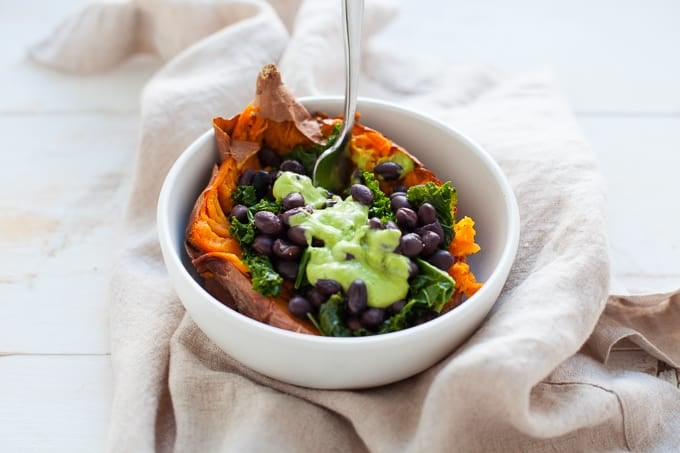
    The ultimate vegan loaded sweet potato – packed with kale, black beans, and topped off with a homemade green goddess dressing. Perfect for a quick and easy weeknight meal. 

    vegan loaded sweet potatoes with green goddess dressing on baking sheet lined with parchment paper.

    Why I Love This Recipe

    This Vegan Loaded Sweet Potato makes a perfect weeknight meal that is healthy, delicious and so easy to make.

    It’s both filling and satisfying, made with black beans for a boost of plant-based protein and varying textures and flavors. The sweetness from the sweet potato is balanced by the savory garlicky kale and the tanginess and creaminess from the Green Goddess Dressing. So good! 

    Speaking of, I use my homemade Vegan Green Goddess Dressing that’s filled with fresh herbs and silky avocados.

    This dressing is hearty, satiating (meaning it’s going to fill you up thanks to the fiber, healthy fats and plant-based protein!), and is the perfect addition to tie the dish together.

    If you’re short on time, a store-bought version of a Green Goddess Dressing would be a great substitute. 

    This loaded sweet potato can be made for a table of one or for the entire family. It’s one of my go-to weeknight meals for the fall and winter months when I gravitate towards root vegetables and warm, comforting dishes.

    Perfect for vegans, vegetarians, and those just looking to include more plant-based meals in their week!

    Ingredients You’ll Need

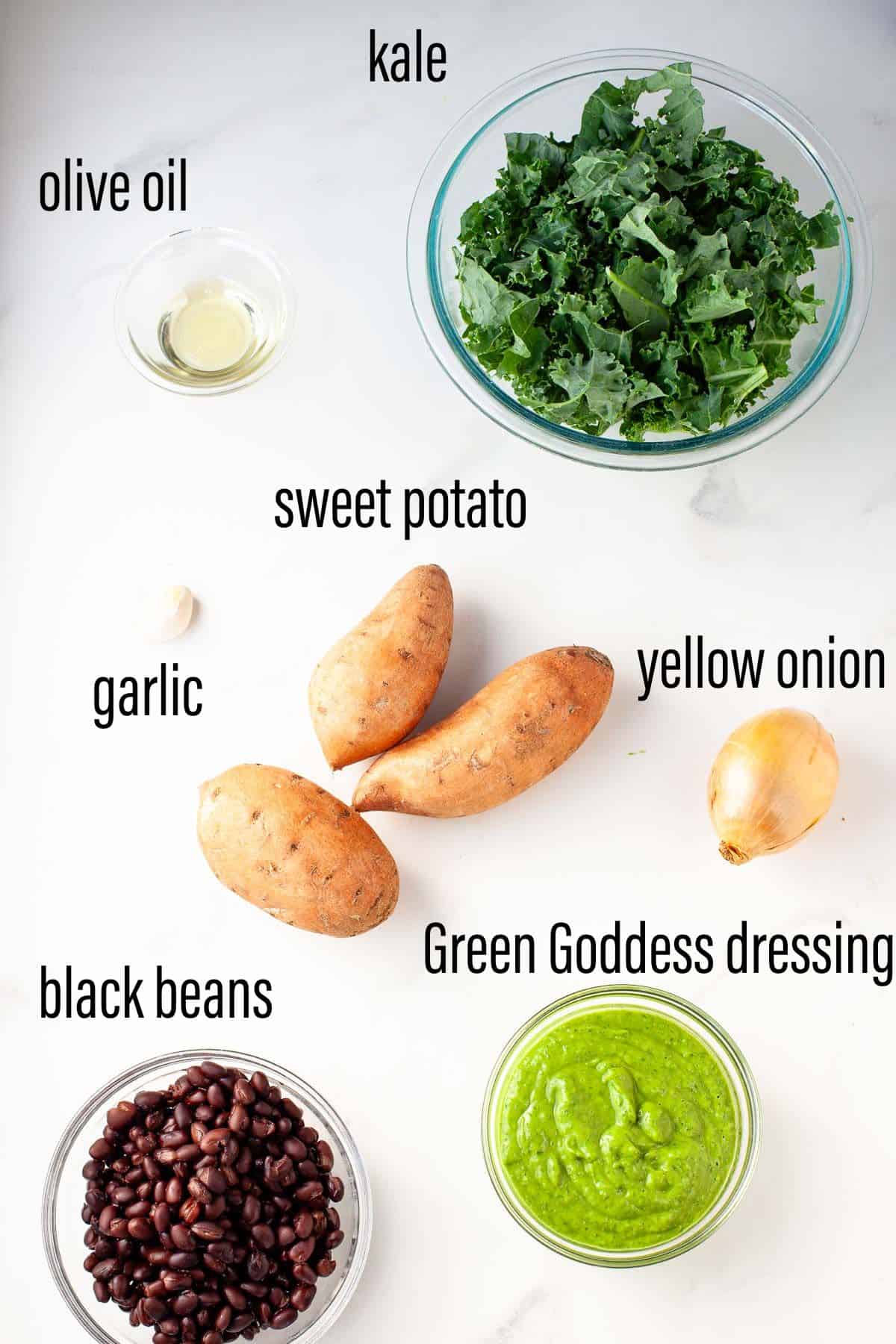
    graphic of ingredients for vegan loaded sweet potato on marble surface with black text overlay

    sweet potato: rich in beta carotene, an antioxidant that converts into vitamin A. Sweet potatoes are also a good source of vitamin C, manganese, potassium, calcium, and fiber. 

    olive oil: used to cook the onion, garlic and kale. It’s also a good source of dietary fat and antioxidants.

    onion: adds aromatic flavor to the dish.

    garlic: also adds a punch of flavor! 

    kale: I like using pre-shredded, pre-washed kale to save some time. 

    black beans: adds plant-based protein and an earthy, slightly nutty flavor. If you’re using canned black beans (I do!) be sure to drain and rinse them before adding to the sweet potato. Feel free to swap them out for a different bean/legume. 

    Green Goddess dressing: provides a tangy, bright, creamy flavor. You can use a store-bought version to save time.

    Equipment You’ll Need (affiliate links – if you make a purchase I receive a small commission)

    Baking Sheet

    How to Make Vegan Loaded Sweet Potato

    step by step graphic of how to make vegan loaded sweet potato

    Bake sweet potatoes. Season potatoes with 1 teaspoon olive oil and salt then poke multiple holes into them using a fork. Place potatoes in oven and bake for about 45-55 minutes, or until tender.
    Sauté onions and garlic. Heat 1 tablespoon olive oil over medium-high heat in medium saucepan and cook onions until softened, about 3 minutes. Add garlic and cook until fragrant, about 1 minute.
    Add kale and black beans. First, add kale and toss to coat. Add 1/4 cup water, cover, and cook until kale has wilted, about 2-3 minutes. Cook until kale is desired texture, adding more water as needed and season with salt and pepper to taste. Add beans and stir until warmed through.
    Assemble sweet potatoes. Cut roasted potatoes in half lengthwise. Top with sautéed kale and beans.
    Serve! Drizzle Green Goddess Dressing on top and enjoy. 

    Expert Tips

    This recipe has several shortcuts you can take to get dinner on the table quickly: 

    Use canned black beans instead of dry beans so all you have to do is drain and rinse.
    Buy pre-shredded, pre-washed kale from the grocery store that’s ready to use. 
    Roast the sweet potatoes ahead of time and store them in the fridge until you’re ready to eat.
    Swap the homemade Green Goddess Dressing for a store-bought version or prep the homemade dressing in advance. Pre-made Vegan Green Goddess Dressing can be stored in an airtight container in the fridge for up to 5 days. 

    Recipe FAQs

    What are good toppings for sweet potatoes?

    Sweet potatoes serve as a great base for both sweet and savory toppings. Some sweet topping ideas are maple syrup, cinnamon, brown sugar, butter, and vanilla. Savory toppings could include Greek yogurt or sour cream with green onion or chives, salt, pepper and olive oil, melted cheese, shredded meats, legumes, veggies, etc. 

    What pairs well with sweet potato?

    Sweet potatoes make a great side to a variety of meals like homemade meatloaf, roasted chicken or fish, and just about any veggie or legume. They are also super versatile and can be prepared in a variety of ways. 

    Do I need to wrap sweet potatoes before roasting?

    Nope! All you need to do is make sure you poke some holes in them, rub them with olive oil and season with salt. Some people wrap their potatoes in aluminum foil before baking but this isn’t totally necessary. 

    4 vegan loaded sweet potatoes drizzled with green goddess dressing and topped with fresh parsley with a side of dressing in a wooden bowl with spoon.

    Storage and Preparation

    Vegan Loaded Sweet Potato leftovers can be stored in an airtight container in the refrigerator for up to 3-4 days.

    You can prepare sweet potatoes and dressing ahead of time (up to 3-4 days in advance) and assemble when you’re ready to eat! 

    Recipes That Pair Well

    Blackened Scallops

    Air Fryer Salmon (Fresh or Frozen)

    Crispy Thai Brussels Sprouts

    Air Fryer Zucchini Chips

    Air Fryer Whole Chicken

    vegan loaded sweet potatoes topped with green goddess dressing and garnished with chopped fresh parsley on a baking sheet lined with parchment paper

    For more sweet potato inspiration, check out my other recipes below! 

    Spicy Creamy Sweet Potato Hummus Soup

    Sweet Potato Mac and Cheese With Kale (and sage breadcrumbs)

    Vegan Loaded Sweet Potato Nachos

    Air Fryer Sweet Potato Fries

    Sweet Potato Noodles with Sage Cashew Cream Sauce

    If you like this recipe, please be sure to comment and give it a 5 star rating below. If you make it, share it on Instagram and tag me @karalydonrd and I’ll re-share it with my followers! If you want to save this recipe for later, be sure to pin it on Pinterest!

    Don’t ever miss a recipe! Sign up to receive my monthly newsletter with a round-up of recipes from the previous month and get my FREE guide when you sign up: Rediscover the Joy in Eating: 5 Simple Steps to Stop Stressing Over Food + Enjoy Every Bite

    This recipe was retested, reshot and revamped to bring you the most delicious (and most beautiful) dish! The original post was published October 2014. 

    Print

    clock clock iconcutlery cutlery iconflag flag iconfolder folder iconinstagram instagram iconpinterest pinterest iconfacebook facebook iconprint print iconsquares squares iconheart heart iconheart solid heart solid icon

    Description

    The ultimate vegan loaded sweet potato – packed with kale, black beans, and topped off with a homemade green goddess dressing. Perfect for a quick and easy weeknight meal. 

    4 medium sweet potatoes, scrubbed
    1 tbsp + 1 teaspoon olive oil, divided
    Salt and pepper, to taste
    1/2 small yellow onion, diced (about 1/2 cup)
    1 clove garlic, minced
    1 bunch kale, stems removed and chopped (about 6 packed cups)
    1 can black beans, drained and rinsed
    Green Goddess Dressing, for serving

    Preheat oven to 400 degrees. Line baking sheet with parchment paper.
    Rub potatoes with 1 teaspoon olive oil and sprinkle with salt. Using a fork, poke multiple holes into sweet potatoes. Place potatoes in oven and bake until tender, about 45-55 minutes
    In the meantime, heat 1 tablespoon olive oil over medium-high heat in medium saucepan. Add onion and cook until softened, about 3 minutes. Add garlic and cook until fragrant, about 1 minute.
    Add kale and toss to coat. Add 1/4 cup water, cover, and cook until kale has wilted, about 2-3 minutes. Remove cover, toss kale, reduce heat to low, and cook until kale is desired texture, adding more water as needed, about 10-15 minutes. Season with salt and pepper to taste. Add beans and stir until warmed through.
    Cut roasted sweet potatoes in half lengthwise. Top with sautéed kale and beans.
    Serve sweet potatoes with Green Goddess Dressing.

    Notes

    For a time saver, use store-bought Green Goddess Dressing.
    Customize with your favorite legumes and vegetables – sometimes I add halved cherry tomatoes on top too.

    Prep Time: 5 minutesCook Time: 45 minutesCategory: DinnerMethod: Oven

    Keywords: vegan loaded sweet potato, vegan sweet potato

  • Starbucks Medicine Ball Tea (Copycat Recipe To Make At Home)

    Starbucks Medicine Ball Tea (Copycat Recipe To Make At Home)

    Starbucks Medicine Ball Tea (Copycat Recipe To Make At Home)


    Privacy & Cookies Policy


  • Facial Gel Moisturizers: Are They Right For Your Skin?

    Facial Gel Moisturizers: Are They Right For Your Skin?

    Pop quiz: What are the two most common ingredients that make up a good moisturizer? Water and oil. This answer may seem deceptively simple, but let’s explore it a little further.

    Skin 101

    The topmost layer of our skin, called the stratum corneum, needs to be made up of at least 10% water to look and feel healthy — though 20-30% is ideal. But water, as we know, evaporates easily. That’s where other ingredients like emollients, humectants and occlusives come in. Often made from oil, these ingredients act as a barrier or sealant to lock moisture in the cells to stop water from evaporating. And a well-moisturized stratum corneum can soak up to six times its weight in water, nicely plumping the skin. Water also interacts with enzymes to help skin shed dead cells in an orderly way. Without water, dead cells pile up on the skin, making it red, chapped and rough. Skin that’s not properly moisturized can develop cracks and become itchy, scaly and even painful. So, moisturizing is a must after your daily skin cleansing routine, but how do you know which kind best suits your skin type? Let’s break it down into two categories of moisturizers — gels and creams — and weigh their pros and cons.

    Gel Moisturizers | Cream Moisturizers | Dry Skin | Oily Skin | Combination Skin | Sensitive Skin | Normal Skin 

    What Are Gel Moisturizers?

    Facial gel moisturizers are lightweight and water-based (and sometimes oil-free … more on that later). They make a nice, smooth base for makeup and feel cool and refreshing when applied to the skin. Absorbent with a non-greasy texture, gel moisturizers are perfect for oily or combination complexions that don’t necessarily need any more oil added topically. If your skin is prone to dehydration, the humectant properties of gel moisturizers make them ideal — they draw water from the surrounding air as well as pulling moisture from deeper down in the skin itself, aka the dermis layer. 

    What Are Cream Moisturizers?

    Thick and oil-based in composition, creams are intensely hydrating and seal in moisture better and with longer-lasting effect than gels. They can leave oil residue, which is not ideal if your skin already skews oily. Creams are often also enhanced with nourishing, emollient ingredients like shea butter and coconut oil, which soothes and softens rough, dry skin. This can be especially important if you live in a place with long, cold winters.

    What’s The Right Moisturizer For Your Skin Type? 

    Dry

    If you have parched skin, oil-free facial gels are probably not your best bet. As mentioned above, they don’t form as effective a barrier to moisture loss as creams do. Look instead for nourishing creams with luxurious emollients, like shea butter, that make your skin feel smoother. A good option for daytime is the Lilikoi Daily Defense Moisturizer SPF 40. Formulated with larch tree, a moisturizing ingredient that shields skin from dehydration and antioxidant-rich lilikoi seed oil, this SPF and moisturizer combo protects and improves the appearance of dry skin in one step.

    Another great product for dry skin is the Coconut Age Corrective Moisturizer, which uses coconut water, coconut oil and shea butter to add moisture. A customer, Diana, reviewed it on the website saying: “The coconut moisturizer is amazing … my skin looks great and the fine lines are really hard to see. Love, love, love this product line.”

    Oily

    While cream moisturizers are perfect for dry skin, they aren’t necessarily the best pick for oilier complexions. Light facial gel moisturizers are better options for skin that is on the oily side, and a good all-over choice is the Strawberry Rhubarb Hyaluronic Hydrator. This vegan gel-cream contains Botanical Hyaluronic Acid Complex, a blend of hyaluronic acid and marshmallow root that intensely hydrates and preserves moisture in the skin. This formula is also made with plant sugars that optimize the skin’s moisture reserve. Another gel moisturizer to try is the dewy, lightweight Mangosteen Gel Moisturizer. It melts into your skin, imbuing it with ingredients like mangosteen fruit extract and pore-minimizing red clover flower extract.

    Combination

    One strategy is to opt for gel moisturizers on the oily parts of the face and cream moisturizers for dry patches. But if spot treating different areas on the face seems a little high-maintenance, the Bakuchiol + Niacinamide Moisturizer is a good choice for combination complexions and aging skin. Besides bakuchiol, a natural alternative to retinol, this moisturizer contains niacinamide, which supports the skin barrier, and panthenol, which hydrates and prevents moisture loss. Happy customer, Emily B., says in a review on our website: “I feel hydrated and glowy all day AND the consistency is lovely under makeup … I’ve been getting compliments on my skin all week!” 

    Sensitive

    Cream moisturizers with gentle formulations and minimal fragrance should be your go-to if you have sensitive skin. The Apricot Calendula Nourishing Cream contains apricot, which replenishes the skin’s barrier, while flax seed moisturizes, hydrates and lubricates. Revitalizing Echinacea Recovery Cream is another good option for sensitive skin types. It moisturizes with replenishing yarrow herb and evening primrose oil. Or try Calm Skin Chamomile Moisturizer, which is formulated with calendula oil and grape leaf extract, plus shea butter that improves the skin’s barrier and protective sunflower oil, chamomile and arnica.

    Normal

    If you don’t have problematic skin, then choose a gel or cream that suits your skin’s other needs. You might want a moisturizer with age-defying ingredients that plump, firm or heal your skin like the Coconut Age Corrective Moisturizer. Or, if you spend a lot of time in the sun, a two-in-one moisturizer with SPF like the Tropical Vanilla Day Cream SPF 40 is a good option to consider for daytime, while the Stone Crop Whip Moisturizer makes a great nighttime cream. Don’t forget, you can always choose more than one moisturizer, customizing your ritual to your skin’s changing needs moment by moment.

    The most important thing is that you moisturize and that you use a product that fits your skin’s profile. Remember this general rule of thumb: light-as-air gel moisturizers for oily complexions and nourishing, hydrating cream moisturizers for dry. Interested in finding out more? Visit your nearest Eminence Organics Spa Partner to help choose the best products for your skin.

Padişahbet
Crypto Casino
Betnano Giriş
new online casino
Padişahbet Giriş
Padişahbet Giriş
Padişahbet Güncel Giriş