Category: Latest Articles

  • 10 Tips to Break a Bad Habit for Good

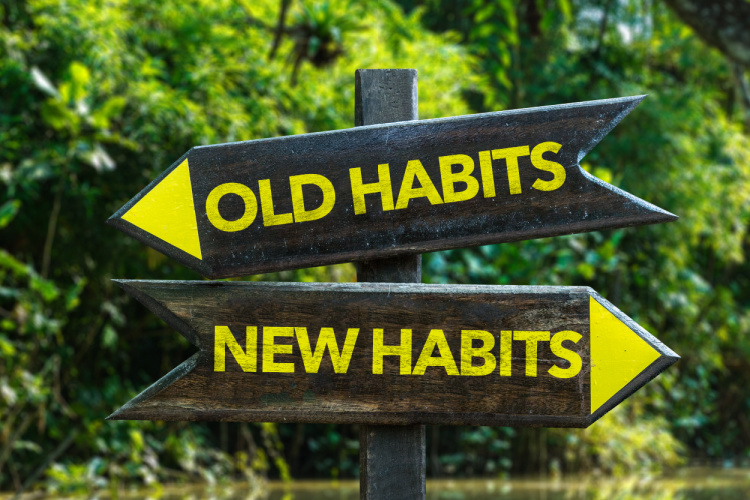
    10 Tips to Break a Bad Habit for Good

    by Caitlin H,

    May 15, 2023

    Breaking Bad Habits

    Many of us structure our lives around habits, such as getting up at 7 a.m., drinking a cup of morning coffee, or eating dinner at 6 p.m. These regular practices may be a critical part of ensuring your everyday life is consistent and manageable, and that’s a good thing.

    But some habits—such as smoking, overeating, drinking, consuming too much caffeine, or scanning social media right before bed—can negatively impact your overall health and well-being.

    There’s a good chance you can quickly identify your own bad habit (or habits). There’s an even better chance you are well aware of their harmful effects. So how do you go about breaking those bad habits?
     
    Read on for 10 tips to successfully break a bad habit for good.


    1) Know the three “R’s”.


    We generally create habits in three steps: Reminder, routine, and reward.
     

    Reminders are mental cues, whether conscious or unconscious, that tend to cause nervousness or other emotions when we don’t address them.


    Routine is what we do to address those reminders, such as lighting up a cigarette or grabbing an unhealthy snack when feeling anxious.

    Reward is when our brains release a chemical called dopamine, which is the physical effect of the routine. It’s the main reason we create and continue to have positive or negative habits.


    2) Pinpoint your triggers.


    Use a journal to write down the events and feelings surrounding your habits. What is the habit? When do you do it? Is it a solo activity or does it involve others? What are your emotions when you do it? What happens before and after?

    Doing this for a week will help you identify the moments and people that align with the bad habit you’re trying to break. Awareness is vital.


    3) Figure out why you want to change it.


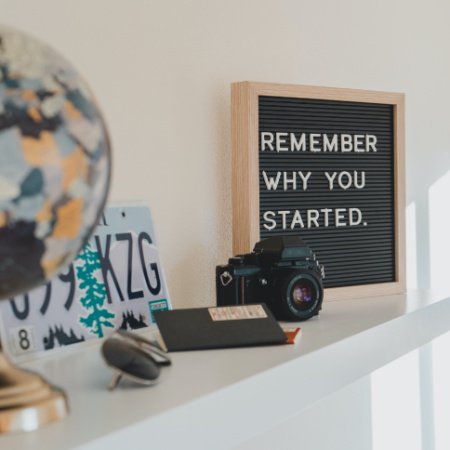
    As part of your journaling, write why you want to break a bad habit. How is it impeding your life and well-being? What’s the value of changing it? Keep these thoughts in your mind, or print them out and hang them somewhere to stay motivated.


    4) Lean on loved ones for support.


    Telling a friend or family member about your mission to break a bad habit can go a long way toward helping you do it. Ask them to keep you accountable by checking in on your progress. Their excitement will mesh well with your own to keep you going strong.

    If you have a friend or family member who has the same bad habit, consider asking them if they want to break it at the same time you do. Sharing insights along the way and celebrating each other’s success is another excellent way to ensure you achieve your goal.


    5) Be mindful of your daily activities.


    Mindfulness is the practice of being self-aware throughout the day. It’s working hard to stay in the moment rather than letting your thoughts wander. Mindfulness takes hard work and practice, so don’t get discouraged if you don’t get it right away. Smartphone apps like Headspace, Calm, and The Mindfulness App can help you learn how to practice mindfulness. From there, you can use the skill to be aware of when you’re doing your bad habit.


    6) Replace a bad habit with a good one.


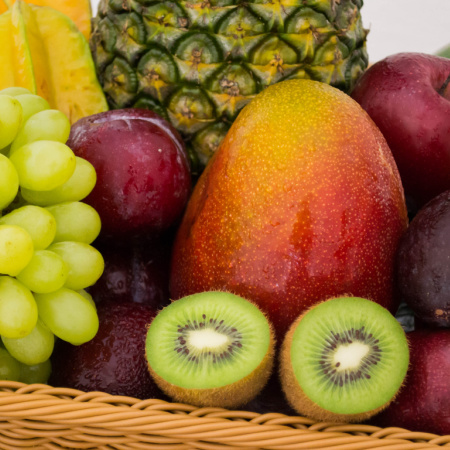
    Many people successfully break a bad habit by replacing it with something different. This is especially helpful for things like eating junk food. Instead of eating chips after dinner snack on something like fruits or nuts instead.

    The longer you repeat the new behavior the easier and more habitual it will become. If you keep up with the journaling you’ll also start noticing its positive effects, such as weight loss or having an easier time falling asleep at night.


    7) Set reminders on your phone.


    Once fully aware of the emotions and behaviors surrounding a bad habit you can set reminders on your phone to do something different. For example, if you find yourself scrolling through social media every night and struggling to fall asleep, set a 9 p.m. reminder to turn off your phone and do some deep breathing for 20-30 minutes before bed.


    8) Accept you won’t be perfect.


    Mistakes and slip-ups happen and that’s okay. Know that you may have a weak moment and fall back into an old habit you’re trying to break. Forgive yourself and move on. Eating candy one night out of the week after dinner doesn’t mean you have to give up. Make a note in your journal and mind, and do better the next day.


    9) Switch up the environment.


    If you’ve successfully identified the triggers, you can also change the environment surrounding them. Say, for example, you want to stop ordering unhealthy takeout for dinner. Consider filling your refrigerator with healthy meals that are easy to make instead. Diet-to-Go offers delicious, chef-crafted meals that you just have to heat and eat. It’s an excellent option if you prefer to avoid cooking or are strapped for time.


    10) Reward your success.


    It takes time to break a bad habit, but when you do, celebrate it! As you start to notice yourself doing it less and less, reward yourself with something like a new outfit or accessory you’ve wanted for a while. Honor your achievements along the way. You worked hard, and you deserve it!

    No matter how challenging you think it might be, you are more than capable of overcoming a bad habit. Try these tips to break it once and for all!


    ————————————————————————————


    Author: Caitlin H
    Diet-to-Go Community Manager

    Caitlin is the Diet-to-Go community manager and an avid runner. She is passionate about engaging with others online and maintaining a healthy, active lifestyle. She believes moderation is key, and people will have the most weight loss success if they engage in common-sense healthy eating and fitness.


    Lifestyle/Wellness

  • Sheet Pan Salmon and Veggies

    Sheet Pan Salmon and Veggies

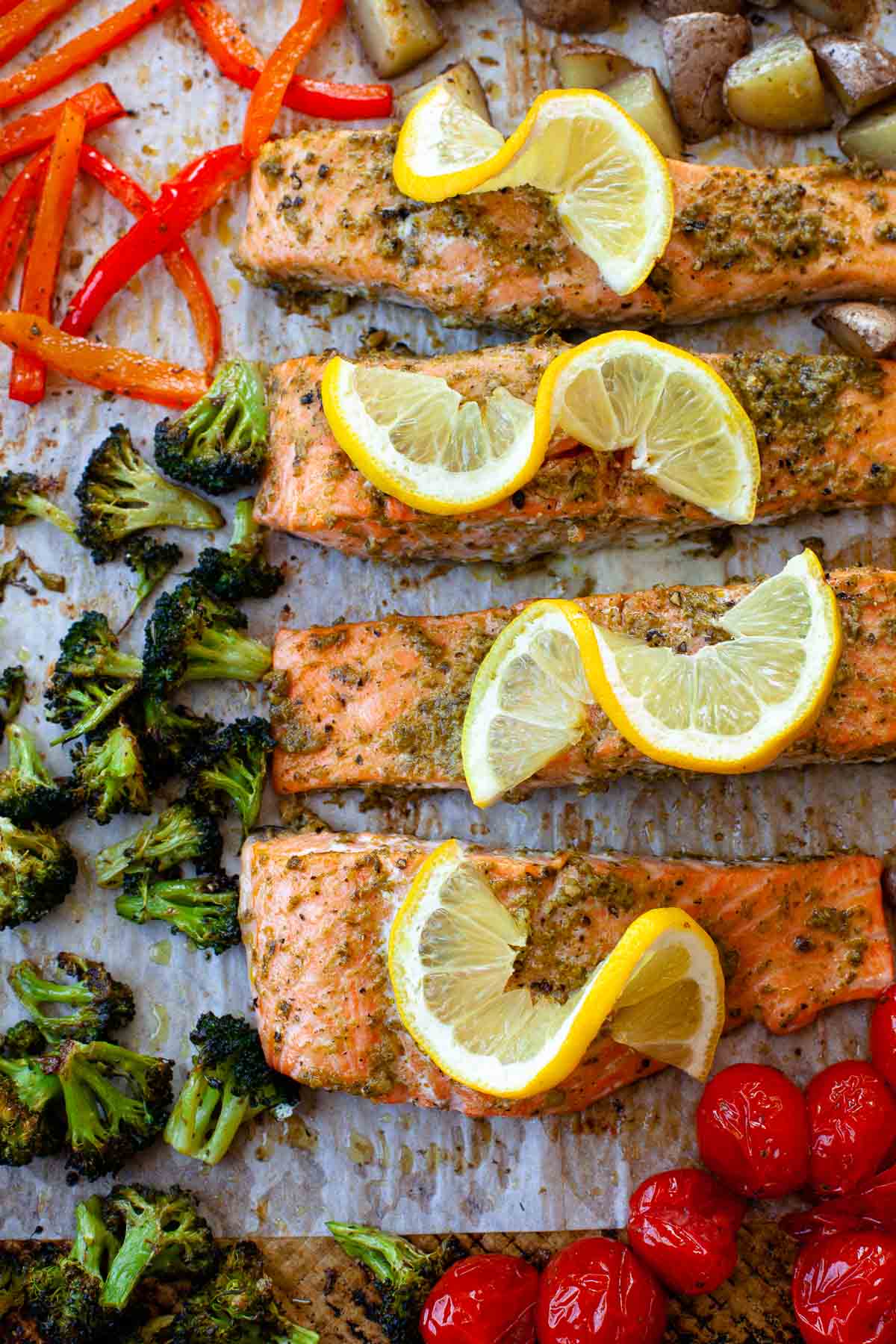
    Ready in just 30 minutes, this sheet pan salmon with veggies is an easy weeknight dinner with minimal clean up. Salmon with pesto is paired with seasoned potatoes, bell peppers, broccoli and cherry tomatoes to make a balanced meal.sheet pan salmon with pesto salmon with lemon slices, broccoli, red bell pepper, potatoes, tomatoes

    Why I love this recipe

    This sheet pan salmon and veggies recipe is one of my favorites to make! Here’s why:

    It’s incredibly easy to make! With just a handful of ingredients and one pan, you can have a delicious and nutritious meal on the table in no time.
    The recipe is very versatile and customizable to whatever veggies or spices you happen to have on hand – I’ve made it with everything from asparagus to Brussels sprouts to sweet potatoes.
    The flavor! The salmon is perfectly cooked with a tender, flaky interior. And the veggies get roasted to perfection, with just the right amount of crisp tenderness. The combination of the savory salmon and the sweet and slightly charred veggies is simply irresistible.
    This recipe is nourishing and balanced, with plenty of protein, omega-3s, and fiber-rich veggies.
    It’s a great option for a quick and easy weeknight meal, but it’s also impressive enough to serve to guests.

    Overall, this sheet pan salmon recipe has become a staple in my cooking repertoire, and I’m sure it will become one in yours too!

    Ingredients To Make Sheet Pan Salmon

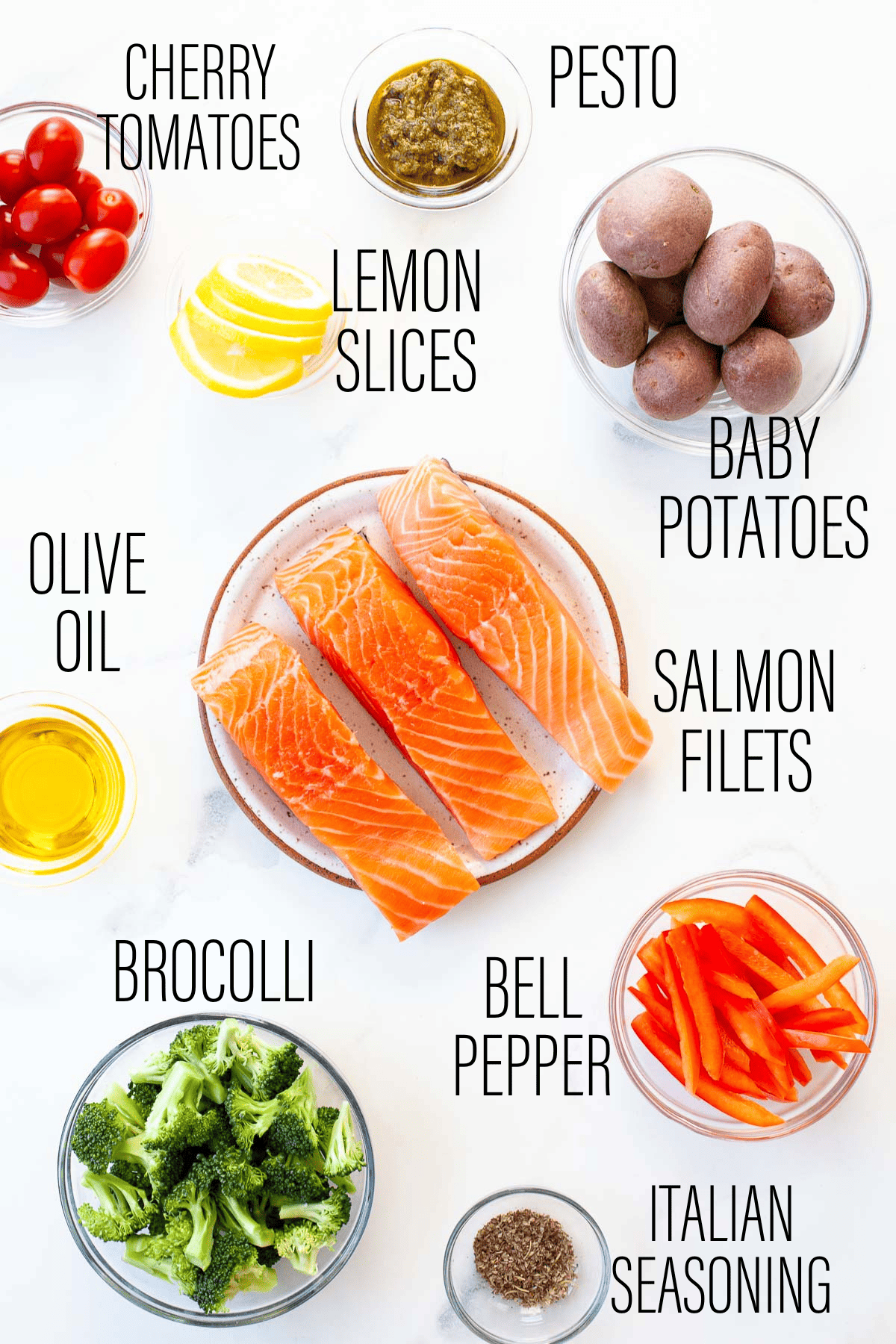
    ingredients for sheet pan salmon and roasted veggies on a white table

    Notes on Ingredients

    Baby potatoes: The potatoes add a source of carbs to the dish and are a good source of fiber, potassium, vitamin C and B6.
    Broccoli: Broccoli is packed with vitamins and minerals, including vitamins C and K, and calcium. It also adds a nice crunch and fresh flavor to the dish.
    Olive oil: Olive oil is used to coat the veggies and the salmon before roasting, which helps to keep them moist and flavorful. It’s also a good source of dietary fat and antioxidants.
    Italian seasoning: The Italian seasoning blend (made with rosemary, oregano, thyme, marjoram, sage and basil) adds a savory and herbaceous flavor to the dish, complementing the salmon and veggies nicely. If you don’t have Italian seasoning, you can use any of those (or combo of!) spices listed above.
    Salt and pepper: These seasonings enhance the flavor of the dish and help to bring out the natural flavors of the veggies and salmon.
    Red bell pepper: The red bell pepper adds a pop of color to the dish and is a good source of vitamin C.
    Cherry tomatoes: Cherry tomatoes add sweetness and acidity to the dish and are a good source of lycopene, an antioxidant that may have anti-inflammatory and cancer-fighting properties.
    Salmon: Salmon is a great source of lean protein and heart-healthy omega-3 fatty acids. It’s also a flavorful and versatile fish that pairs well with a variety of veggies and seasonings.
    Pesto: Pesto adds a rich and savory flavor to the salmon and is a good source of fat and antioxidants. Use homemade if you have the time, like my garlic scape pesto, or store-bought pesto as a timesaver!
    Lemon slices: The lemon slices add brightness and acidity to the dish, balancing out the richness of the salmon and pesto.

    Equipment You’ll Need (affiliate links – if you make a purchase I receive a small commission)

    How to Make Sheet Pan Salmon and Veggies

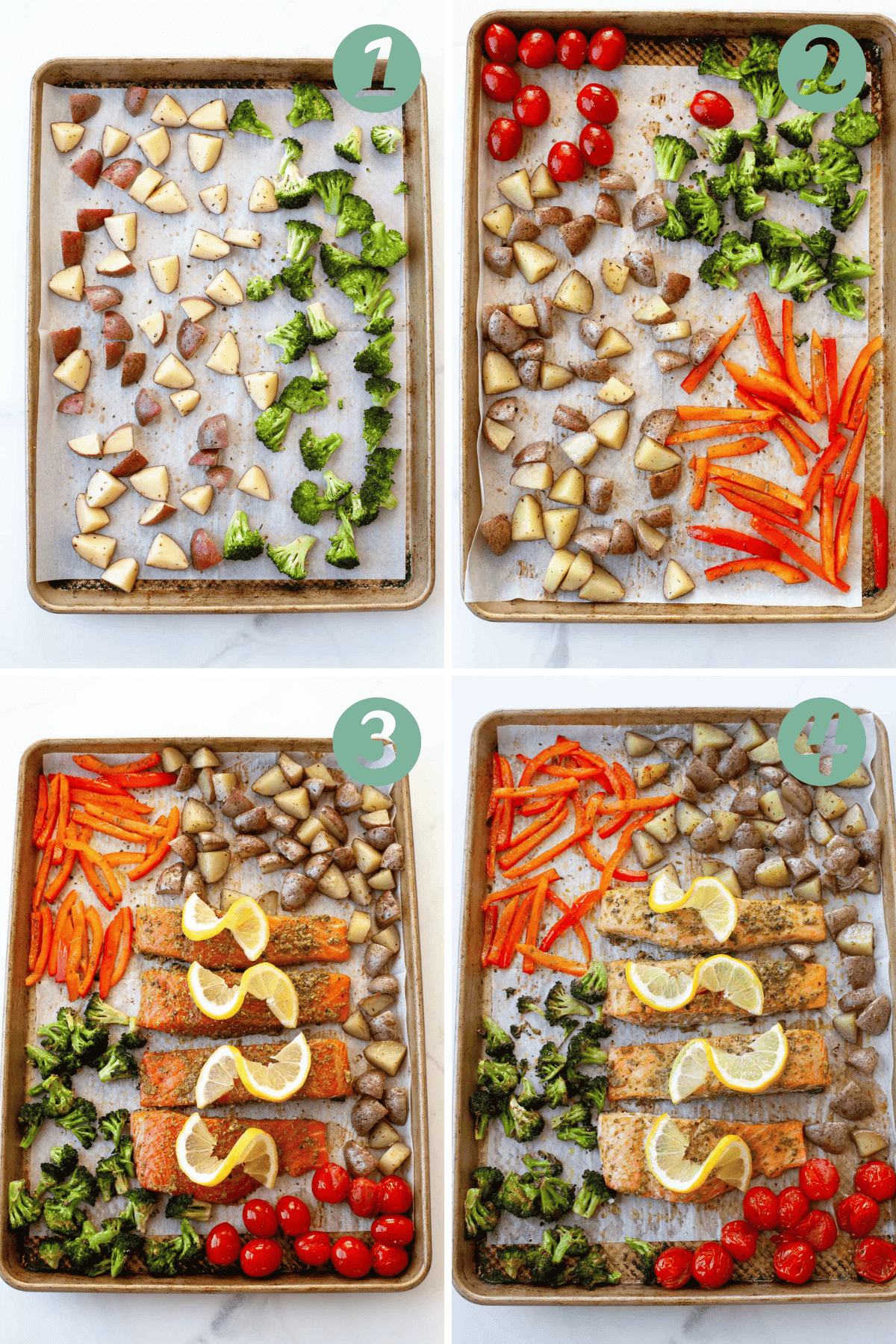
    To Prep: Preheat the oven to 425 degrees F and line a baking sheet with parchment paper.

    Roast potatoes and broccoli. In a medium bowl, toss potatoes and broccoli in olive oil, Italian seasoning, salt and pepper. Add to the baking sheet and bake for 10 minutes. 
    Roast bell pepper and tomatoes. In the same bowl, toss the bell peppers and tomatoes with more oil and seasonings and then bake on sheet pan for another 5 minutes. 
    Prep the salmon. While the veggies are roasting, season the salmon with salt and pepper, add pesto and top each filet with a lemon slice.
    Bake the salmon. Add salmon to the pan and bake salmon until flaky, about 10-15 minutes.

    Expert Tips

    Use a meat thermometer to ensure perfectly cooked salmon. While cooking times will vary based on the thickness of your salmon fillets, using a meat thermometer is a foolproof way to ensure your salmon is cooked to the desired temperature. Insert the thermometer into the thickest part of the fillet and cook until the internal temperature reaches 125-135 degrees F for medium to medium-rare salmon or 145 degrees F for well-done salmon (USDA recommends cooking seafood until it reaches 145 degrees F to prevent food borne illness).
    Cut your veggies into similar-sized pieces to ensure even cooking. When roasting vegetables, it’s important to cut them into similar-sized pieces so that they cook evenly. This will prevent some veggies from becoming overcooked while others are still undercooked.
    Make it your own! Use whatever veggies or seasonings you have on hand. For example, you could sprinkle some Parmesan cheese over the veggies before baking, or add some red pepper flakes to the salmon for a little heat. Experiment with different seasonings and toppings to make the dish your own.

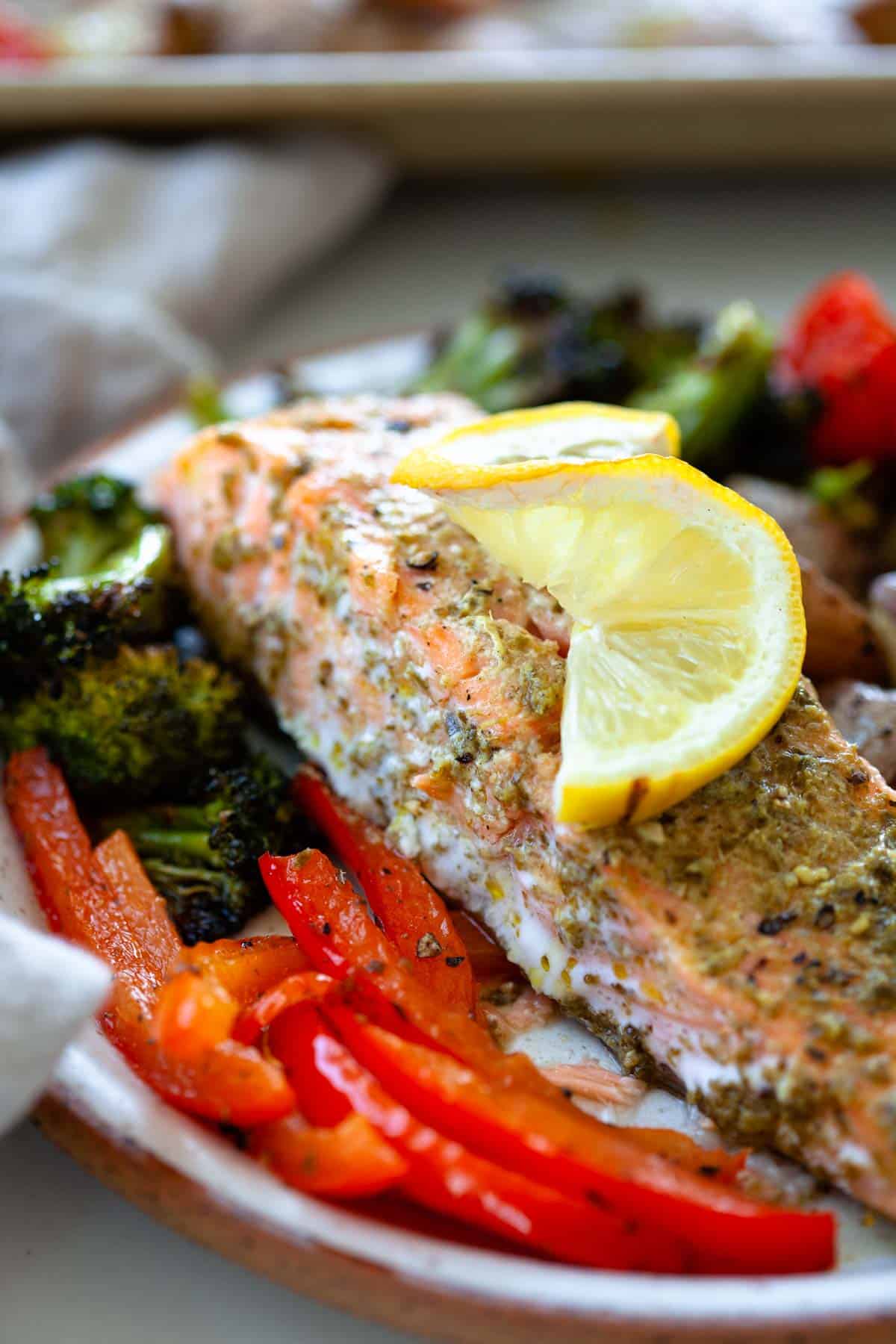
    close up of sheet pan salmon and vegetables with a lemon slice on top

    Recipe FAQs 

    What veggies go best with salmon?

    Whichever veggies you like best! Salmon is super versatile and pairs well with all veggies. I personally love pairing salmon with whichever veggies are in-season. In the spring, I like using asparagus and in the summer I love using green beans, zucchini, broccoli, and tomatoes. In the fall I love using corn, kale, and winter squashes.

    What are the best side dishes to go with salmon?

    Veggies like asparagus (try my Instant Pot Asparagus!), green beans, broccoli, and peppers all go well with salmon! For starches I love a roasted potato like my air fryer baked potato, mashed potatoes, or my Air Fryer Sweet Potato Fries! A rice pilaf like my vegetarian rice pilaf would also be a delicious starch to pair with salmon.

    What if my sheet pan veggies are not cooking evenly? 

    Make sure you chop all of your veggies roughly the same size to ensure even cooking. Make sure there is as much space as possible between the veggies and that they aren’t overlapping much. You can always use a second sheet pan if need be!

    And if all else fails, you can always remove some of the veggies a little early while the rest cooks to your desired texture.

    Seasoning Ideas for Salmon

    Here are some other seasoning ideas if you don’t like pesto or if you just want to switch things up! 

    Dijon mustard + Everything But The Bagel Spice
    Lemon Juice + Dijon Mustard + Dill
    Teriyaki Sauce
    BBQ Sauce
    Thai Peanut Sauce
    Chili Crisp

    Storage and Preparation 

    Sheet pan salmon and veggies leftovers can be stored in an airtight container in the refrigerator for up to 3-4 days. It’s best to store the salmon and veggies separately, if possible, as they may have different reheating times and temperatures and so that the veggies don’t take on a fishy aroma :).

    To reheat in the oven, preheat your oven to 350 degrees F, place the salmon and veggies on a baking sheet, and bake for 10-15 minutes, or until heated through. To reheat in the microwave, reheat salmon and veggies for 30-90 seconds depending on the wattage of your microwave.

    It’s important to note that reheated salmon can sometimes become dry or tough, so it’s best to reheat it gently and not to overcook it.

    Recipes That Pair Well

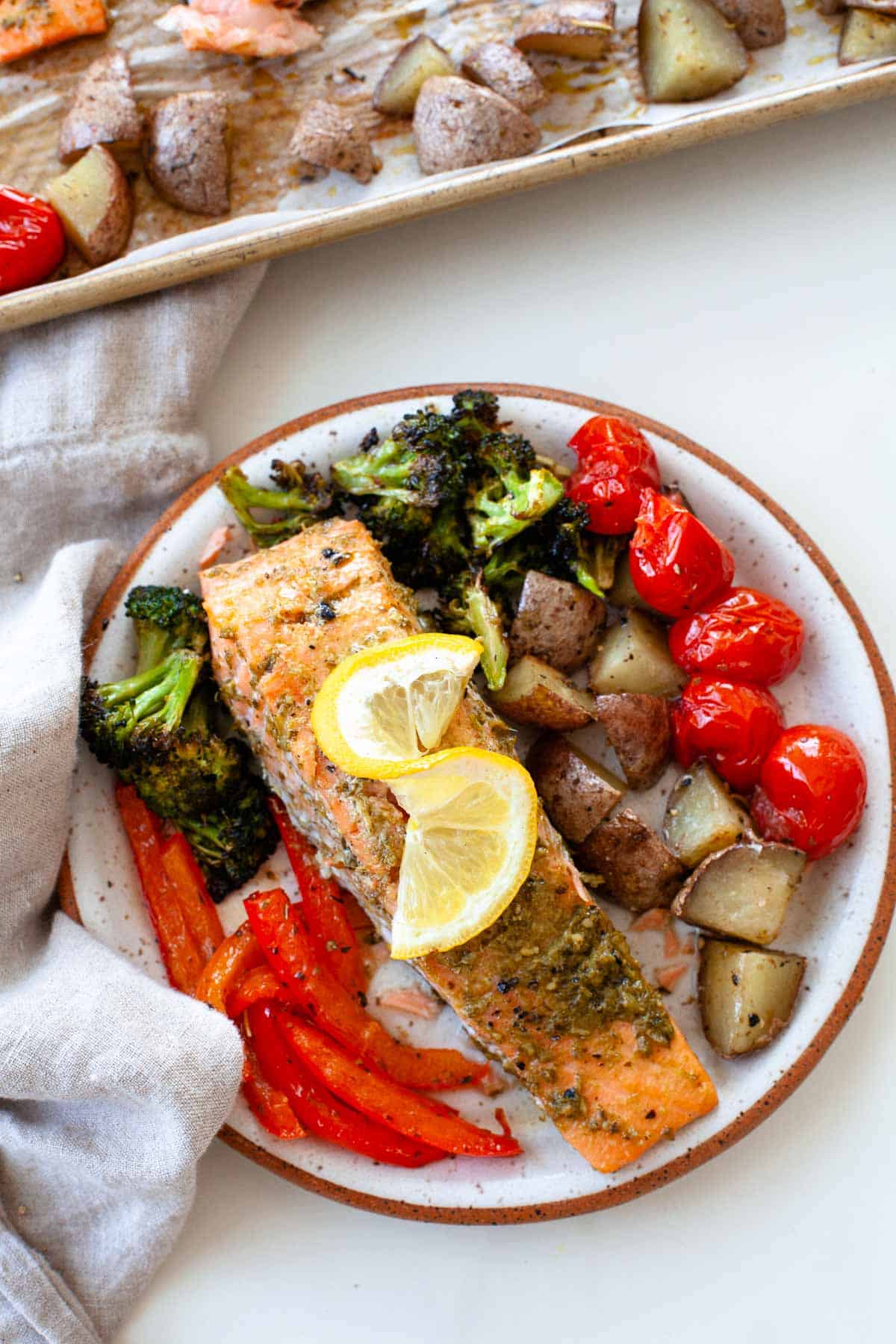
    sheet pan salmon with tomatoes, potatoes, broccoli, bell pepper and lemon on speckled plate

    For more sheet pan inspiration, check out my other recipes below!

    If you like this recipe, please be sure to comment and give it a 5 star rating below. If you make it, share it on Instagram and tag me @karalydonrd and I’ll re-share it with my followers! If you want to save this recipe for later, be sure to pin it on Pinterest!

    Never want to miss a recipe? Sign up for my email list and receive my FREE guide – Rediscover the Joy in Eating: 5 simple steps to stop stressing about food + enjoy every meal!

    Print

    clock clock iconcutlery cutlery iconflag flag iconfolder folder iconinstagram instagram iconpinterest pinterest iconfacebook facebook iconprint print iconsquares squares iconheart heart iconheart solid heart solid icon

    Description

    Ready in just 30 minutes, this sheet pan salmon with veggies is an easy weeknight dinner with minimal clean up. Salmon with pesto is paired with seasoned potatoes, bell peppers, broccoli and cherry tomatoes to make a balanced meal.

    3/4 lb baby potatoes, cut into 1/2 inch-pieces
    2 small heads broccoli, chopped (about 2 cups broccoli florets)
    3 tablespoons olive oil, divided
    1 teaspoon Italian seasoning, divided
    Salt and pepper
    1 red bell pepper, sliced (about 1 cup)
    1 cup cherry tomatoes
    1.5 lbs salmon, cut into 4, 6-ounce filets
    3 tablespoons pesto
    4 lemon slices

    Preheat oven to 425 degrees F. Line a baking sheet with parchment paper.
    In a medium bowl, add potatoes and broccoli and toss with 2 tablespoons olive oil, 3/4 teaspoon Italian seasoning, salt and pepper. Add to baking sheet, leaving space in between veggies, and bake for 10 minutes.
    While the potatoes are roasting, add bell pepper and tomatoes to the same bowl. Toss with remaining 1 tablespoon olive oil, 1/4 teaspoon Italian seasoning, salt and pepper.
    Add bell pepper and tomatoes to the pan and bake for another 5 minutes.
    While vegetables are roasting, season salmon with salt and pepper, brush with pesto, and top each filet with a lemon slice. Add salmon to the pan and bake until salmon easily flakes with a fork inserted at the center or a thermometer inserted at the center reaches an internal temperature of 125-135 degrees F for medium to medium-rare salmon or 145 degrees F for well done salmon, about 10-15 minutes.

    Notes

    USDA recommends cooking salmon until a thermometer inserted at the center of the filet reaches 145 degrees F. This will yield salmon that is well done.
    Be sure to leave as much space as possible between veggies to ensure even cooking.

    Other seasoning ideas for the salmon include:

    Dijon mustard + Everything But The Bagel Spice
    Lemon Juice + Dijon Mustard + Dill
    Teriyaki Sauce
    BBQ Sauce
    Thai Peanut Sauce
    Chili Crisp

    Prep Time: 5 minutesCook Time: 25 minutesCategory: DinnerMethod: Sheet PanCuisine: American

    Keywords: sheet pan salmon and veggies, sheet pan salmon with vegetables, sheet pan salmon with potatoes and veggies

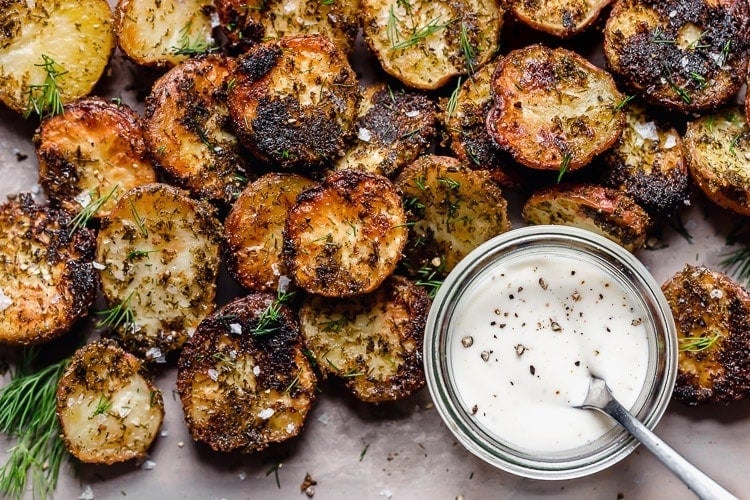
  • Best Potatoes for Roasting + Crispy Roasted Potatoes Recipe

    Best Potatoes for Roasting + Crispy Roasted Potatoes Recipe

    Best Potatoes for Roasting + Crispy Roasted Potatoes Recipe


    Privacy & Cookies Policy


  • Lee Beauty’s Callus Remover For Feet Eliminates Dead Skin Fast

    Lee Beauty’s Callus Remover For Feet Eliminates Dead Skin Fast

    If you purchase an independently reviewed product or service through a link on our website, STYLECASTER may receive an affiliate commission.

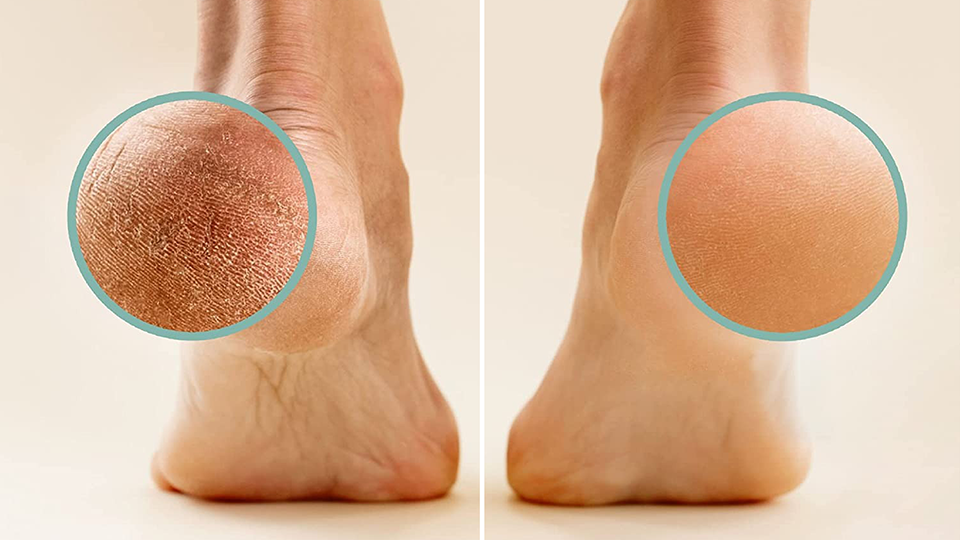
    It wasn’t until I moved to New York City that I noticed just how much walking everywhere could affect the skin on my feet. By no means were they in a terrible state, but the bottom of my heels had certainly seen better days. The skin in this area felt rougher, and I honestly had no clue what to do about it. That’s where products like Lee Beauty’s Callus Remover for Feet could’ve really done me a solid.

    The callus remover gets rid of “years” of rough skin from your feet, and “in minutes,” per the brand. This is a pretty tall claim, but fans of the product can assure us all that it gets the job done. One wrote, “I did not expect the results that I got!! 15 to 20 minutes of filing and 98 percent of my callus are gone. I still have spots where there is a slight callus but no more cracks!!! NO CRACKS!! It’s been years since my feet have felt this good. I will forever keep this on hand!”

    This game-changer really does discard years of rough skin in a very short amount of time. No more sitting in a salon chair for an hour! And these results come at an affordable price tag of just $15. It typically costs around $17 but is currently on sale for under $15 at Amazon.

    “A shocking amount of dead skin comes off,” wrote another five-star shopper. “Really great results, feet that are clean, soft, and sandal-ready.”

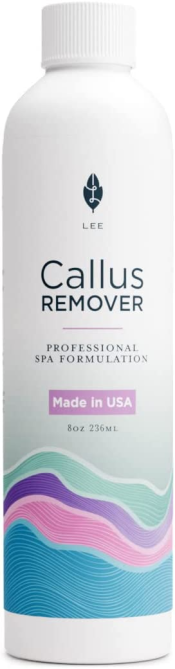
    Lee Beauty Callus Remover for Feet Amazon

    Photo: Lee Beauty.

    Here’s how to get the smoothest feet with this product: First, soak your feet in water and dry them. Then, apply the gel and rinse it off. Finish with a rasp or pumice. 

    After following all of these steps, as suggested by the brand, you’ll have baby-soft skin like this reviewer. “This product was super easy to use and effective,” they wrote. “I’ve used this both times after taking a shower. I’d sit on the side of my tub and squeeze [the] gel on my trouble areas and rub my feet together to spread it thoroughly. Set the timer on for about six minutes and play a game or two on my iPhone. When the timer goes off, I rinse the gel off with a small hand brush. Use the callus brush on the areas and rinse once again. Towel dry and viola, baby-soft skin. I am so happy and impressed!”

    RELATED: Shoppers Swear This $8 Viral Foot Peeling Spray ‘Instantly’ Removes Dead Skin

    The time it takes to transform your feet from rough to smooth varies by person, but the results are nevertheless the same. Showing your feet some T.L.C. and getting spa-quality results have never been easier thanks to this fast-acting, professional-grade callus remover from Amazon.StyleCaster Shopping Newsletter Sign Up

  • Pore Strips, Glue And Other Skin Trends To Avoid

    Pore Strips, Glue And Other Skin Trends To Avoid

    If you’re anything like us, your social media feed is showing you a lot of so-called “skin care hacks” that claim to help you achieve the best possible complexion. While these DIY tricks may look good on TikTok or Instagram, many of them should be avoided, especially the ones inspired by spa treatments usually performed by trained professionals. Read on to learn about some popular internet trends that should be avoided — and discover the alternative treatments that are much better for your skin!

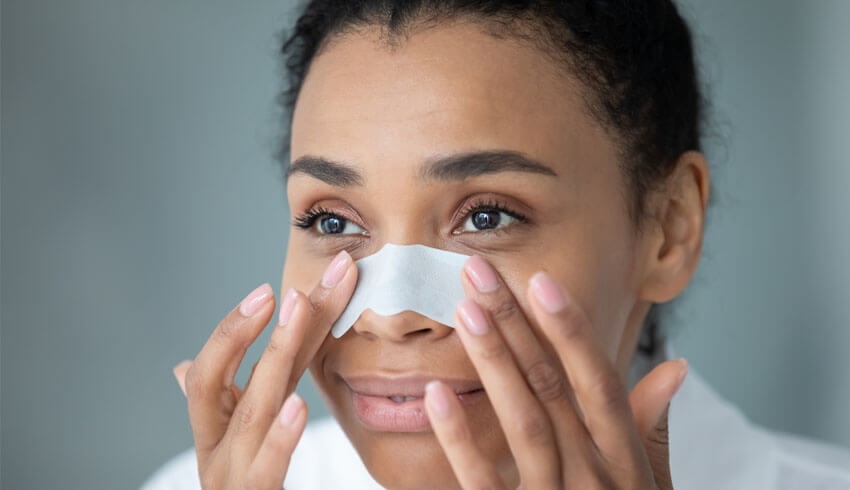
    Avoid: Pore Strips 

    Pore strips (also known as blackhead strips) aren’t a new trend, and actually first hit the shelves in the 1970s. They’re back in the spotlight because people online love to share the satisfaction of peeling them off to reveal what looks like buildup, dirt and oil found in their pores. The strips’ staying power is understandable – who wouldn’t want to empty their pores with a simple, inexpensive product that provides such instant gratification?

    Unfortunately, pore strips aren’t all they’re cracked up to be. They work by forcefully pulling the oil from sebaceous filaments that line your pores and maintain your skin’s oil balance. Any redness you might notice after using one is not the squeaky clean skin you think it is. Instead, it’s irritated skin that has been painfully stripped of the oils that work to keep your skin barrier in good working order. 

    According to Very Well Health, the benefits of a pore strip are temporary and not as impressive as a pore strip’s residue might suggest. Oftentimes, our sebaceous filaments – which actually play a key role in your skin’s hydration and oil regulation – are mistaken for clogged pores. Pore strips target these important sebaceous filaments, along with whatever else they can grab. Plus, when using them for nose blackhead removal, pore strips can only pull out a small section and can’t reach larger, deeper blackheads. This means leaving a large portion behind in your skin. Without addressing the root of the problem, you’ve only partially emptied a tiny crevice that is now ready to collect new dirt and buildup. Yuck. 

    Instead, opt for a chemical or finely powdered physical exfoliant. We love the Strawberry Rhubarb Dermafoliant to clear clogged pores around the nose. This fine powder works by gently removing grime or gunk without stripping the skin of the oils that work to protect it, giving you a deep clean without any damage. 

    Avoid: Using Glue To Remove Blackheads

    One of the more surprising trends we’ve seen is using glue to create a pore-strip-style product for the face. Yes, you read that right – we’re talking about the white, thick glue you used in grade school. 

    According to Healthline, this trend mimics the effects of a traditional pore strip. However “glue is not intended for human skin, and may cause your pores to become even more clogged.” While we understand the appeal of a budget-friendly hack, we definitely couldn’t recommend this one in good conscience – especially considering the nasty chemicals that glue contains. Avoid greater skin issues down the line and keep the glue for your next craft project. 

    Instead, incorporate a peel into your weekly routine. This will help keep blackheads, whiteheads and surface level texture at bay. We love the Clear Skin Willow Bark Exfoliating Peel. 

    Avoid: Pore Vacuums 

    You might have seen a newer tool pop up in your skin care aisle or social media feed: the pore vacuum. Pore vacuums are handheld devices that suction onto the skin, promising to pull out any blackheads, gunk or buildup that’s settled in. But don’t believe the hype.

    While pore vacuums look similar to highly effective tools used by spa professionals, they are not the same. The professional tools require specialized training to treat the area without damaging the skin’s layers. According to Healthline, at-home pore vacuums can cause bruising, discoloration and scarring, especially when used by someone not trained in esthetics. Worse, if you’re prone to sensitive skin reactions or rosacea, a pore vacuum can result in broken blood vessels or capillaries. 

    Instead, we’d recommend gommage – an exfoliating technique where a physical exfoliant is layered over a gel textured mask or treatment and gently rolled away with damp fingers after a few minutes. Gommage uses physical and chemical exfoliation to softly slough away dead skin cells and remove other debris from the skin’s surface. This technique is safe to try at home with a soft touch and slow movements. Or, head to your esthetician to have a professional safely perform extractions along with a gommage treatment.

    Keen to try it? Our Lead Skin Care Trainer, Natalie Pergar, recommends a combination of our Stone Crop Masque and Stone Crop Oxygenating Fizzofoliant for a gentle yet invigorating treatment. 

    Avoid: Face Taping 

    A newer trend to hit the internet involves applying sticky tape-style products on the skin before bed to reduce movement and prevent wrinkles through the night. While this might make sense in theory, there are many reasons why this isn’t an effective strategy for smoothing the face. 

    According to the Cleveland Clinic, any short-term fixes will quickly disappear as the skin resumes its normal position when you wake up and start your day. And worse, pulling off the tape can remove a layer of skin, prompting irritation, allergic reactions to the tape itself or even blisters. 

    Instead, encourage lymphatic drainage and soften the look of wrinkles by using a gua sha tool as part of your routine. A regular gua sha practice gently works the muscles, increases glow and reduces puffiness. Discover our favorite gua sha techniques here. 

    Avoid: Harsh Scrubs 

    Aggressively buffing away at a surface to smooth it out makes sense when painting a wall or priming furniture, but would you use a product akin to sandpaper on your face? We didn’t think so. Harsh scrubbing with products that use nut shells or other ingredients with sharp edges will not give you the clear base you’re looking for. 

    Harsh scrubbing with thick, gritty pastes can lead to microtears and irritation, damaging your skin barrier and creating the perfect conditions for future breakouts. Vigorous physical exfoliation can also strip the skin, causing it to overproduce lost oil, leading to acne and other issues. Plus, if you have existing breakouts, scrubs can aggravate already inflamed skin, making breakouts worse. 

    Instead, gently exfoliating with a finely powdered product is the way to go. While smoothing skin with a powder scrub, use plenty of water to work the product around the face. A chemical exfoliant will do the same job without any rubbing at all. Remember, skin care is a marathon, not a sprint. Make your exfoliating ritual slow and relaxing. Your skin will love you for it. 

    Avoid: Derma Rolling

    A derma roller is a handheld roller covered with tiny needles that you roll over the surface of your skin. Derma rolling takes inspiration from microneedling, a professional treatment that creates a low level of trauma to stimulate the production of collagen and elastin in the skin. Microneedling can be an effective treatment for firming the skin because a professional can make adjustments depending on how their Clients’ skin reacts. However, the “one size fits all approach” of derma rolling means this treatment isn’t nearly as safe or effective.

    According to Healthline, the potential risks include permanent scarring and darkening of the skin. Without proper sterilization, derma rolling also comes with a risk of infection. Some dermatologists express concerns about potential microtears and the risk of cheap rollers leaving tiny needle particles in the skin. Because of the risk of irritation, derma rollers are a no-go for those with eczema and dermatitis. Plus, as the rolling movement can spread bacteria around the face, derma rolling is especially risky for those with acne or cold sores. 

    Because these devices may reach nerves, blood vessels and other parts of the skin, even the FDA suggests leaving derma rolling to the professionals. Don’t try this one at home! Instead of derma rolling at home, always opt for professional microneedling treatments.

    Watch as our Lead Skin Care Trainer, Natalie Pergar, discusses these and other skin care trends that should be avoided. 


    If you’re looking for better ways to improve your skin, consider reaching out to an Eminence Spa Partner in your area to help you choose the right option.

  • How This Esthetician Achieves Glowy Skin With ‘Less is More’

    How This Esthetician Achieves Glowy Skin With ‘Less is More’

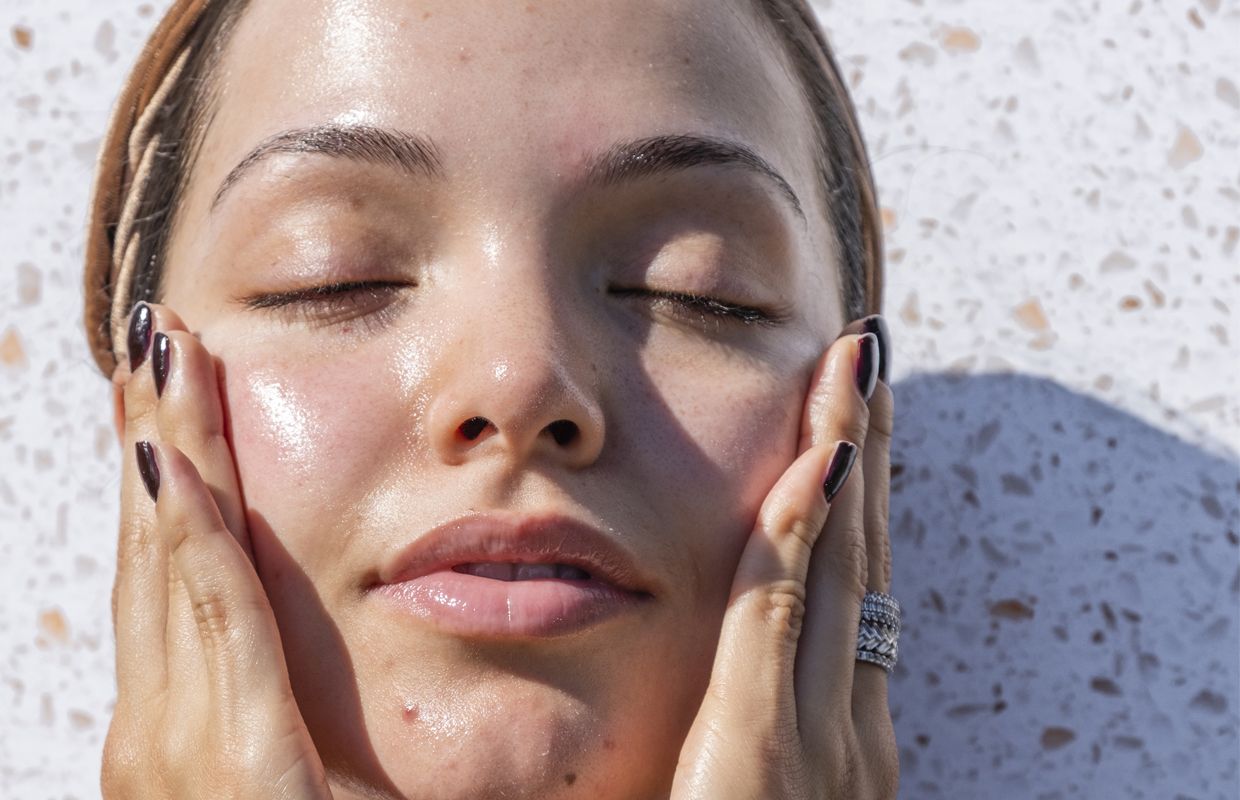
    What started as a Korean beauty trend now reigns as one of the buzziest trends of 2023. You may have heard it called glass skin, glazed donut skin, jello skin, or some other dewy-sounding variation, but it all focuses on one main goal: glowy skin with a natural-looking gleam. Korean Beauty was the catalyst for this movement, known for its thoughtful skincare routines and an almost ethereal glow. But with audiences across the globe sharing their how-to’s, tips, tricks, and DIYs on social media, there are more than enough recommendations as to how you can achieve this dewy look, too. 

    I’m always eager to hear how others keep their skin looking dewy, so I asked our trusted in-house esthetician, Lexi, how she achieves such radiant skin. Lexi’s mentality is simple: “Less is more.” But it can’t be that easy, right? Let’s take a look at Lexi’s routine and see what she has to say about just how attainable dewy skin is.

    Lexi’s Routine

    Lexi is a Skin Type 6, which means her skin is fairly balanced and doesn’t lean too far dry or oily (of course, this depends on the seasons since climate affects our skin). The goal for Skin Type 6 is to keep a good balance of water and oil in the skin while also focusing on ingredients that promote healthy aging (think retinol, vitamin C, and antioxidants). As you’ll see, Lexi strikes this balance really well and uses products and ingredients that are beneficial to her skin type!

    AM

    Step 1: Cleanser

    To start, she washes her face with either Mint Renewal Cleanser or Purifying Face Wash.

    To make sure you’re getting the most out of your routine, learn more about how to wash your face the right way and which cleansing mistakes to avoid.

    Step 2: Toner

    Immediately after cleansing, she goes in with the Moisture Infusion Toner. This not only delivers an instant blast of hydration to your skin (after all, glowy skin really just means hydrated skin), but it also clears your skin of any impurities that can be caused by minerals found in your tap water.

    Step 3: Serum

    After applying toner, she uses Vitamin C + E, a product she praises for its extremely hydrating qualities (and even claims it’s the key to achieving her dewy glow!). This product is great for evening out your skin tone, as well as keeping your skin youthful-looking for longer. 

    Bonus: This antioxidant-based serum is also helpful in protecting the cells of your skin from environmental damage!

    Step 4: Sunscreen

    Last but certainly not least, it’s time to apply SPF. Lexi tops it all off with Weightless Protection SPF 30, which also functions as her moisturizer and keeps her skin protected from harmful UVA and UVB rays. 

    PM

    Step 1: Remove Makeup & Cleanse

    Depending on the amount of makeup that she wore that day, Lexi will end the night by cleansing with either Better Than Balm or Soothing Aloe Cleansing Milk. Better Than Balm is a great option for days when heavier makeup like long-wear foundation is applied, as it breaks down makeup and debris through its unique dual-phase technology. However, Soothing Aloe Cleansing Milk is a gentle, calming option that’s perfect for those days when you wear little to no makeup.

    Step 2: Toner

    She once again immediately follows cleansing with the Moisture Infusion Toner, making sure to wipe away any residual makeup with a toning cloth.

    Step 3: Treatment

    Next, she goes in with a prescription retinoid to fight fine lines and wrinkles. Lexi usually uses her retinoid about four nights a week (it’s important not to overdo it so that your skin gets a break, the concept behind skincycling). Topical retinoids simultaneously thicken the deeper skin layers by stimulating the production of collagen while thinning out the outer skin layer, giving the skin a dewy, glowing appearance. 

    Btw, a simple routine like Lexi’s is key when using a prescription retinoid. Learn how to adjust your skincare routine when using prescription retinoids.

    Step 4: Moisturizer

    Finally, Lexi finishes off her routine with either the Hydraboost Rescue Cream or The Inkey List’s Omega Water Cream. This once again helps deliver hydration and lock in moisture to keep her skin’s moisture barrier healthy. 

    What Products Does Lexi Recommend Outside Of Her Normal Routine?

    Skincare

    As I mentioned, dewy skin is just one of the many benefits of hydrated skin, which is why Lexi recommends using hydrating products containing ingredients like hyaluronic acid, glycerin, tremella fuciformis, and sodium hyaluronate.

    She also agrees that exfoliation can be a great way to cycle out dead skin cells and allow new ones to surface, ultimately bringing a boost to your daily glow. While you won’t want to exfoliate too much (2-4x a week max depending on your skin type), she says this is key to achieving beautiful, smooth, dewy-looking skin. Lexi uses Triple Berry Smoothing Peel two times a week, or a couple of days before any event where she wants a nice, dewy glow. In addition, she works in a physical exfoliant like Triple Berry Smoothing Scrub once a week. 

    Makeup

    And while your skin should hold the majority of your attention when trying to accomplish a beautiful glow, I’m a huge proponent of getting a bit of help through makeup as well. One product that Lexi swears by when it comes to dewy-looking skin is the Saie Glowy Super Gel. She wears this almost every single day for her self-proclaimed “best glow ever.” Sometimes she also uses Glossier’s Futuredew under her everyday makeup.

    Wanting more makeup suggestions? Here are 5 makeup products I use to achieve glowing skin.

    What Facial Treatments Can Help You Achieve A Dewy Glow?

    If you’re interested in a professional treatment to get a jumpstart on (or maintain) your glow, there are many treatments designed to bring you healthy, hydrated skin. Lexi recommends a deep cleansing facial to help with the overall health of your skin. Another treatment she suggests is a HydraFacial, specifically focused on helping you achieve beautiful, dewy skin.

    What Lifestyle Adjustments Can Promote A Natural Glow?

    Lexi believes that focusing on the inside is the most important part, as it is absolutely reflected on the outside. Focusing on a nutritious diet where you’re eating mostly whole foods is key to a healthier inside and outside. Antioxidant-rich foods, such as avocados, broccoli, and berries, are another great way to promote healthy aging from the inside out. Lexi says this has been a big help in her life, not only with her skin but also with her hair and nails. Now we would never tell you to cut out fun food entirely (we aren’t crazy!), but focusing on eating whole foods, lots of antioxidants, and less dairy is great for you both physically and mentally. 

    Regular physical movement is important for so many reasons, and it also gets your blood pumping to deliver vital nutrients to the skin. This helps give an overall radiance. While nothing can replace a good workout, you can also try my two-minute trick for glowing skin!

    What Mistakes Should You Look Out For When Trying To Get Glowy Skin?

    While there aren’t any glaring mistakes to be made, Lexi warns that layering too many products (especially heavy ones) can lead to clogged pores rather than your desired sheen. Hydrating oily, acne-prone skin incorrectly can lead to clogged pores and breakouts quickly, so it’s really important to use products formulated for your skin type.

    Lexi also brings slugging up specifically, stating that this process is oftentimes too much for people’s skin. I personally only recommend slugging as a temporary measure for those with very dry and irritated skin. Again, a less is more mentality will save you in the long run. By finding one or two really good products, like her Vitamin C+E and Saie Glowy Super Gel, you can achieve a dewy glow without going overboard. 

    So there you have it! With just four easy steps every morning and night (plus a little exfoliation and highlight here and there) you too can be on track toward the perfect dewy glow. 

    Want to know more? Here are my eight top tips for making dull skin glow.

  • Blog

    Blog

    10 Tips to Break a Bad Habit for Good

    by Caitlin H,

    May 15, 2023
    10 Tips to Break a Bad Habit for Good

    Many of us structure our lives around habits, such as getting up at 7 a.m., drinking a cup of morning coffee, or eating dinner at 6 p.m. These regular practices may be a critical part of ensuring your everyday life is consistent and manageable, and that’s a good thing.

    But some habits—such as smoking, overeating, drinking, consuming too much caffeine, or scanning social media right before bed—can negatively impact your overall health and well-being.

    There’s a good chance you can quickly identify your own bad habit (or habits). There’s an even better chance you are well aware of their harmful effects. So how do you go about breaking those bad habits? 

    Tweet

    7 Brain Exercise Activities to Keep Your Mind Sharp

    by Caitlin H,

    May 8, 2023

    7 Brain Exercise Activities to Keep Your Mind Sharp

    Creating a healthy lifestyle is about many things. It’s about a consistent diet with balanced nutrition. It’s about staying active and exercising. It’s about ensuring your mental well-being. And it’s about keeping your brain active and engaged.

    Need a little help keeping that mind sharp, engaged, and present in the moment?  Read on!

    Tweet

    10 Signs Your Diet is a Dud

    by Caitlin H,

    May 1, 2023

    10 Signs Your Diet is a Dud

    If you’re like many of our customers, there’s a solid chance you have tried some weight loss plans in the past—and didn’t see the long-term results you desired.

    Here’s the thing: The people who find lasting success do so by making it a lifestyle. That doesn’t mean you shouldn’t try a diet. But it means you need to find a diet that works for you and allows you to incorporate healthy eating into your everyday life.

    But how can you tell if that “diet” can become a lifestyle?

    Tweet

    Delicious Recipes For Our Favorite Spring Fruits

    by Caitlin H,

    Apr 24, 2023

    Delicious Recipes For Our Favorite Spring Fruits

    Spring is the most colorful time of year, and that’s especially true when it comes to spring fruits!

    While you can find these fruits year-round in supermarkets, using seasonal produce tends to elicit the best-tasting results. You can also visit farmers’ markets to support local growers and get the freshest stuff available.

    We love springtime and the colorful fruits that come with it. Now is the perfect time to try a new light, healthy snack or dessert that everyone will love!

    Tweet

    Financial Analyst Loses 10 Pounds in One Month with Diet-to-Go

    by Caitlin H,

    Apr 17, 2023

    Financial Analyst Loses 10 Pounds in One Month with Diet-to-Go

    Hailey’s 32nd birthday weekend in February was filled with the kinds of things most people like to do on their birthdays — dinner and drink outings, celebrations with friends, and enjoying time with her fiancé.

    But after that weekend, Hailey stepped onto the scale and quickly realized she had gained 5 pounds over those few days alone.

    Find out how Diet-to-Go helped Hailey lose 10 pounds in 30 days!

    Tweet

    10 Fun Fitness Ideas to Make Exercise Enjoyable

    by Caitlin H,

    Apr 10, 2023

    10 Fun Fitness Ideas to Make Exercise Enjoyable

    Exercising can sometimes feel intimidating, especially when you go to a gym and see what looks like elite athletes pumping weights or pounding out mile after mile on the treadmill.

    It’s okay. We get it. And you are certainly not alone. Thankfully, exercising can take place anywhere, anytime, and in all sorts of fun formats.

    Tweet

    The Benefits of Staying Hydrated and How Much Water to Drink

    by Caitlin H,

    Apr 3, 2023

    The Benefits of Staying Hydrated and How Much Water to Drink

    Water is an essential part of a healthy, well-rounded diet. In fact, studies show that hydrating often may slow the aging process and help you live longer. In addition to adding years to your life, there are also a host of other benefits of drinking water and staying well-hydrated.

    So, how much water should you drink each day? 

    Here’s the thing, it’s not a one-size-fits-all model. But, we can help you figure out what amount is right for you!

    Tweet

    5 Weight Loss Tips That Fit Into Your Hectic Schedule

    by Caitlin H,

    Mar 27, 2023

    5 Weight Loss Tips That Fit Into Your Hectic Schedule

    Remember when it was just before the new year, and you were highly motivated to lose weight and get healthy?

    Between balancing things like work, kids, social events, and everything in between, our hectic schedules often mean there’s not much time left for self-care or healthy habits, and that resolution might have fallen to the wayside.

    But here’s the thing: Taking care of yourself ensures everything, and everyone else will get the best, most productive version of yourself.

    How do you make taking care of yourself a priority again though?

    Tweet

    7 Scientific Reasons You Should Try Meatless Monday

    by Caitlin H,

    Mar 20, 2023

    7 Scientific Reasons You Should Try Meatless Monday

    Burgers, steak, lamb chops — red meat is a staple of the American diet.

    While it may be unreasonable to cut it out of your diet completely, going vegetarian at least one day a week can go a long way toward improving your health. That’s why we outlined seven scientific reasons why you should try Meatless Monday and reap all the benefits of reducing your meat consumption.

    Tweet

    Reverse Your Prediabetes With These 5 Tips

    by Caitlin H,

    Mar 13, 2023

    Reverse Your Prediabetes With These 5 Tips

    Prediabetes means your blood sugar levels are higher than normal, but not high enough to be diagnosed as diabetes. It could be considered a blessing in disguise. Knowing that you have it allows you to make new, healthier choices to reverse the condition and hopefully help you avoid developing Type 2 Diabetes.

    Tweet

    Simple Ways to Tell if Your Food is Nutritious

    by Caitlin H,

    Mar 6, 2023

    Simple Ways to Tell if Your Food is Nutritious

    Proper nutrition is one of the most important ways to ensure you lead a healthy, happy, long life. In fact, studies show that eating a balanced diet plays a role in all sorts of things. 

    It can be challenging to know whether your food is nutritious. Labels can be confusing if you’re not a nutrition expert, and honestly, how many of us are? But don’t stress! Check out our easy to follow beginner’s guide to deciphering food labels.

    Tweet

    8 Essential Elements for a Healthier Heart

    by Caitlin H,

    Feb 27, 2023

    8 Essential Elements for a Healthier Heart

    February is American Heart Month, an annual observance of the importance of cardiovascular health. The American Heart Association and all health providers use the month to remind us to engage in healthy habits that reduce our heart disease risk.

    That’s why the American Heart Association (AHA) identifies these eight essential elements to better heart health. Read on to learn more!

    Tweet

    Break That Snacking Habit with These Expert Tips

    by Caitlin H,

    Feb 20, 2023

    Break That Snacking Habit with These Expert Tips

    It’s 8 p.m., and you’re enjoying your favorite TV show or cozied up on the couch with a good book. Then, you get up and find yourself standing in the kitchen, reaching for a handful of chips or a couple of cookies.

    If this sounds all-too-familiar, you’re not alone. Mindless snacking is a habit many of us deal with daily, whether sitting at the office (or home office), perusing social media, or even snuggling up in bed.

    Thankfully, there are ways you can cut back on snacking.

    Tweet

    10 Delicious, Healthy Dinners to Wow Your Sweetheart

    by Caitlin H,

    Feb 14, 2023

    10 Delicious, Healthy Dinners to Wow Your Sweetheart

    Did you remember Valentine’s Day? If you or your sweetie are trying to eat healthily, why not keep the momentum going by whipping up a delicious dinner?

    Want to try a new recipe to surprise your sweetie for Valentine’s Day (or any day)? We’ve got your covered with some tasty choices! Bon appétit!

    Tweet

    7 Ways to Make the Most of Your First Day at the Gym

    by Caitlin H,

    Feb 6, 2023

    7 Ways to Make the Most of Your First Day at the Gym

    You did it. You committed to your health and fitness and signed up for a gym membership. And now, it’s time to step into that world of weights and cardio machines for the first time. It can feel pretty darn intimidating. That’s more than okay. It’s a brand new situation, and doing anything for the first time can be nerve-wracking.

    Thankfully, the gym is actually a place you can have fun and spend time — you just have to set yourself up for success before showing up for the first time.

    Tweet

    These 5 Simple Dietary Swaps Could Lengthen Your Life

    by Caitlin H,

    Jan 30, 2023

    These 5 Simple Dietary Swaps Could Lengthen Your Life

    If the potential of adding years to your life by making small changes appeals to you, listen up.

    Improving the quality of foods you eat daily — even just a little — can extend your life, no matter how old you are.  Making some simple swaps to your overall diet can improve your nutritional intake — and maybe even add years to your life!

    Tweet

    Step Outside Your Comfort Zone This Year

    by Caitlin H,

    Jan 23, 2023

    Step Outside Your Comfort Zone This Year

    The new year is often when we think about hitting the reset button on some (or several!) aspects of our lives. We consider our intentions, set goals, and start doing what we can to achieve them.

    This year, consider the following: How often do you set a goal to do something extraordinary that will give you a sense of true exhilaration?

    Maybe it’s time to step outside your comfort zone and live life to the fullest!

    Tweet

    8 Simple Ways Women Can Move More While At Home

    by Caitlin H,

    Jan 16, 2023

    8 Simple Ways Women Can Move More While At Home

    You’ve heard it before, and you’ll hear it again; physical activity is crucial to controlling your weight, gaining healthful benefits, and expanding your lifespan. 

    A recent study found that physical activity was associated with a lower risk of death for women. By participating in daily activity of any intensity, a woman could lengthen her expected lifetime. Fitness guru, Dr. Gabe Mirkin tells us “You do not need to have a specific exercise program to stay fit, you just need to keep on moving for a large part of each day.” That’s good news if you’re not a big fan of what we traditionally associate with exercise.

    So, what can you do to make sure you can keep your body in motion each and every day? We have 8 simple ideas for you! (Men, you can do these things, too!)

    Tweet

    Lorrie Mills Lost 15 Pounds In Just Three Months

    by Caitlin H,

    Jan 9, 2023

    Lorrie Mills Lost 15 Pounds In Just Three Months

    Lorrie Mills is a giving person. During the holiday season, he sponsors families in need by fulfilling their wishlists and providing food. But in April 2022, Lorrie learned some troubling news that meant it was time to give something to himself, too.

    When his doctor started making notes in his medical records about his chances of stroke or heart attack (or worse) Lorrie took him seriously. That same day he found Diet-to-Go, and three months later he’s happy to share what he’s learned.

    Tweet

    Clever Hacks To Help You Get a Better Night’s Sleep

    by Caitlin H,

    Dec 19, 2022

    Clever Hacks To Help You Get a Better Night’s Sleep

    A quality night’s rest is one of the best feelings. It makes it much easier to take on the day’s tasks, make time for exercise, think clearly, be productive and even make better nutrition choices.

    Unfortunately, many of us may struggle to get quality sleep. 

    If you’re one of those people, you may want to take a peek at our list of things you can try in order to up the quantity (and quality) of those zzzzs! 

    Tweet

  • Am I hungry? Signs of hunger to watch for

    Am I hungry? Signs of hunger to watch for

    Ever wonder if you’re actually hungry? This blog post takes a deep dive into hunger cues: the 4 types of hunger, 8 signs of hunger to watch for, a scale to help determine your degree of hunger, and background on how you’ve been conditioned to mistrust your hunger cues.

    Do you ever question whether or not you’re actually hungry? 

    Do you ever second-guess your hunger? Wondering if it’s something else? Doubting that you could actually be hungry?

    Do you ever find yourself ravenous by the time you sit down to eat? Do you struggle to notice hunger until it’s too late?

    If you answered yes to any of the above questions, this post about signs of hunger is for you!

    We’ve been conditioned to mistrust hunger

    Hunger is a natural physiological cue that alerts us when it’s time to eat. When your stomach is empty, it produces ghrelin, a hormone that travels through the bloodstream to the part of the brain (hypothalamus) that regulates hunger (among other physical functions).

    When you were young (before you were conditioned by diet culture), you probably noticed hunger signals and you responded to them by eating. It wasn’t all that complicated.

    But somewhere along the way, you were taught to override your hunger signals. That if you were hungry all the time, it meant you had willpower.

    You were taught that hunger could easily be mistaken for thirst and that you should just drink a lot of water instead of eating.

    You were taught that you probably weren’t physically hungry, it was just all in your head.

    You started to mistrust your hunger. You started to fear your hunger. And maybe one day you stopped noticing hunger.

    Diet culture does a wonderful job at convincing you that hunger is a bad thing. That you need to override what your body is telling you in an attempt to lose weight. It tells you that you are “doing it right” if you’re hungry all the time.

    Diet culture is an effing liar. It disconnects you from your body’s wisdom. It makes you believe that your body cannot be trusted.

    Let me ask you this to put things into perspective: Have you ever been taught to second guess your body’s cue to go pee? Have you ever been told that you have so much willpower if you fight the urge to go pee? Have you ever been conditioned to fear the urge to pee?

    No, of course you haven’t! That would be ridiculous. Because relieving yourself is morally neutral. Whereas hunger is a loaded cue.

    But hunger and the urge to pee are both inherently neutral physiological signals – it’s just that our culture has attached meaning to one and not to the other.

    4 Types of Hunger: Physical, Emotional, Taste, and Practical

    Physical Hunger

    Physical Hunger starts out gradual and builds over time. This is a type of hunger you would feel via bodily sensations like a grumbling stomach, inability to focus, salivating, and it’s generally satisfied by eating enough.

    Emotional Hunger

    Emotional hunger gets a bad rep. We’ve been taught that emotional eating is “bad” but emotional eating is a very normal part of being a human being. Food is meant to be pleasurable and comforting – if it wasn’t, we wouldn’t be as inclined to eat (see more in this article I wrote for SHAPE.com on emotional eating)

    Emotional eating comes on faster than physical hunger and you might have a taste for something specific (i.e. a comfort food). Emotional eating only becomes problematic if it’s the only tool you have in your tool belt for coping with emotions.

    Taste Hunger

    Taste hunger is when you have a taste for something very specific. This could also be referred to as a craving. Taste hunger can overlap with emotional hunger but it doesn’t have to. You might be having an emotionally neutral day but still have a taste for something specific.

    Taste hunger can also overlap with physical hunger but it doesn’t have to. Let’s say you’re noticing physical hunger and you are craving a turkey sandwich – that’s both taste and physical hunger. Let’s say you just finished dinner and you have a craving for some chocolate – that’s taste hunger.

    Practical Hunger

    This is also referred to in the Intuitive Eating book as eating as an act of self-care. Practical hunger is when you’re not physically hungry – yet – but you know you need to eat something because of when you likely will get hungry and food might not be accessible at that time.

    A perfect example is you have class at 9am and you’re not allowed to eat during class. You wake up at 8am and you’re not hungry yet but you know that by 9am you will be hungry. As an act of self-care, you eat at 8:30am before heading out the door so that you’re not starving by the end of class.

    8 Signs of Physical Hunger

    Most people think of hunger as residing in the stomach and struggle to notice other subtle (or not-so-subtle) signs and symptoms of hunger. Here are some other signs that might mean you’re hungry! Some of these signs overlap with signs you may not be eating enough.

    1. Stomach gnawing, grumbling, feeling empty

    Many people recognize feeling hunger in their stomach – you might hear some growling or sense some grumbling. Maybe you feel an ache or gnawing in your stomach or you have a sense that your stomach feels empty.

    2. Headache

    When you are hungry, typically your blood sugar is low because you haven’t eaten in a while – low blood sugar levels can result in headaches.

    3. Inability to focus / concentrate

    When your brain isn’t well nourished, it can feel challenging to concentrate on work or focus on the task at hand. You also might find yourself thinking about food, which makes it hard to concentrate.

    4. Feeling Irritable

    Hanger is for reallllll. If you’ve ever snapped at your partner or friend when you were hungry, you’re not alone. Been there, done that. When blood sugar levels are low, it’s common to experience some irritability or anger (hanger!).

    5. Anxious

    For others, low blood sugar can manifest as anxiety. Maybe you start to get shaky or sweaty or your heart starts to race or you begin to ruminate – these could all be signs of hunger.

    6. Dizzy or lightheaded

    This is usually a hunger sign that means you’re past the point of gentle hunger (see hunger scale below). If you’re feeling dizzy or lightheaded, you probably missed a more subtle hunger cue along the way.

    7. Fatigue

    Maybe you didn’t sleep well the night before…or maybe you’re just hungry? You’ve probably heard of folks reaching for that second (or third) cup of coffee (or maybe that’s you!) to combat the mid-afternoon slump. But what if your body is actually hungry mid-afternoon and it needs nourishment, not just caffeine? Not having enough fuel in the tank in terms of energy from calories can cause you to feel tired and sluggish.

    8. Salivating

    Our body produces extra saliva in response to hunger. Ever notice how you might have more saliva when you smell a batch of freshly baked cookies coming out of the oven? That’s your body’s way of preparing to eat!  

    So how do you know if all of these symptoms are a result of hunger or something else? You start to pay attention with curiosity and begin to notice patterns over time.

    If you notice any of these symptoms, try asking yourself “is it possible that I could be experiencing physical hunger right now?” “When is the last time I had something to eat?”

    How hungry are you?

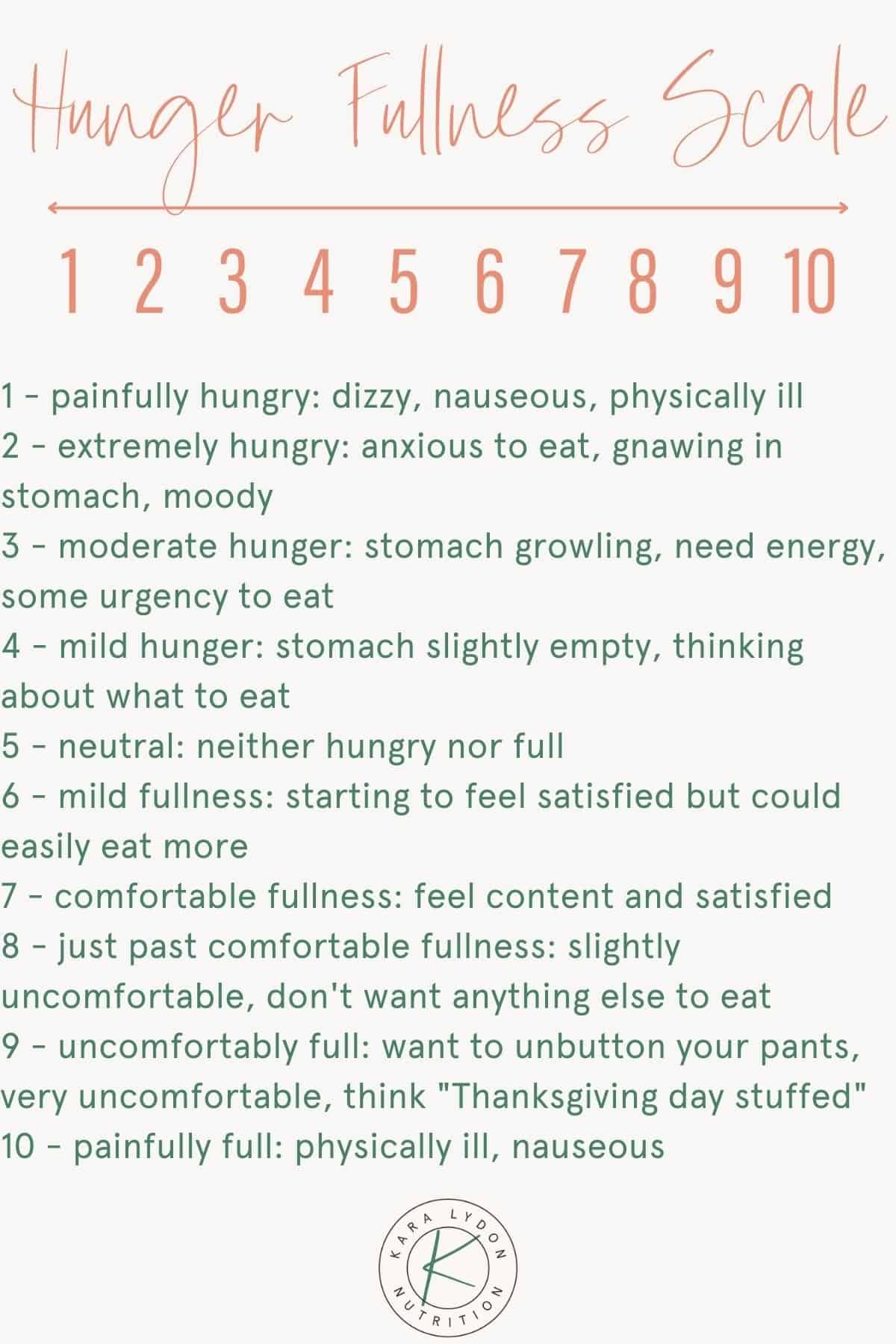
    Have you ever seen a hunger / fullness scale? This can be a helpful tool to clue you into just how hungry you are.

    Ideally you want to be eating around a 3-4 on the hunger scale. If you’re eating at a 1 or a 2, you’re overly hungry, and you might be more likely to eat past comfortable fullness, and likely won’t be able to actually enjoy what you’re eating.

    Other Reasons Hunger Might Not Be Accessible

    Diet culture interferes with our ability to honor our hunger but for others it might not be just about cultural conditioning.

    Folks who are neurodivergent and folks with histories of trauma that make it difficult to connect with the body may have a harder time noticing hunger cues. For these folks, practical hunger and eating according to the clock or as an act of self-care may be the most nourishing choice. 

    I hope you found this post helpful! If you did, please leave a comment below. I’d love to hear from you! 

    If you liked this post, check out some of my other related Intuitive Eating blog posts:

    Are you on the hunger fullness diet?

    Am I eating enough? 8 signs you may be undereating

    The beginner’s guide to Intuitive Eating

    Top 10 Intuitive Eating books to help you heal your relationship with food

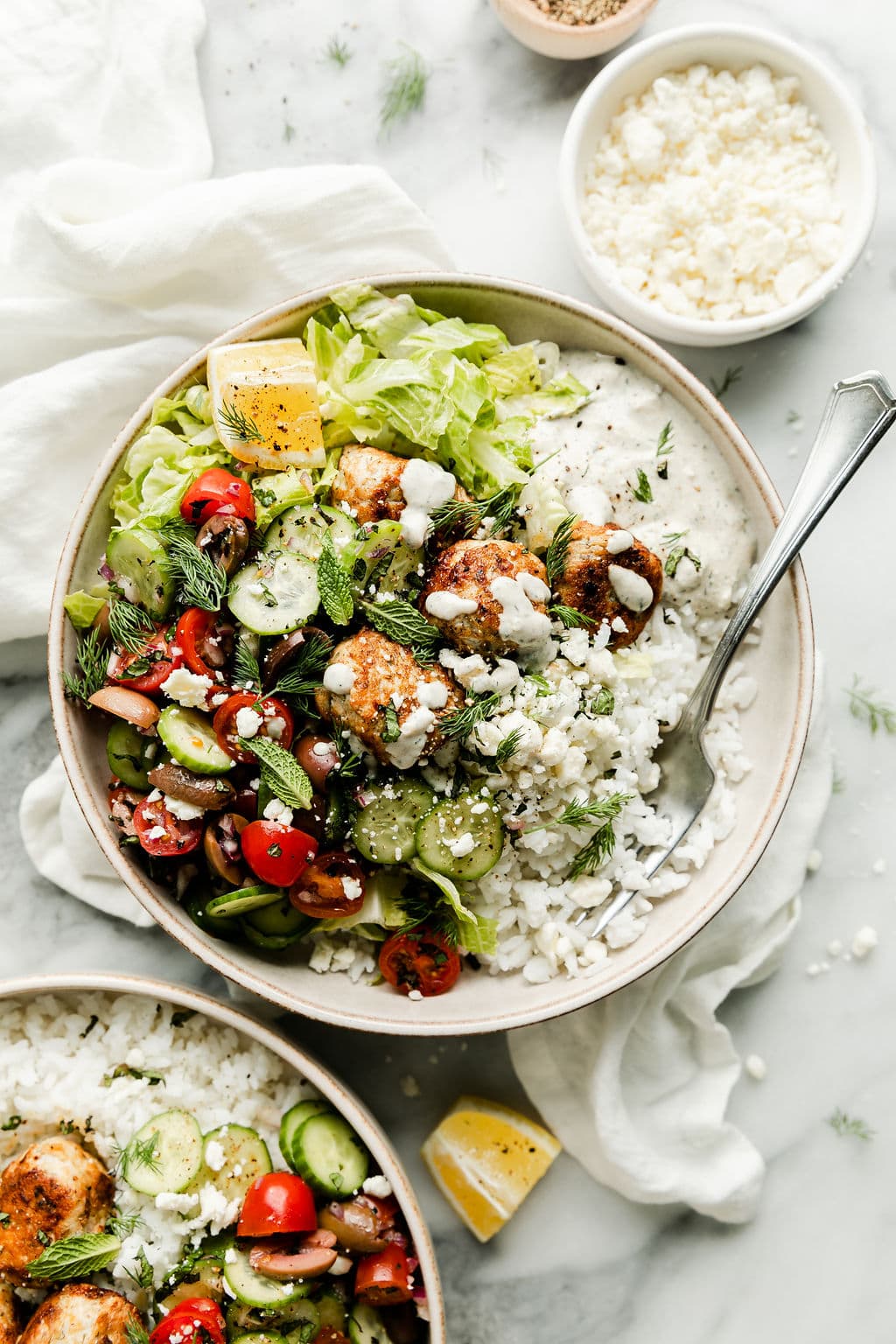
  • Greek Chicken Meatballs (Greek-Style Bowls With Tzatziki)

    Greek Chicken Meatballs (Greek-Style Bowls With Tzatziki)

    Greek Chicken Meatballs (Greek-Style Bowls With Tzatziki) – The Real Food Dietitians


    Privacy & Cookies Policy


  • Mindful Eating for Emotional Wellness: How to Use Mindfulness to Cope with Stress, Anxiety, and Other Emotions

    Mindful Eating for Emotional Wellness: How to Use Mindfulness to Cope with Stress, Anxiety, and Other Emotions

    As a mindfulness-based registered dietitian with a decade of experience, I have seen the transformative power of mindful eating in improving emotional wellness.

    Stress, anxiety, and other emotions can often lead to unhealthy eating habits that may exacerbate mental health issues. In this article, I will discuss how mindful eating can help you cope with stress, anxiety, and other emotions. Additionally, I will share specific practices and mental health resources to help you navigate these challenges and find balance in your life.

    Mindful Eating for Emotional Wellness

    The Connection Between Emotions and Eating Habits

    It is not uncommon for individuals to use food as a coping mechanism during times of stress, anxiety, or emotional turmoil (1). Emotional eating, or eating in response to feelings rather than physical hunger, can lead to overeating, weight gain, weight loss, and negative emotions such as guilt or shame (2). This cycle can perpetuate itself, making it difficult to break free from the grasp of emotional eating.

    I often get asked questions about if emotional eating is bad by new Mindful Nutrition Method students in my program, and my answer is always the same! Experiencing emotional eating of any kind is not “bad”, it’s part of our human experience! The goal is to build our mindfulness muscle so we’re better able to understand, observe, and take more aligned action based on the awareness of our emotional eating habits over time.

    Mindful Eating: A Path to Emotional Wellness

    Mindful eating is an approach that encourages individuals to pay attention to their internal cues, such as hunger and satiety, while also being aware of the emotional and environmental triggers that may influence their eating behaviors (3). By practicing mindfulness, individuals can develop a more compassionate and non-judgmental relationship with food, which can ultimately lead to improved emotional wellness.
    Research has shown that practicing mindful eating can result in numerous mental health benefits, including reduced anxiety, depression, and emotional eating (4). In one study, participants who received a mindfulness-based intervention experienced significant improvements in emotional eating behaviors and reported increased feelings of self-compassion (5).

    Embracing Mindfulness During Emotional Eating Episodes

    While the ultimate goal is to reduce emotional eating, it’s important to recognize that challenges may occur. During these moments, practicing mindfulness can still be beneficial in mitigating the impact of emotional eating. Instead of judging yourself or feeling guilty, try to observe your thoughts and emotions without judgment, and acknowledge the situations or “triggers” that led to emotional eating.

    By doing so, you can gain valuable insights into the underlying causes and develop more effective coping strategies for the future (14). Moreover, incorporating mindfulness during emotional eating episodes can help you remain present, potentially preventing overindulgence and promoting greater self-compassion. Remember that progress is a gradual process, and developing a non-judgmental and compassionate approach towards yourself is crucial for long-term success in achieving emotional wellness.
    The Role of Self-Compassion in Emotional Wellness

    Developing self-compassion is an essential aspect of mindfulness and can have a profound impact on emotional wellness. Self-compassion involves treating yourself with kindness, understanding, and acceptance, particularly during challenging moments (8). Research has shown that individuals with higher levels of self-compassion tend to have lower levels of anxiety, depression, and emotional eating (9).

    To cultivate self-compassion, consider the following strategies:

    Practice self-kindness: Instead of judging yourself harshly or engaging in negative self-talk, try to treat yourself with the same kindness and understanding you would offer to a friend. This can help break the cycle of negative emotions and promote emotional wellness (10).
    Embrace your imperfections: Recognize that everyone makes mistakes and experiences setbacks. By accepting your imperfections, you can develop a healthier relationship with yourself and better cope with stress, anxiety, and other emotions (11).
    Offer yourself loving kind wishes such as “May I feel at peace with food, may I be at ease around food, may I experience my emotions fully with care, and may I not judge my experiences with food” and many more to explore.

    Mental Health Resources for Coping with Stress and Anxiety

    In addition to practicing mindful eating and cultivating self-compassion, it’s important to seek additional support when managing stress, anxiety, and other emotions. Consider exploring the following mental health resources:

    Professional therapy: A licensed therapist or counselor can provide valuable guidance and support as you navigate emotional challenges. Cognitive-behavioral therapy (CBT) and dialectical behavior therapy (DBT) are two evidence-based approaches that have been shown to be effective in treating stress and anxiety (12).
    Mindfulness-based stress reduction (MBSR): This is an eight-week program designed to help individuals develop mindfulness skills and coping strategies for stress, anxiety, and other emotions. Research has shown that MBSR can lead to significant improvements in mental health and emotional wellness (13).
    Support groups: Connecting with others who are experiencing similar challenges can provide a sense of community and support. Many organizations offer support groups for stress, anxiety, and emotional eating, both in-person and online.

    Takeaway

    Mindful eating, self-compassion, and accessing mental health resources can play a significant role in improving emotional wellness and helping individuals cope with stress, anxiety, and other emotions. By adopting these strategies and seeking support, you can cultivate a healthier relationship with food, yourself, and your emotions.

    Find Freedom & Balanced Nourishment.

    Embrace a Balanced & Peaceful Relationship with Food.

    If you’re looking to develop a healthier relationship with food and transform your eating habits, consider joining our online group coaching program, the Mindful Nutrition Method. Our program is designed to help you cultivate a mindful approach to eating and develop a healthier relationship with food and your body.

    Get the 3-part system that will help you discover your balance, enjoy food fully, and nourish your relationship with food to feel confident, balanced, and at peace. You’ll learn the skills and strategies you need to make lasting changes to your health and well-being. Don’t wait to start your journey towards a healthier, happier you.

    References:

    Van Strien, T. (2018). Causes of emotional eating and matched treatment of obesity. Current Diabetes Reports, 18(2), 11.
    Ricca, V., Castellini, G., Lo Sauro, C., Ravaldi, C., Lapi, F., Mannucci, E., … & Faravelli, C. (2012). Correlations between binge eating and emotional eating in a sample of overweight subjects. Appetite, 59(2), 418-421.
    Framson, C., Kristal, A. R., Schenk, J. M., Littman, A. J., Zeliadt, S., & Benitez, D. (2009). Development and validation of the mindful eating questionnaire. Journal of the American Dietetic Association, 109(8), 1439-1444.
    Katterman, S. N., Kleinman, B. M., Hood, M. M., Nackers, L. M., & Corsica, J. A. (2014). Mindfulness meditation as an intervention for binge eating, emotional eating, and weight loss: A systematic review. Eating Behaviors, 15(2), 197-204.
    Alberts, H. J., Thewissen, R., & Raes, L. (2012). Dealing with problematic eating behavior. The effects of a mindfulness-based intervention on eating behavior, food cravings, dichotomous thinking and body image concern. Appetite, 58(3), 847-851.
    Jordan, C. H., Wang, W., Donatoni, L., & Meier, B. P. (2014). Mindful eating: Trait and state mindfulness predict healthier eating behavior. Personality and Individual Differences, 68, 107-111.
    Tribole, E., & Resch, E. (2012). Intuitive Eating: A Revolutionary Program That Works. St. Martin’s Griffin.
    Neff, K. D. (2003). Self-compassion: An alternative conceptualization of a healthy attitude toward oneself. Self and Identity, 2(2), 85-101.
    Mantzios, M., & Wilson, J. C. (2015). Mindfulness, eating behaviors, and obesity: A review and reflection on current findings. Current Obesity Reports, 4(1), 141-146.
    Neff, K. D., & Germer, C. K. (2013). A pilot study and randomized controlled trial of the mindful self‐compassion program. Journal of Clinical Psychology, 69(1), 28-44.
    Breines, J. G., & Chen, S. (2012). Self-compassion increases self-improvement motivation. Personality and Social Psychology Bulletin, 38(9), 1133-1143.
    Hofmann, S. G., Asnaani, A., Vonk, I. J., Sawyer, A. T., & Fang, A. (2012). The efficacy of cognitive behavioral therapy: A review of meta-analyses. Cognitive Therapy and Research, 36(5), 427-440.
    Kabat-Zinn, J. (2003). Mindfulness-based interventions in context: past, present, and future. Clinical Psychology: Science and Practice, 10(2), 144-156.
    Katterman, S. N., Mindful Eating for Emotional Wellness.

Padişahbet Güncel Giriş
Padişahbet
Padişahbet Giriş
new online casino
Crypto Casino